


You start brushing your dog expecting nothing more than a little loose fur. Then you notice a small irritated patch hidden underneath the coat—or realize the nails have become much longer than you thought.
That is why grooming is about much more than appearance. Regular dog grooming helps maintain the coat, skin, nails, ears, paws, and general hygiene while giving owners an opportunity to notice visible changes that might otherwise remain hidden.
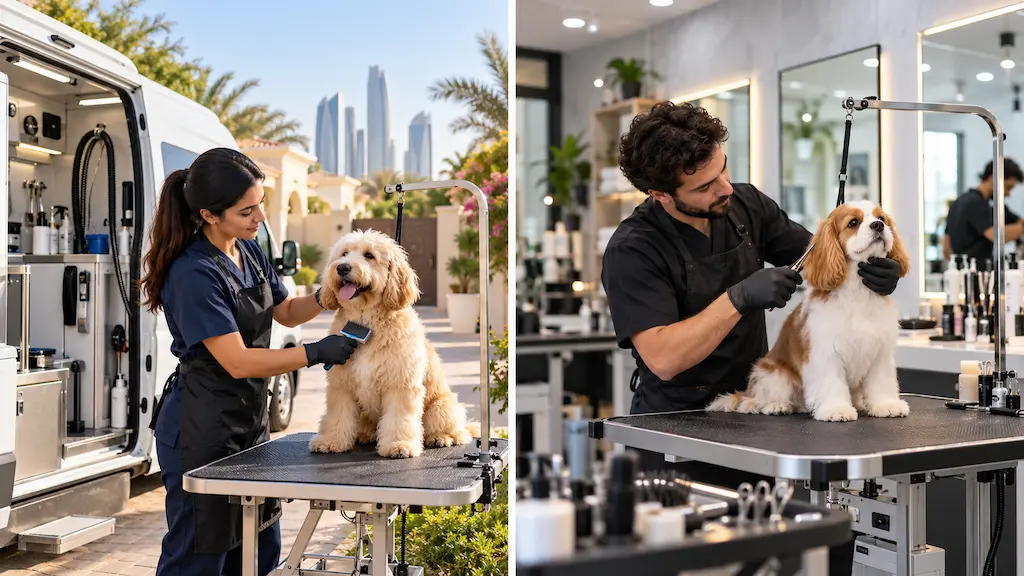
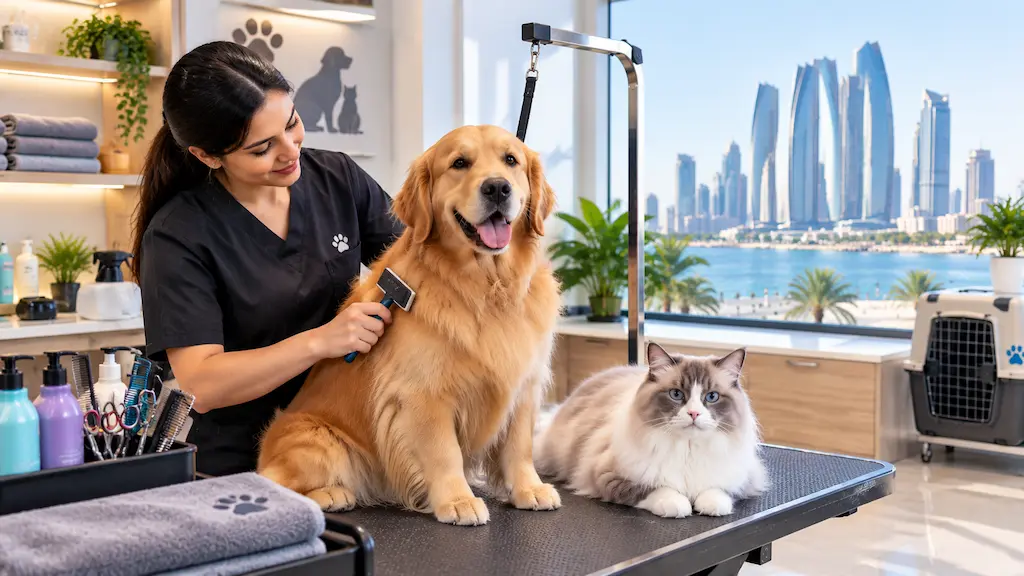
For owners looking for professional pet grooming in Abu Dhabi, understanding what grooming involves can also help you decide which tasks can be safely managed at home and when professional help makes more sense.
What Is Dog Grooming?
Dog grooming refers to the regular hygiene and coat-maintenance activities used to keep a dog clean, comfortable, and manageable.
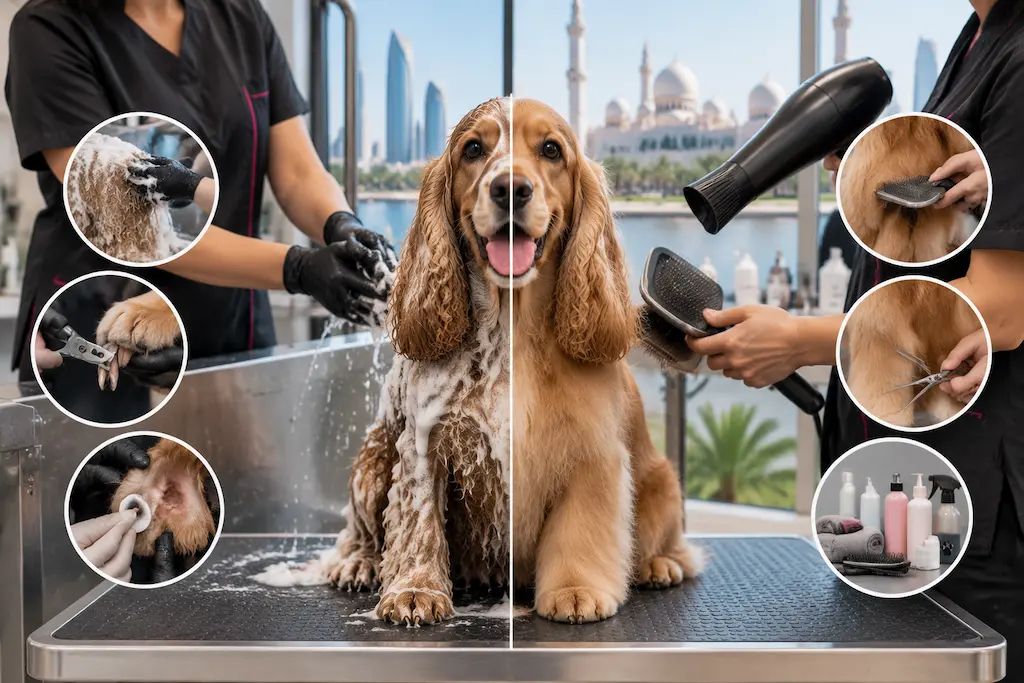
Depending on the breed and individual dog, grooming can include:
- Brushing and de-shedding
- Bathing and drying
- Hair trimming
- De-matting
- Nail trimming
- Paw care
- Ear-area cleaning
- Eye-area cleaning
- Basic oral hygiene
Grooming requirements vary significantly. A short-coated Beagle does not need the same routine as a Poodle, Husky, Golden Retriever, or Shih Tzu. Breed, coat type, lifestyle, age, skin condition, activity level, and climate all affect how often grooming is required.
Why Is Dog Grooming Necessary?
The American Kennel Club notes that routine grooming allows owners to examine a dog’s coat, teeth, eyes, ears, and nails while removing dirt, loose hair, and mats. Grooming frequency should be based primarily on breed, size, and coat type.
Here are some of the most important benefits.
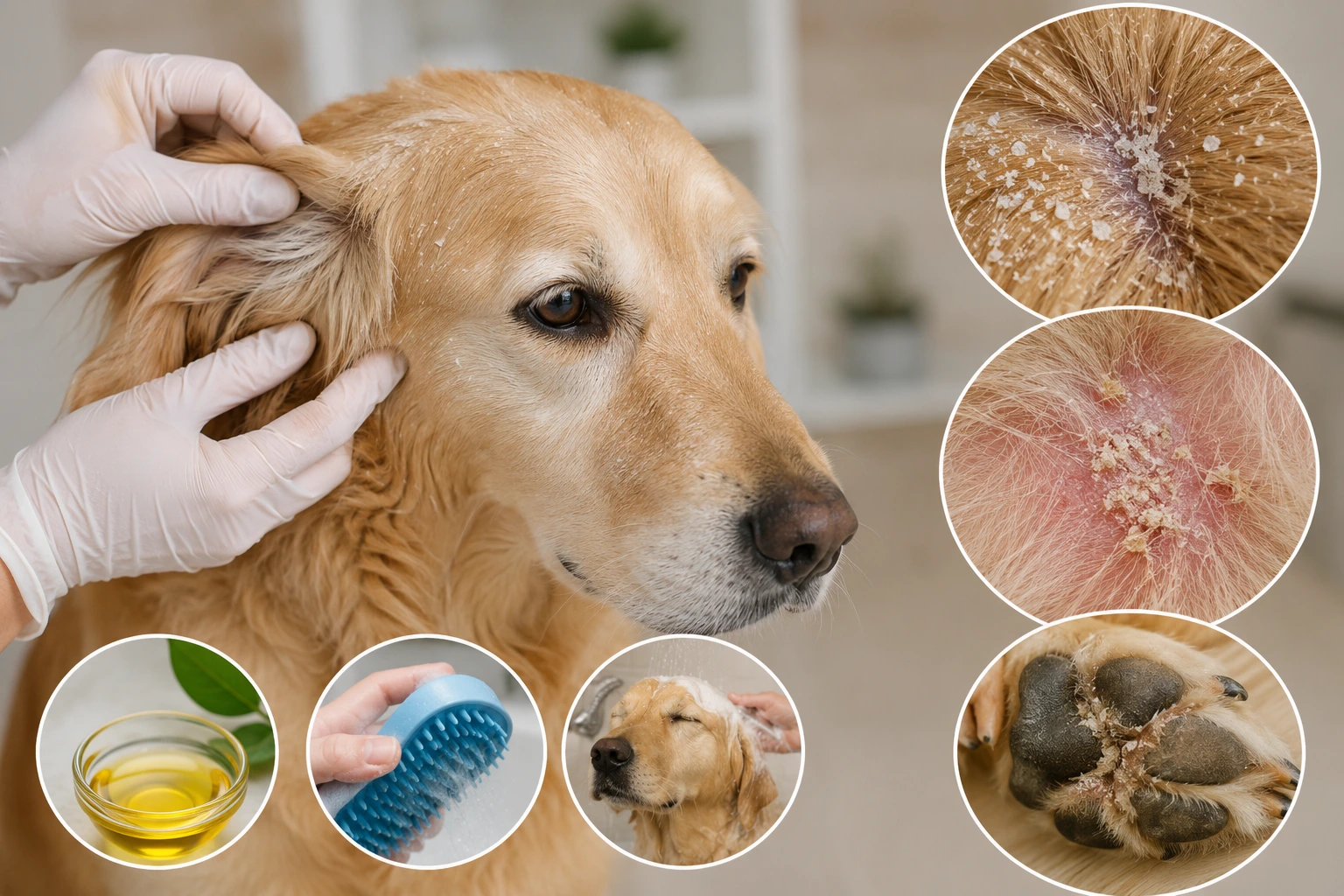
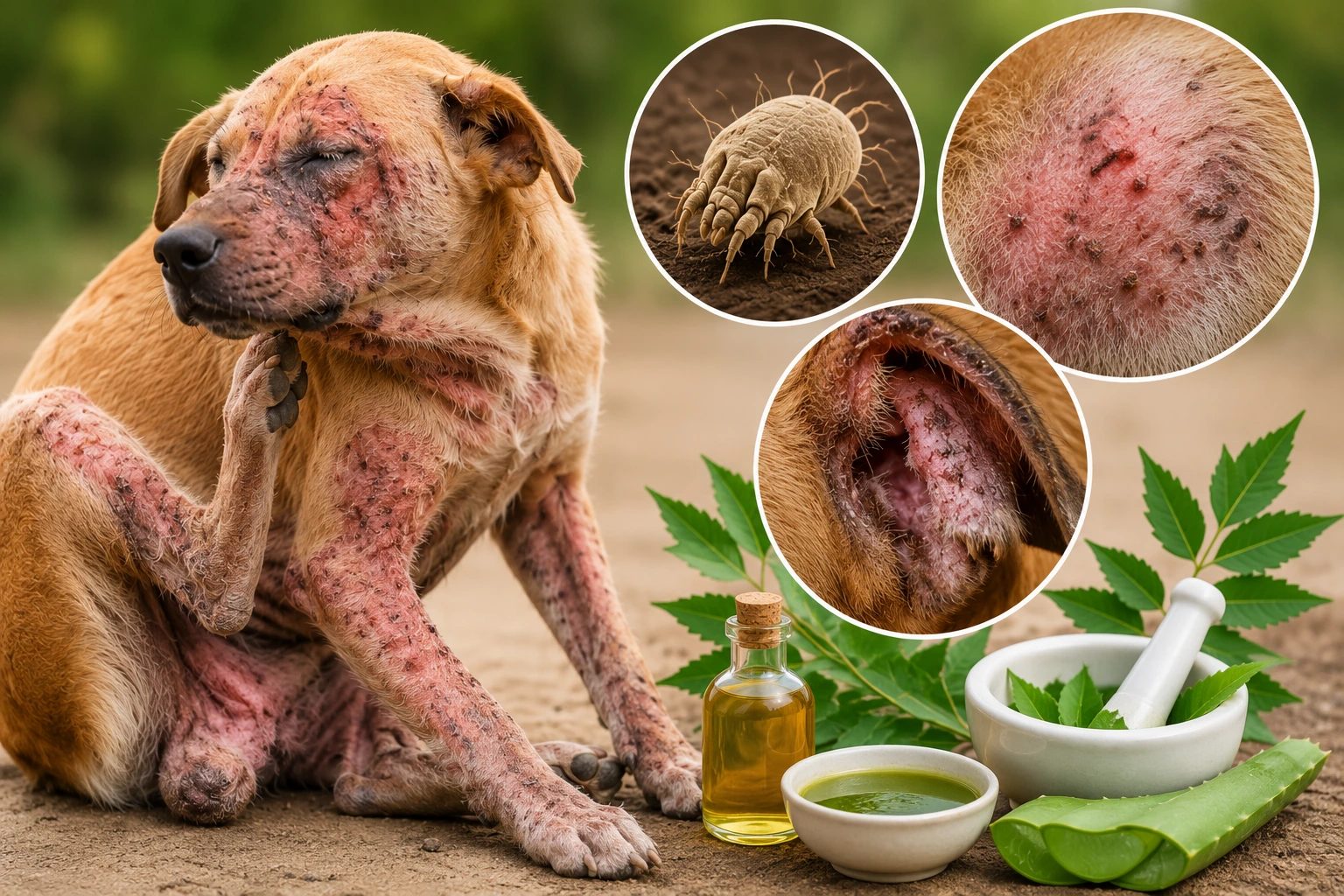
1. Helps You Notice Skin and Coat Changes Early
Regular brushing means you become familiar with what your dog’s skin and coat normally look and feel like.
During grooming, you may notice:
- Redness
- Rashes
- Flaky skin
- Bald patches
- Lumps or bumps
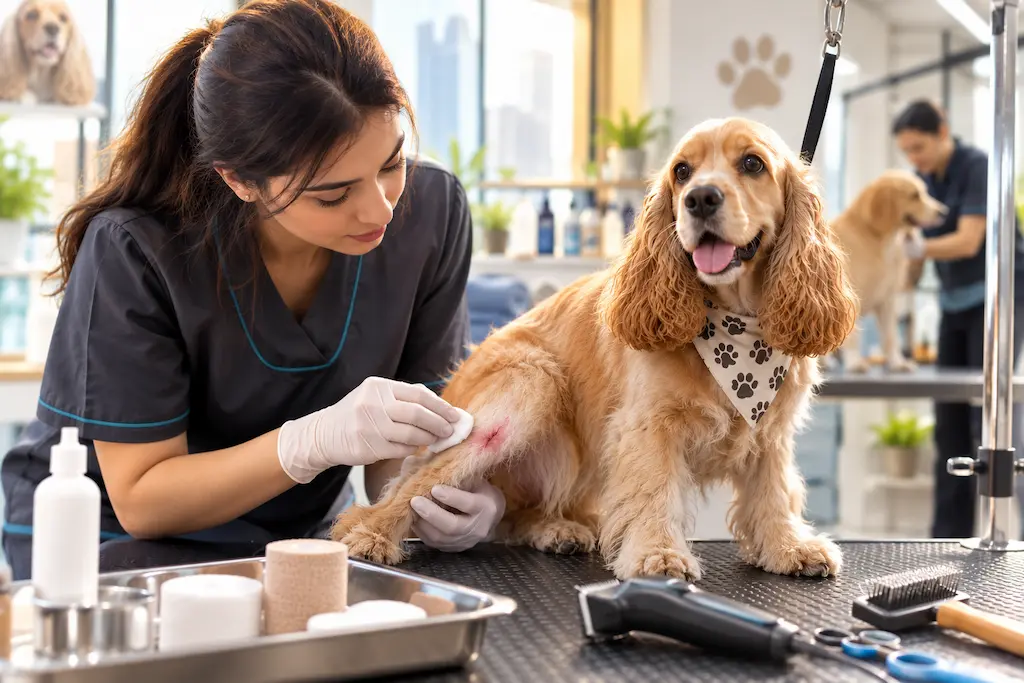
- Cuts
- Unusual odours
- Fleas or ticks
- Areas that are painful to touch
A groomer can also notice visible abnormalities while working through the coat. However, grooming does not diagnose medical conditions. Any persistent lump, wound, severe itching, unusual hair loss, or skin irritation should be examined by a veterinarian.
2. Helps You Spot Fleas and Ticks
Regular brushing and coat inspection can make fleas, ticks, flea dirt, and skin irritation easier to identify. Grooming itself should not be treated as complete parasite prevention. Dogs still need an appropriate flea and tick prevention program based on veterinary recommendations, particularly if they spend considerable time outdoors. Think of grooming as an additional opportunity to spot a problem early, rather than a substitute for parasite treatment.
3. Maintains a Healthier, More Manageable Coat
Brushing removes loose hair, debris, and dead coat while helping prevent tangles from becoming painful mats. It can also distribute natural oils through the coat.
This is particularly important for:
- Long-haired breeds
- Curly coats
- Double-coated dogs
- Heavy shedders
Mats can pull tightly against the skin and trap moisture and debris underneath. Dogs therefore need a grooming routine based on their specific coat. Groom Room’s guide to how often a dog should be groomed by breed and coat type provides a useful starting point.
4. Supports Better Ear Hygiene
Ear care can form part of a dog’s grooming routine, but ears should not simply be cleaned as often as possible. Some dogs naturally require more attention than others, particularly dogs with floppy ears, heavy ear hair, allergies, or a history of ear problems.
During grooming, check for:
- Redness
- Excessive wax
- Swelling
- Strong odours
- Unusual discharge
- Frequent scratching
- Repeated head shaking
These can indicate a problem requiring veterinary assessment.
For more detailed home-care information, read this guide on how often you should clean a dog’s ears.
5. Helps Manage Shedding and Matting
Shedding is normal, although the amount varies significantly between dogs. Regular brushing removes loose hair before it ends up around the home and helps stop loose undercoat from becoming trapped.
This is especially useful for double-coated breeds and during heavier shedding periods. Professional dog grooming in Abu Dhabi can also include de-shedding, bathing, drying, brushing, and coat maintenance for dogs whose coats are difficult to manage at home.
6. Keeps Nails at a Comfortable Length
Nail care is one of the most important parts of grooming. The AKC notes that overly long nails can interfere with a dog’s normal gait and make walking uncomfortable. Long nails can also crack or break.
How frequently nails require trimming depends on:
- How quickly they grow
- Activity level
- Walking surface
- Age
- Nail structure
Dogs regularly walking on harder surfaces may naturally wear their nails more than dogs spending most of their time indoors. If you are unsure when trimming is needed, Groom Room’s guide on how often to trim your dog’s nails explains the main signs to watch for.
7. Gives You an Opportunity to Check the Paws
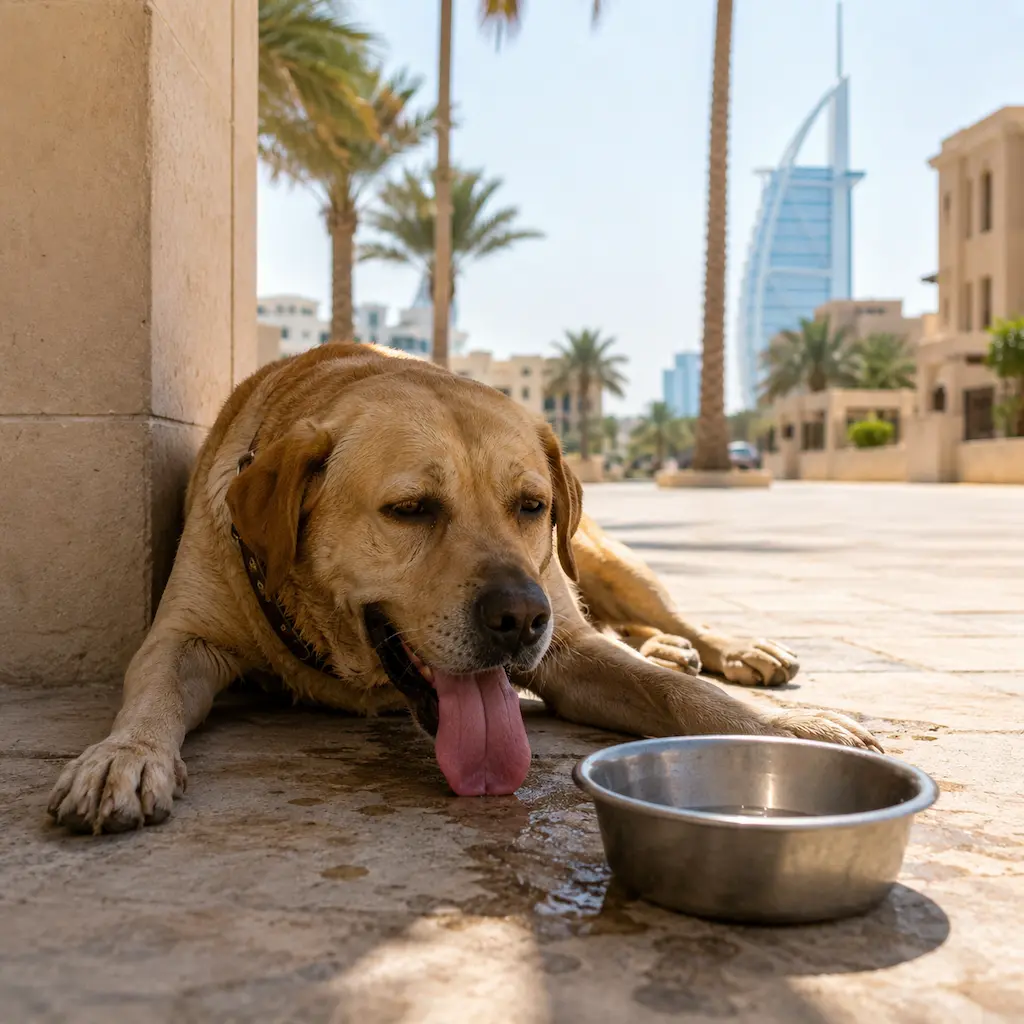
For dogs living in Abu Dhabi, paw checks are particularly useful after outdoor walks. Heat, sand, debris, and rough surfaces can affect paw comfort.
Check regularly for:
- Cracks
- Cuts
- Foreign objects
- Irritation
- Matted hair between pads
- Overgrown nails
During the hotter months, also be cautious about extremely hot outdoor surfaces.
8. Can Make Handling More Familiar
When grooming is introduced gradually and positively, dogs can become more accustomed to having their paws, ears, coat, and body handled.
That can make routine care easier. Keep sessions short at first and reward calm behaviour.
If your dog begins showing signs of significant stress such as growling, biting, hiding, struggling, or repeatedly attempting to escape do not force the session. Professional assistance may be safer.
What About Dental Care?
Dental hygiene is important, but it deserves more attention than an occasional grooming-session tooth brushing.
A large UK VetCompass study involving 22,333 dogs found that 12.52% had a veterinary diagnosis of periodontal disease during a one-year period.
That highlights why oral health should not be overlooked. Use dog-specific toothpaste for home brushing and discuss professional dental examinations and cleaning with your veterinarian. A groomer may provide basic teeth brushing, but grooming does not replace veterinary dental care.
Is It Safe to Groom Your Own Dog?
Yes, many routine tasks can be performed safely at home when owners know the correct technique.
Home grooming commonly includes:
- Brushing
- Basic bathing
- Coat checks
- Paw checks
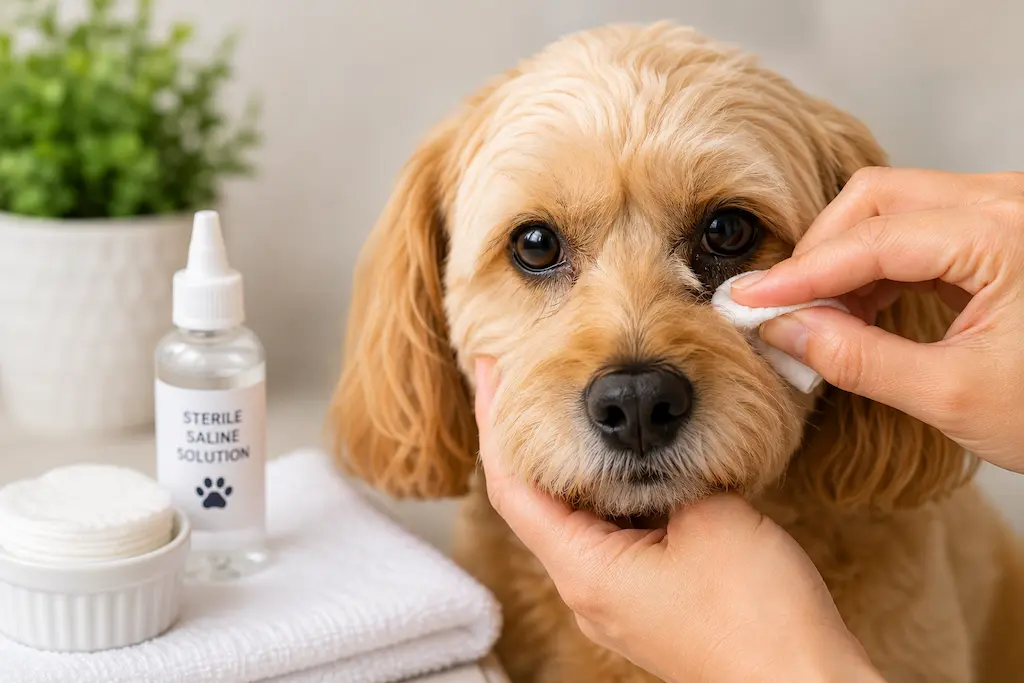
- Gentle eye-area cleaning
More caution is needed with:
- Nail trimming
- Severe matting
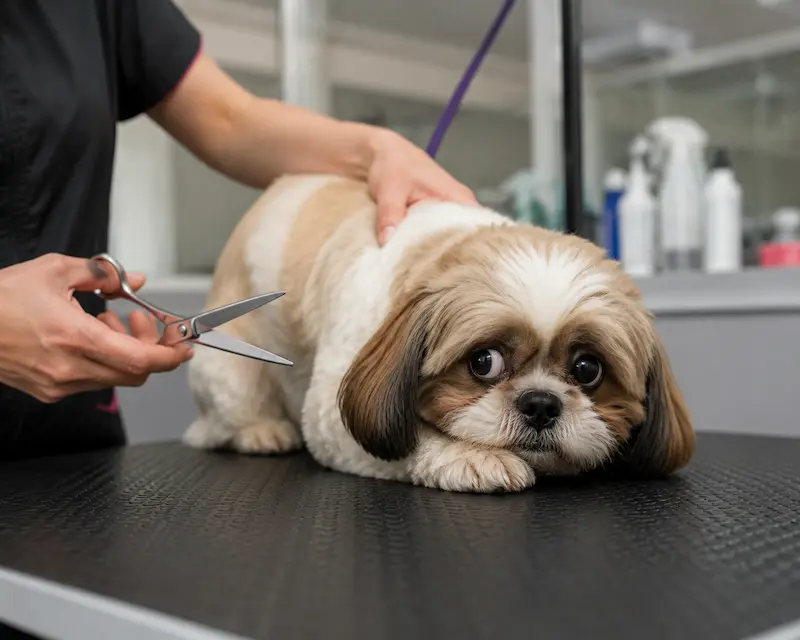
- Clippers and scissors
- Difficult ear cleaning
- Anxious or aggressive dogs
Never attempt complicated grooming simply because you want to avoid a professional appointment. If you are unsure, ask a groomer or veterinarian to demonstrate the correct technique.
What Does a Professional Dog Groomer Do?
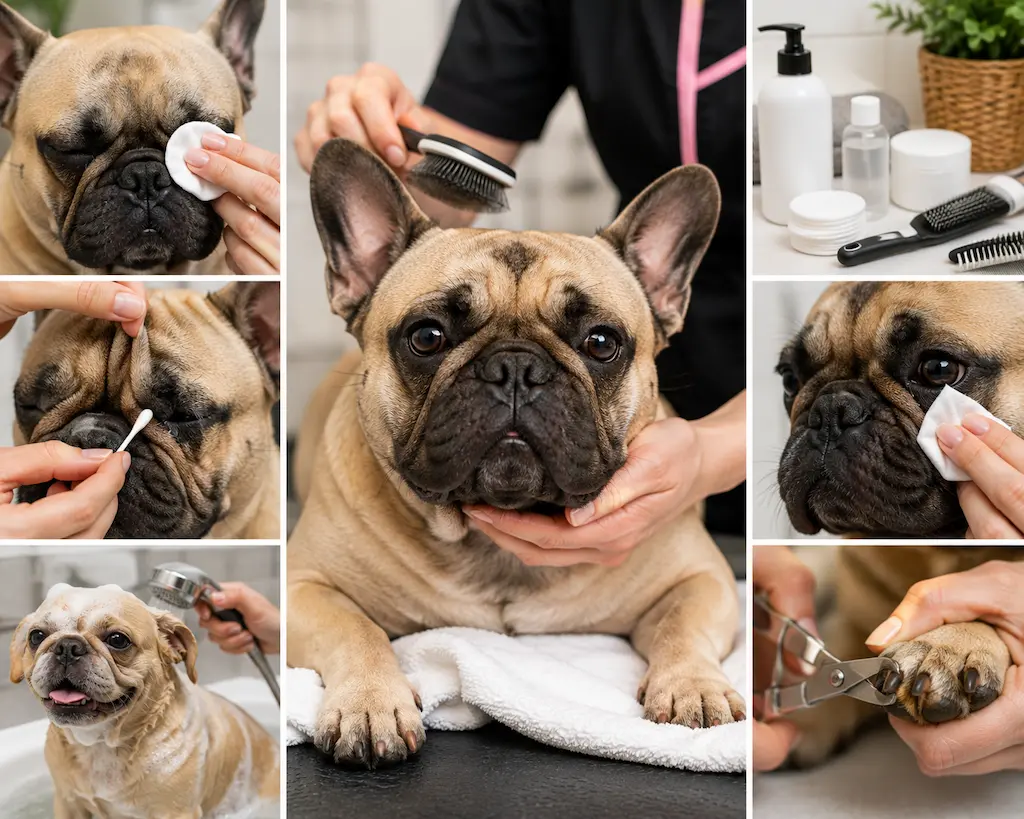
Depending on the service package and your dog’s needs, professional grooming may include:
| Grooming Service | Purpose |
|---|---|
| Bathing | Removes dirt and odour |
| Brushing | Removes loose coat and tangles |
| De-shedding | Manages excess loose undercoat |
| Hair trimming | Maintains suitable coat length |
| Nail trimming | Keeps nails manageable |
| Ear-area cleaning | Removes appropriate surface debris |
| Paw care | Maintains fur and areas around pads |
| Eye-area cleaning | Removes minor external debris |
A professional groomer should also adjust their technique according to breed, coat type, age, temperament, and coat condition.
How Often Does a Dog Need Grooming?
There is no universal grooming schedule. A dog’s routine should depend on:
- Short coat: Generally less intensive coat maintenance.
- Long coat: Frequent brushing may be required.
- Curly coat: Needs consistent brushing and trimming to reduce matting.
- Double coat: Regular brushing and seasonal de-shedding can be particularly important.
Lifestyle matters too. Dogs frequently outdoors in Abu Dhabi may need more coat and paw checks because of dust, sand, and environmental exposure.
Frequently Asked Questions
What is included in dog grooming?
Dog grooming can include bathing, drying, brushing, de-shedding, hair trimming, nail care, ear-area cleaning, eye-area cleaning, and paw maintenance.
Why is regular dog grooming important?
It helps maintain coat and hygiene, manage shedding and matting, keep nails comfortable, and gives owners an opportunity to notice visible changes in the skin, ears, paws, or body.
How often should dogs be professionally groomed?
It depends on breed, coat type, lifestyle, age, shedding, and how much maintenance is performed at home. There is no single schedule suitable for every dog.
Can I groom my dog at home?
Basic brushing and bathing can often be done at home. Nail trimming, severe matting, complicated haircuts, or grooming a highly anxious dog may be safer with professional assistance.
Does grooming prevent fleas and ticks?
Grooming can help you find parasites earlier, but it does not replace veterinarian-recommended flea and tick prevention.
Where can I find professional dog grooming in Abu Dhabi?
Groom Room provides professional dog grooming in Abu Dhabi with services including bathing, brushing, de-shedding, nail trimming, haircuts, ear-area cleaning, and other routine grooming care.