

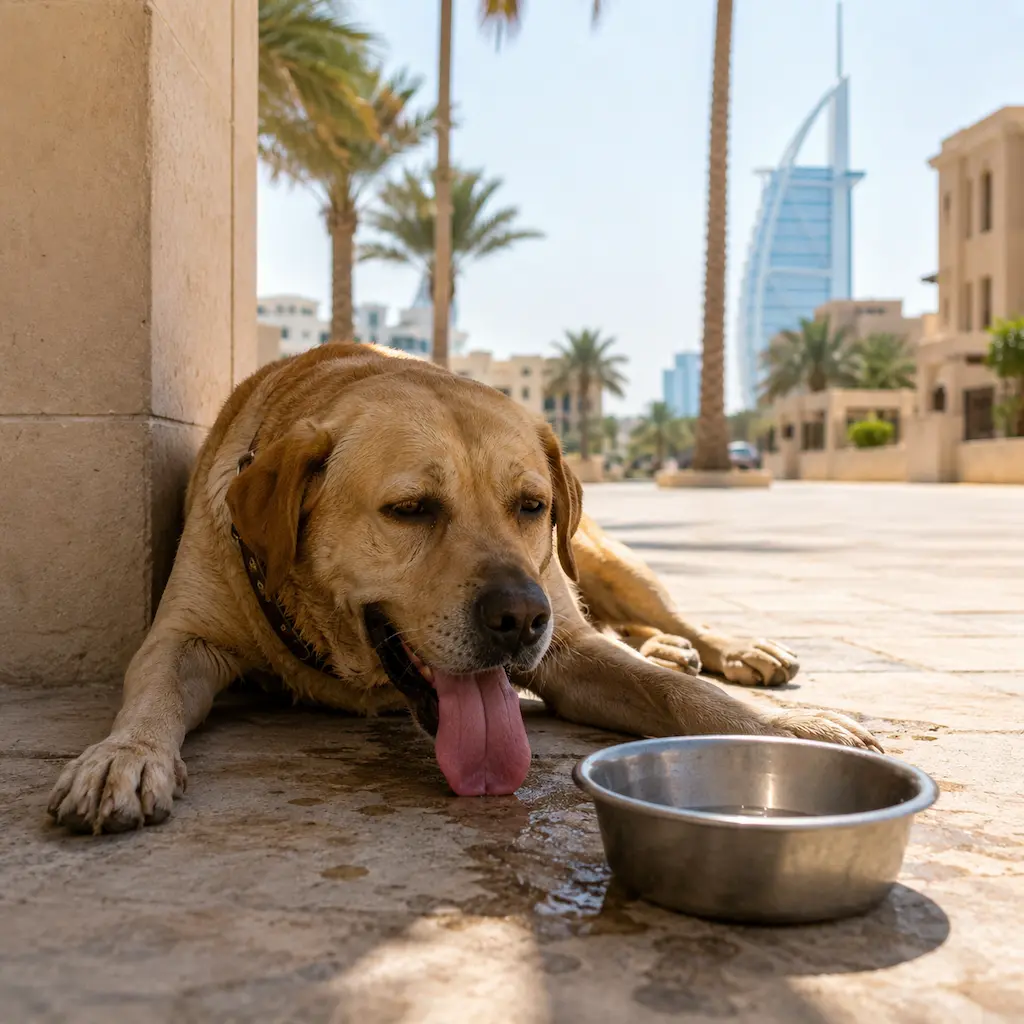




Khalid had done everything right. Carrier ready the night before. Appointment booked three days in advance. Morning walk skipped so Remy his four-year-old Labrador would be calmer for the journey.
What he had not accounted for was the temperature inside his car at 1pm in August.
By the time Khalid reached the clinic on Airport Road, Remy was panting heavily and visibly distressed. The vet confirmed heat stress. The appointment was rescheduled. Remy spent the afternoon recovering on a cool bathroom floor.
This is not an unusual story in Abu Dhabi. Transporting pets here carries risks that most owners genuinely underestimate not from carelessness, but because standard pet transport advice was not written for 45-degree afternoons and stop-start Corniche traffic.
Getting this right requires more than a carrier and good intentions. This guide covers exactly what it takes and where our Pet Taxi in Abu Dhabi fits into the picture.
Why Abu Dhabi Makes Pet Transport Genuinely Risky
Three factors make this city categorically different for pet transport:
Extreme heat:
Between May and September, ambient temperatures sit between 38°C and 45°C. A parked car interior can reach 70°C within minutes. Even with AC running, a stressed animal generating additional body heat in a carrier that has been baking in the sun is a real welfare concern.
Journey duration:
Abu Dhabi traffic is unpredictable. A fifteen-minute drive becomes forty-five without warning. A pet in a carrier cannot shift position, access water, or regulate its environment. Every additional minute matters.
Stress from confinement:
Most Abu Dhabi pets are indoor animals with limited travel exposure. Engine noise, unfamiliar smells, movement, and confinement activate the stress response sharply particularly in cats. An animal arriving at a grooming or vet appointment already stressed is physiologically compromised before anything has even begun.
The Non-Negotiables of Safe Pet Transport
These apply regardless of how your pet gets there:
Properly secured carrier:
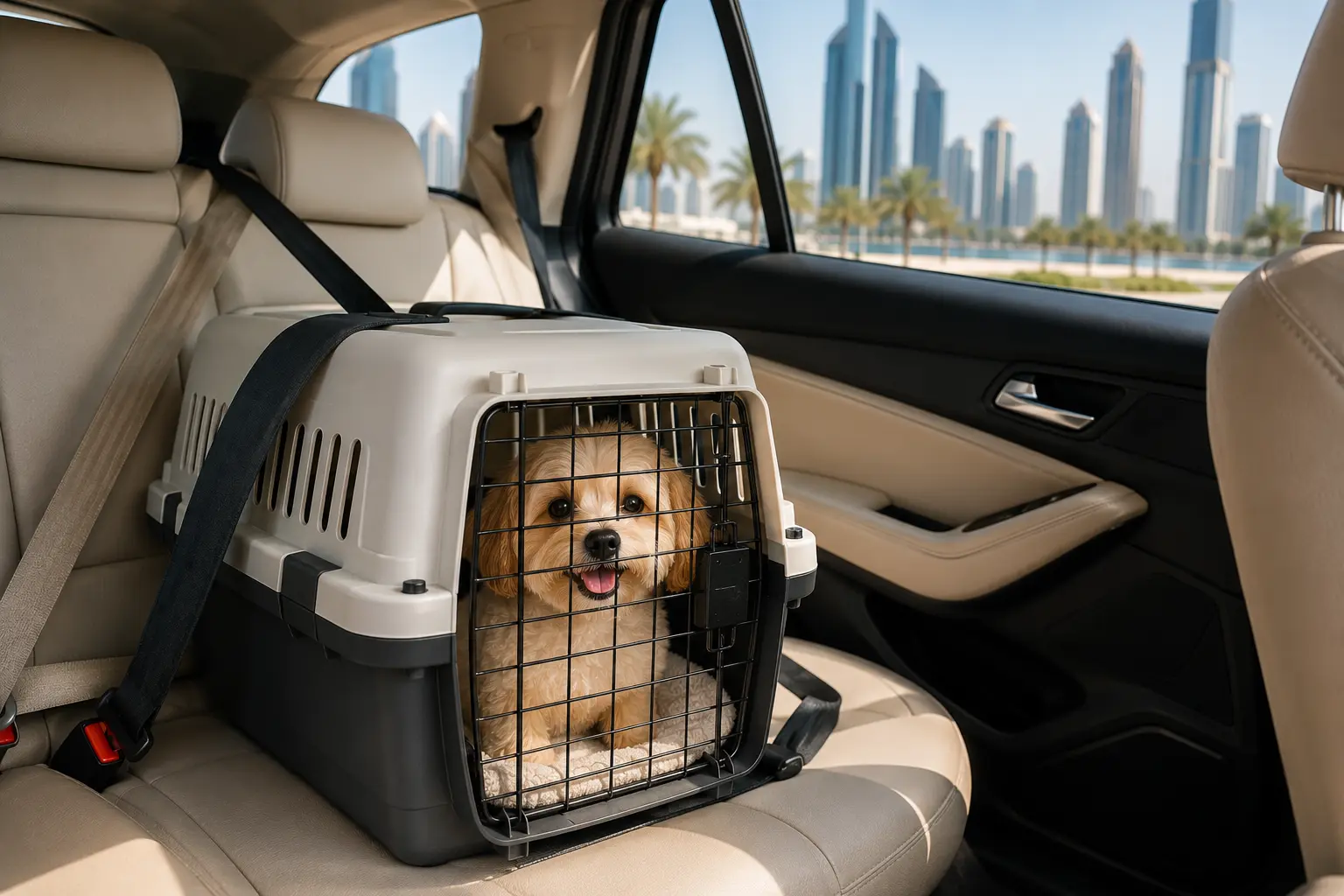
Large enough to stand, turn, and lie down but secured so it does not slide during braking. An unsecured carrier in Abu Dhabi’s stop-start traffic is a safety risk for both the animal and the driver.
Pre-cooled vehicle:
Run the AC for at least five minutes before loading. The seat surface and carrier floor need time to cool air temperature drops faster than contact surfaces. A carrier placed into a sun-baked car remains hot at surface level for several minutes after the AC kicks in.
Timed journeys:
Before 9am and after 7pm are the safest windows from April through October. Midday transport in summer should be avoided for elderly animals, young puppies and kittens, and flat-faced breeds.
Water access:
For journeys over fifteen minutes, a spill-proof travel water bowl inside the carrier is a basic welfare requirement in this climate not an optional extra.
No free-roaming:
An unrestrained pet in a moving vehicle is a distraction risk for the driver and a projectile in an emergency stop. Carrier transport is non-negotiable.
The Cat Problem; Why Transport Affects Grooming Quality
Dogs adapt to car travel more readily than cats. Many dogs, with exposure, learn to associate the car with good things.
Cats do not generalise this way. For most cats, a carrier appearing in the home is the first signal that something threatening is about to happen. By the time the journey starts, the cortisol response is already fully activated. The cat arrives at its destination at maximum stress and everything that follows happens against that baseline.
For pet grooming in Abu Dhabi, this matters directly. A cat that arrives in acute stress is harder to handle safely, more likely to show defensive behaviour, and less likely to tolerate the procedures it needs even with the most experienced groomer. The outcome of the session is fundamentally shaped by how the cat got there.
For cats specifically, minimising transport stress is not about convenience. It is about the quality of care they actually receive.
Why a Pet Taxi Is a Different Category of Solution
Most owners consider asking a friend or flagging a standard taxi. Neither is adequate.
A friend’s car is still a car same heat exposure, same confinement stress, no expertise in managing an anxious animal in transit. A standard taxi driver has no obligation to accept animals and no training in recognising stress signals during a journey.
A professional Pet Taxi in Abu Dhabi is categorically different:
Temperature-controlled throughout:
Not a car with the AC on a vehicle maintained at appropriate temperature from the point of loading, with controlled ventilation and surface temperature.
Experienced handlers monitoring the animal:
The journey is actively managed. Stress signals are recognised and responded to in transit — not discovered on arrival.
Correct equipment already in place:
Secured carrier positions, water access, non-slip surfaces, and handling protocols specific to animal transport.
Journey planning built around Abu Dhabi’s conditions:
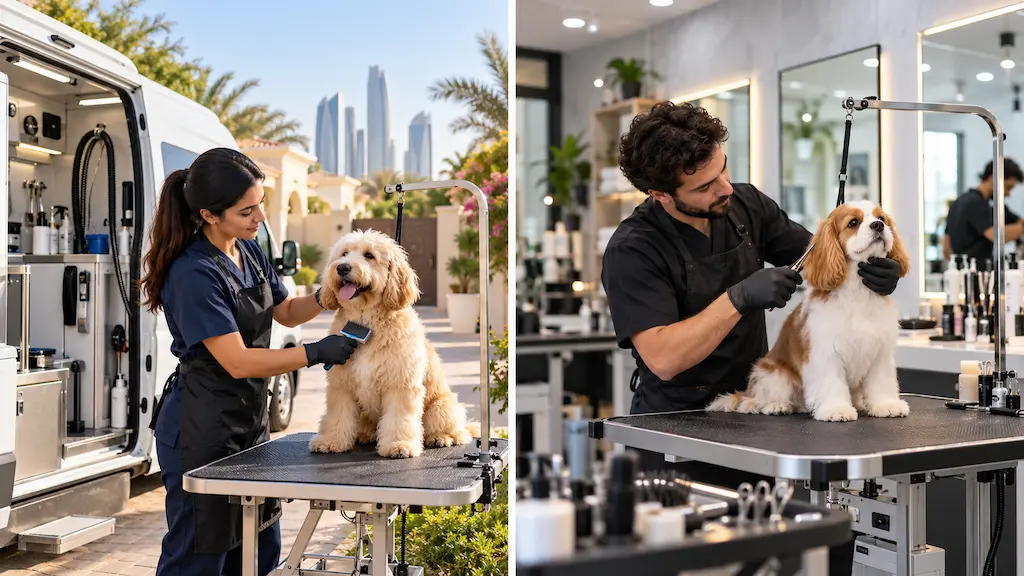
The right routes, the right times, the right precautions for the breed and the season. Khalid’s midday Airport Road run in August is not a route a professional pet transport service would take for a Labrador in summer without specific protocols in place.
When Professional Transport Is the Clinical Decision
There are situations where a pet taxi is not a lifestyle upgrade. It is the correct choice.
Post-operative transport: A recovering animal on sedation, experiencing pain, and unable to self-regulate should not be transported by a single owner who is simultaneously driving and monitoring in Abu Dhabi traffic.
Brachycephalic breeds in summer: French Bulldogs, Pugs, Persian cats, and Himalayans have compromised airways that make heat regulation physically difficult. Standard car transport during peak summer hours is a genuine risk for these breeds.
Elderly or mobility-impaired animals: Loading an arthritic large-breed dog into and out of an SUV risks injury to both the animal and the owner. Professional transport with appropriate handling removes that risk.
Highly anxious animals: For some animals, the transport itself is the primary welfare concern — not the destination. Reducing that stress directly improves the quality of whatever appointment follows.
Multi-pet households: Managing two or three animals in a personal vehicle simultaneously is operationally complex and difficult to do safely alone.
Before Every Journey; A Practical Checklist
- Pre-cool the vehicle for at least five minutes before loading
- Check carrier latches and ventilation before every trip
- Place a worn item of clothing inside the carrier for scent familiarity
- Light meal two to three hours before not immediately before travel
- Spill-proof water bowl for journeys over fifteen minutes
- Travel before 9am or after 7pm during summer months
- Inform your destination of anxiety, health conditions, or behavioural notes in advance
- Never open the carrier in a moving vehicle
Frequently Asked Questions
Is standard car transport safe for pets in Abu Dhabi?
With proper preparation pre-cooled vehicle, secured carrier, correct timing yes. In summer, the margin for error is significantly smaller, particularly for brachycephalic breeds and elderly animals.
What temperature should my car be before loading my pet?
Interior air below 24°C and contact surfaces cool to the touch. Surfaces take longer to cool than air, especially after the car has been parked in direct sun.
Can I use a standard taxi for pet transport in Abu Dhabi?
Standard taxis are not obligated to accept animals and carry no appropriate equipment. Most drivers will decline. Those who accept are not trained handlers.
How do I reduce my cat’s stress before a car journey?
Leave the carrier out for at least a week before travel. Place a worn item of clothing inside. Apply a pheromone spray such as Feliway to the carrier lining thirty minutes before the journey. Avoid feeding immediately beforehand.
Which breeds need the most careful management in Abu Dhabi’s summer?
Brachycephalic breeds, French Bulldogs, Pugs, English Bulldogs, Persian cats, Himalayans, and Shih Tzus are at highest risk due to compromised airways and reduced ability to thermoregulate. Always travel during the coolest part of the day.