

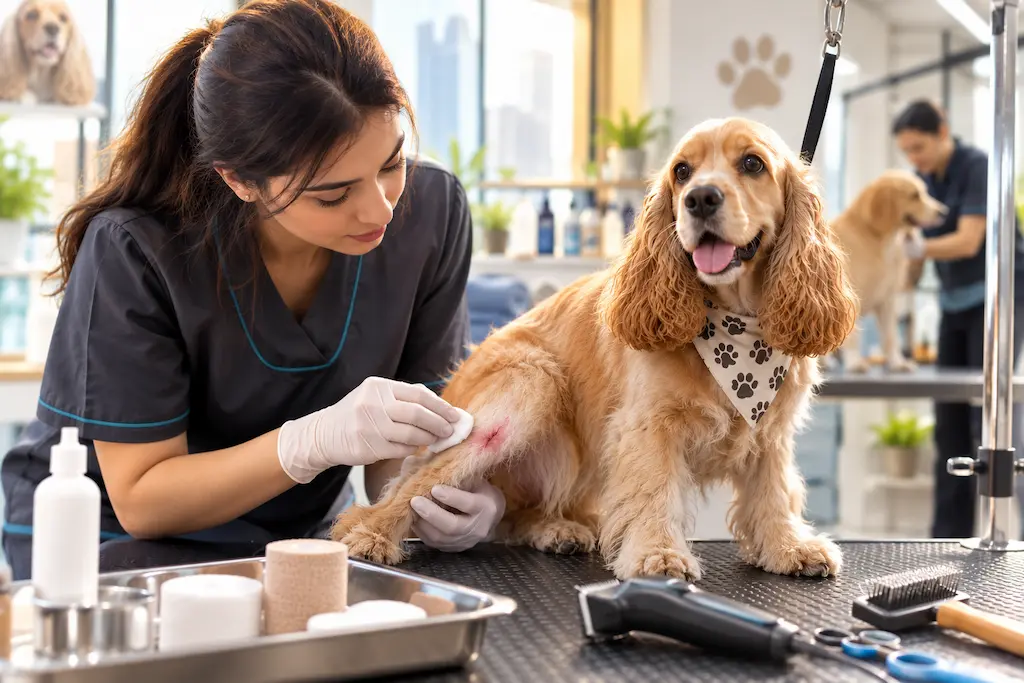
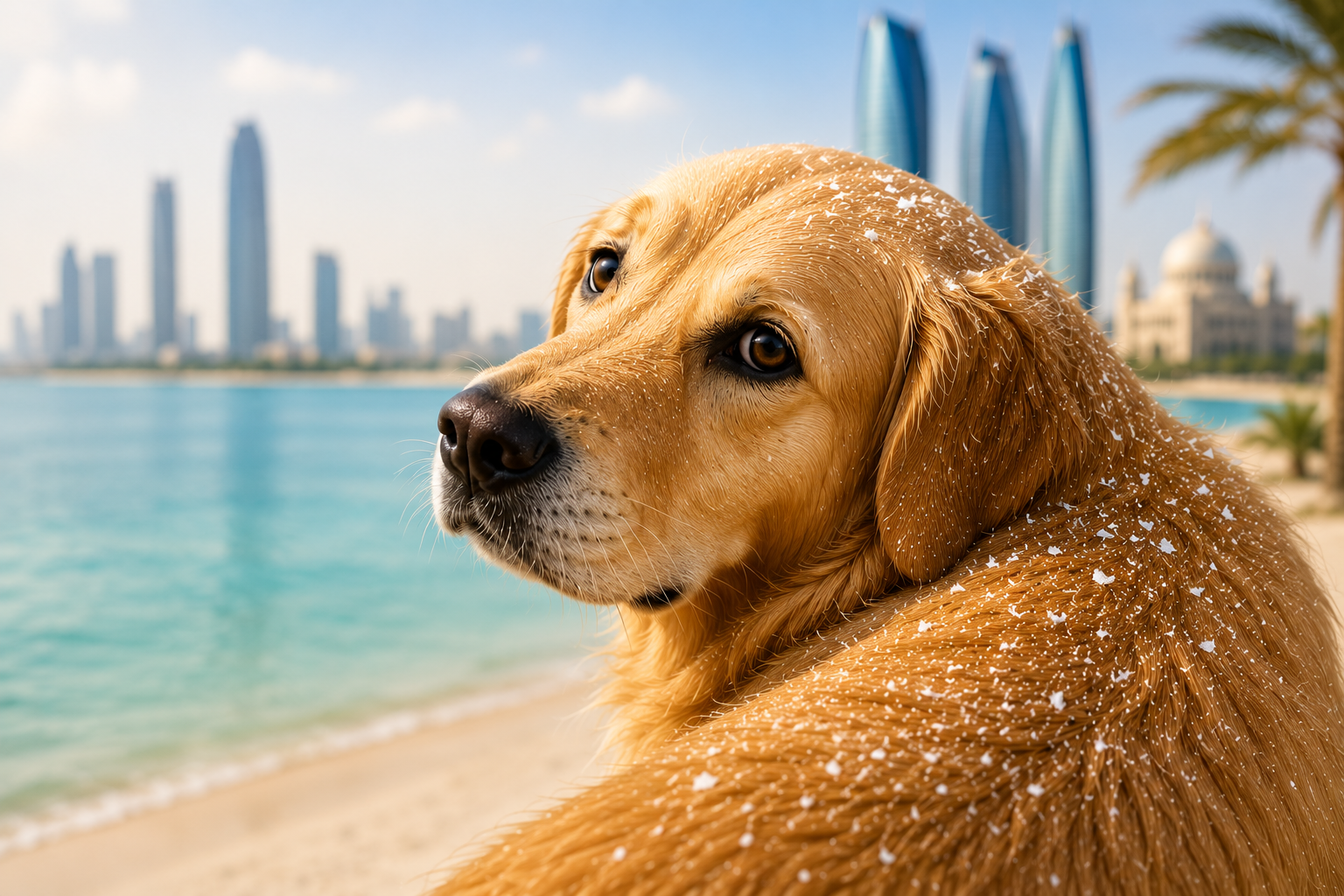
I’ve been providing pet grooming in Abu Dhabi for over ten years, and every summer, without fail, I have a moment with a dog on my grooming table where something just feels off. Nothing dramatic, no collapsing or obvious distress, just subtle signs. Gums may look a little drier than usual, or the dog may have less energy and struggle to hold their head up normally.
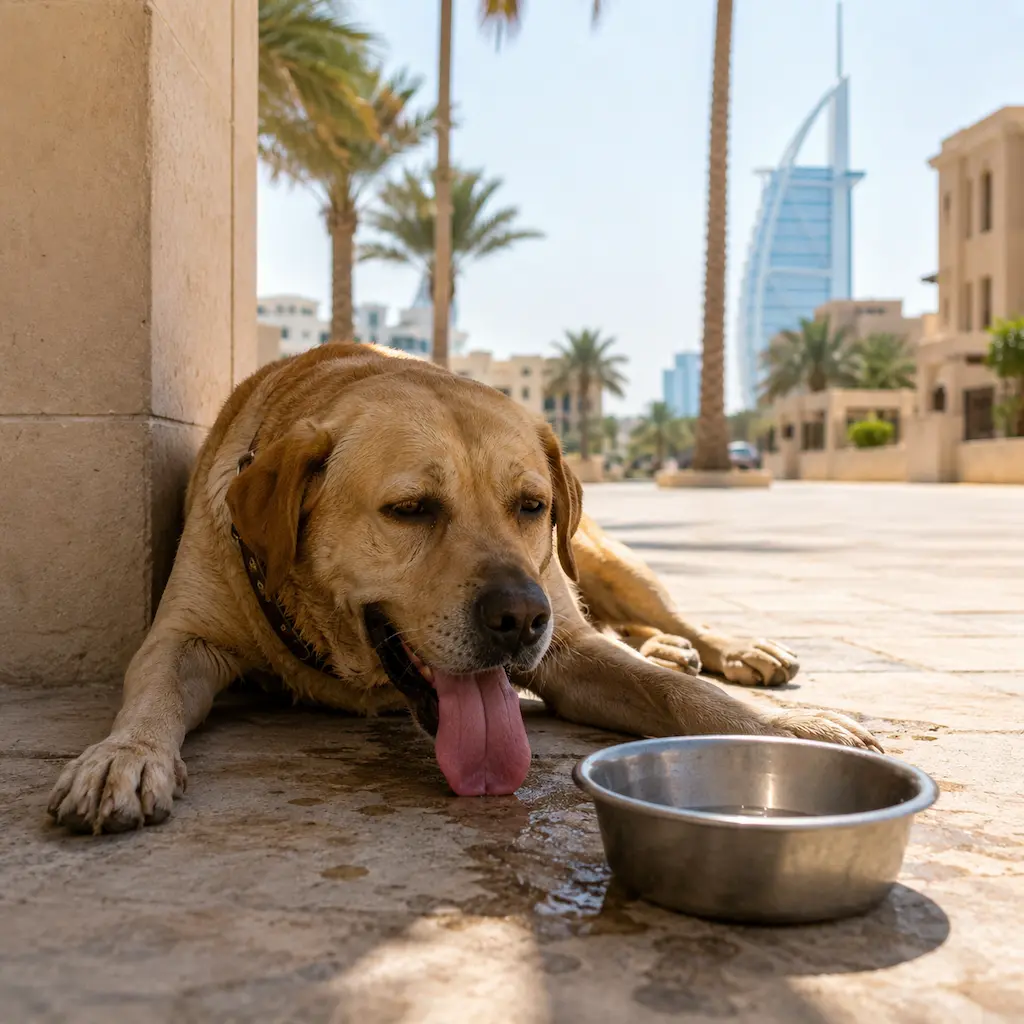
Last July, one of my regular clients brought in a Labrador after a midday walk. He was unusually quiet, his gums felt slightly tacky, and when I gently performed a skin pinch test around his shoulders, the skin returned to place more slowly than it should have. It was mild dehydration, caught early. We gave him water, kept him in a cool shaded area, and let him rest before even considering starting the grooming session.
That’s the thing about dehydration in dogs: it rarely looks like an emergency at first, until suddenly it can become one. In Abu Dhabi’s intense summer heat, where hot pavement, direct sun, and parked cars can become dangerous within minutes, recognizing the early signs of dehydration is especially important for pet owners.
Why Dogs Dehydrate Faster in UAE Heat
Dogs cool themselves mainly through panting, not sweating like we do. In UAE summer heat, that system works overtime, and every pant is fluid leaving their body. Add in hot pavement burning paw pads, limited shade on midday walks, and thick or double coats that trap heat, and you’ve got conditions where a dog can go from fine to concerning faster than most owners expect. It’s the same seasonal risk window that makes tick fever more common too, warm weather raises more than one kind of risk at once, so it’s worth staying alert on multiple fronts during the hotter months.
The Checks I Actually Do, in Order
These are the same quick checks I run through on every dog that comes in looking a little tired during summer, and you can do all three in under a minute at home.
- Check the gums: Lift the lip and touch a finger to the gum above a canine tooth. Healthy gums feel wet and slick, like the inside of your own cheek. If your finger drags, or the gums feel tacky or dry, that’s an early sign.
- Do the skin tent test: Gently pinch and lift the loose skin between the shoulder blades, then let go. In a well-hydrated dog, it snaps back almost instantly. If it settles slowly, or stays tented, that points to dehydration.
- Look at the eyes and energy: Sunken-looking eyes and a dog that seems quieter, less engaged, or reluctant to move are both worth taking seriously, even without an obvious trigger like a long walk.
A note on the skin tent test: it’s not perfect. Senior dogs and very thin dogs naturally have looser skin, so it can look “tented” even when hydration is fine. Puppies and overweight dogs have the opposite problem, their skin can snap back quickly even with real dehydration underneath. I always pair it with the gum check and how the dog is actually behaving, not just one test on its own.
How Serious Is It? A Quick Reference
| Level | What You’ll See | What To Do |
|---|---|---|
| Mild | Slightly tacky gums, minor delay in skin tent, dog is alert and willing to drink | Move to shade or AC, offer small amounts of water frequently, rest before any activity |
| Moderate | Clear skin tent, dry gums, sunken eyes, visibly lethargic | Same-day vet visit, don’t wait to see if it resolves on its own |
| Severe | Collapse, extreme weakness, very dry or pale/grey gums, markedly delayed skin return | Emergency vet care immediately, this can progress to organ damage or shock |
When It’s Not Just Dehydration, It’s Heatstroke
This is the part I take most seriously as a groomer, because I see dogs come straight in from outdoors and I’m often the first person to notice something’s wrong. Heatstroke is dehydration’s more dangerous relative, and in UAE summers, it’s a real risk on any midday walk without enough shade or water breaks.
Watch for heavy panting that doesn’t ease up, drooling, confusion, vomiting, or collapse. A veterinary study on classic heatstroke found mortality rates up to 50% when treatment isn’t started promptly, but also found that early cooling and fluid therapy significantly improve the outcome. That’s the reason I never wait and hope with a dog showing these signs, I get them into a cool space immediately and call ahead to a vet.
If you see any of these, this is not a “wait and see” situation:
- Heavy, uncontrolled panting
- Vomiting or collapse
- Confusion or unsteady movement
- Gums that are bright red, pale, or greyish
What I Do Differently for Dogs During Summer Grooming Sessions
A few things I’ve built into how I work with dogs during the hotter months, based on years of exactly this kind of moment:
- I check gums and general alertness on every dog before starting a session, not just the ones that seem obviously tired.
- Water is available and offered before, not just after, grooming.
- Sessions get paced slower for dogs that arrive from being outdoors, giving them time to cool down first.
- Any dog showing more than mild signs gets a pause, not a haircut. Grooming can always wait fifteen minutes; a dehydrated dog on a table doesn’t need the extra stress.
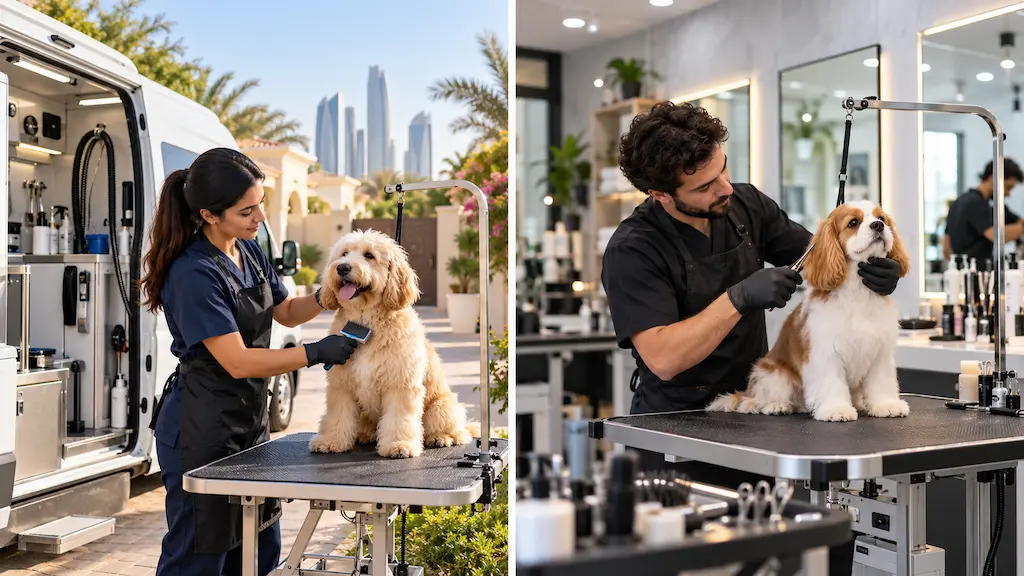
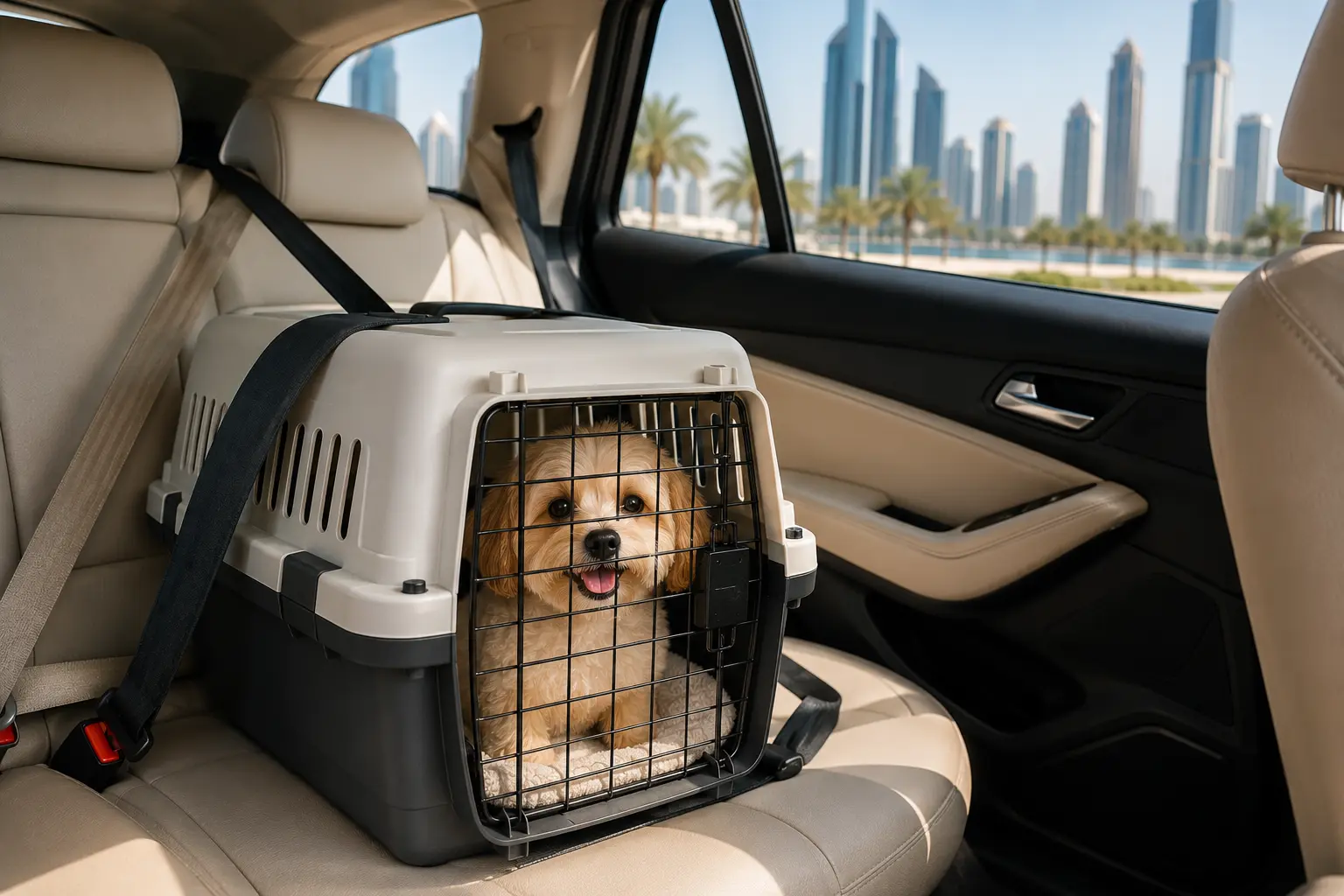
If getting your dog into a car and across town during peak heat is itself part of the problem, our mobile grooming service in Abu Dhabi brings the session to your home instead, no midday drive, no waiting in a hot car, and your dog stays in a familiar, cooler environment the whole time. This applies whether you’re in Abu Dhabi or working with our dog grooming team in Al Ain, the heat risk doesn’t change much across the emirates.
Simple Prevention for UAE Summers
- Walk dogs early morning or after sunset, avoiding midday pavement heat entirely
- Always carry water on walks, even short ones
- Never leave a dog in a parked car, even for a few minutes
- Provide constant access to fresh water at home, and consider a second bowl if you have multiple pets
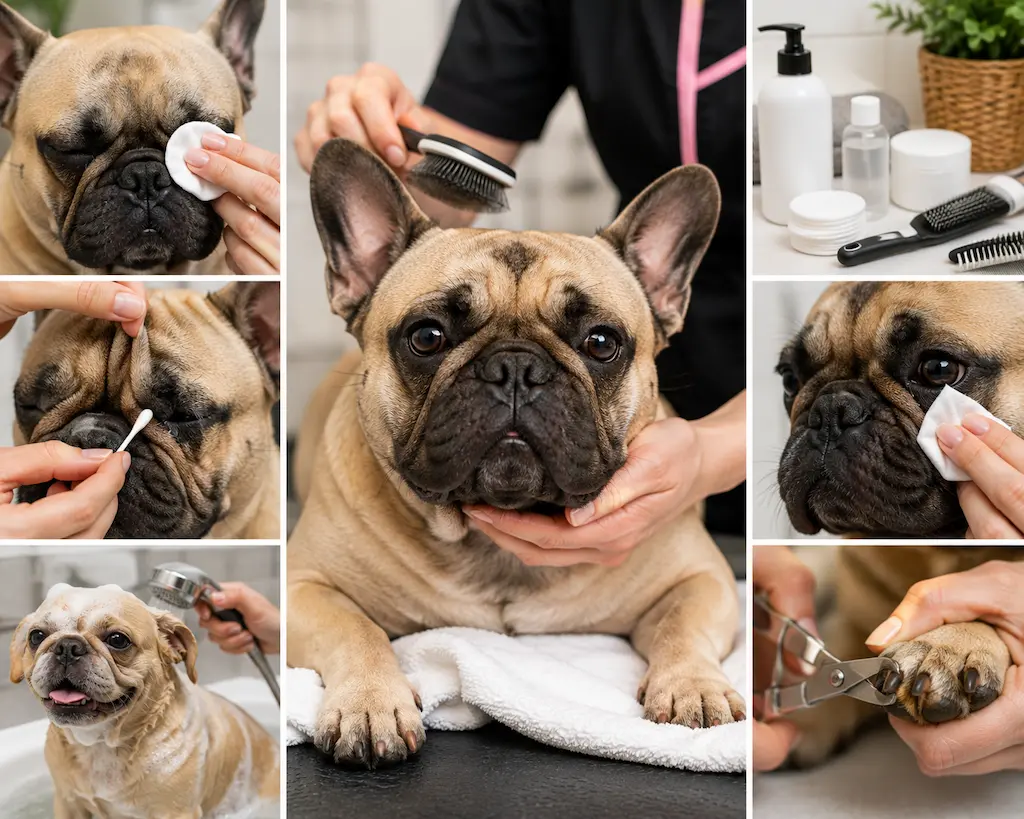
- Watch double-coated and brachycephalic breeds especially closely, they struggle more with heat regulation
Frequently Asked Questions
What are the first signs of dehydration in dogs?
The earliest signs are usually subtle: gums that feel slightly tacky instead of wet, a small delay when you do the skin tent test, and a dog that seems a notch quieter or less engaged than usual. None of these look dramatic on their own, which is exactly why they’re easy to miss.
How can I tell if my dog is dehydrated at home?
Two quick checks: lift the lip and touch the gums (should feel wet, not tacky or dry), and gently pinch the skin between the shoulder blades (it should snap back almost instantly). If either looks off, or your dog seems unusually lethargic, treat it as a real sign, not a maybe.
How much water does a dog need in UAE heat?
There’s no single number that fits every dog, it depends on size, coat, and activity level, but the practical rule is constant access to fresh water at home and carrying water on every walk, even short ones, during summer months.
Can dehydration in dogs be dangerous? Yes. Mild dehydration usually resolves with water and rest, but moderate to severe dehydration can progress to organ damage or shock if left untreated, and it’s often linked to the early stages of heatstroke, which can be fatal without prompt treatment.
What’s the difference between dehydration and heatstroke in dogs?
Dehydration is fluid loss, dry gums, slow skin tent, mild lethargy. Heatstroke is a more severe, dangerous escalation: heavy uncontrolled panting, vomiting, collapse, or confusion. Dehydration can lead to heatstroke, but heatstroke needs emergency care immediately, not a wait-and-see approach.
Which dog breeds are most at risk in UAE heat?
Double-coated breeds and brachycephalic (flat-faced) breeds like pugs and bulldogs struggle most with heat regulation, since panting is less efficient for them. Puppies and senior dogs are also more vulnerable and dehydrate faster than healthy adult dogs.
Conclusion
Dehydration in dogs rarely announces itself loudly. It shows up as gums that feel a little dry, skin that settles a beat too slow, energy that’s just a notch lower than usual, exactly the kind of thing that’s easy to miss unless you’re actually checking for it. In UAE heat, that gap between “a little off” and “a real emergency” can close fast, so catching it early isn’t overcautious, it’s just good sense. If you’re ever unsure, a same-day call to your vet costs you nothing and can genuinely change the outcome.
Regular grooming is also a good early-warning system, since it means someone experienced is putting hands on your dog and checking their coat, skin, and general condition on a routine basis, not just during emergencies. If your dog’s due for a summer check-in, book a session through our dog grooming in Abu Dhabi service, or contact us if you’d rather we come to you. And if you’ve got cats at home too, the same heat awareness applies to them, our cat grooming services include the same kind of coat and condition check during every visit.