
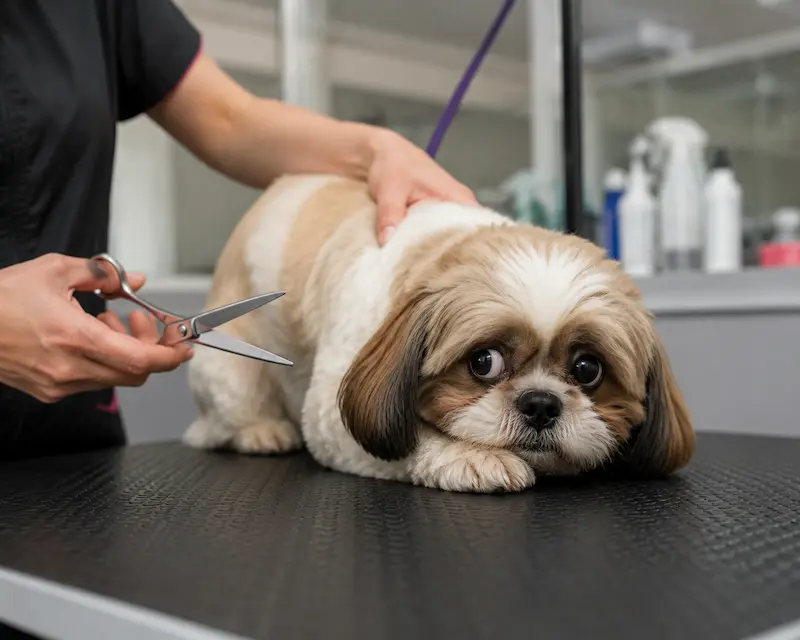

The first time Luna came through the door of a pet grooming salon in Abu Dhabi, she made it exactly three steps inside. Then she planted all four paws, dropped her weight, and refused to move. Her owner apologized and called her stubborn. She wasn’t stubborn. She was terrified, and everything about her body was saying so from her tucked tail to the sweaty paw prints she left on the tiles.
If your dog trembles in the car, hides when the brush comes out, or turns into a wriggling, growling stranger the moment the clippers switch on, you are not dealing with bad behavior. You are dealing with fear. And fear responds to a plan. With the right approach to pet grooming in Abu Dhabi, patience, and a groomer who understands anxious pets, your dog can slowly learn that grooming doesn’t have to be a scary experience.
Fear Isn’t Disobedience; It Just Looks Like It
Veterinary behaviour research has consistently found that handling-related fear in dogs is far more common than owners realise. A well-known study published in The Veterinary Journal observed that roughly four out of five dogs displayed clear fearful behaviour on the examination table, even when nothing painful was happening. Grooming triggers the same nervous system: restraint, an unfamiliar surface, a stranger touching sensitive areas.
The problem is that fear in dogs rarely announces itself. Owners tend to notice the growl and miss the twenty signals that came before it.
| Early signals (easy to miss) | Escalated signals (impossible to miss) |
|---|---|
| Lip licking, yawning when not tired | Trembling, panting with no heat source |
| Turning the head away, “whale eye” | Trying to jump off the table |
| Sudden slow movement or freezing | Growling, snapping, mouthing |
| Refusing high-value treats | Urinating or emptying anal glands |
| Excessive shedding on the table | Total shutdown — going limp and still |
Groomer’s note: A dog that refuses chicken or cheese during a session isn’t full. Appetite is one of the first things fear switches off. When treats stop working, stop the session.
Top Reasons Your Dog Is Scared of Grooming
1. A bad first experience stuck
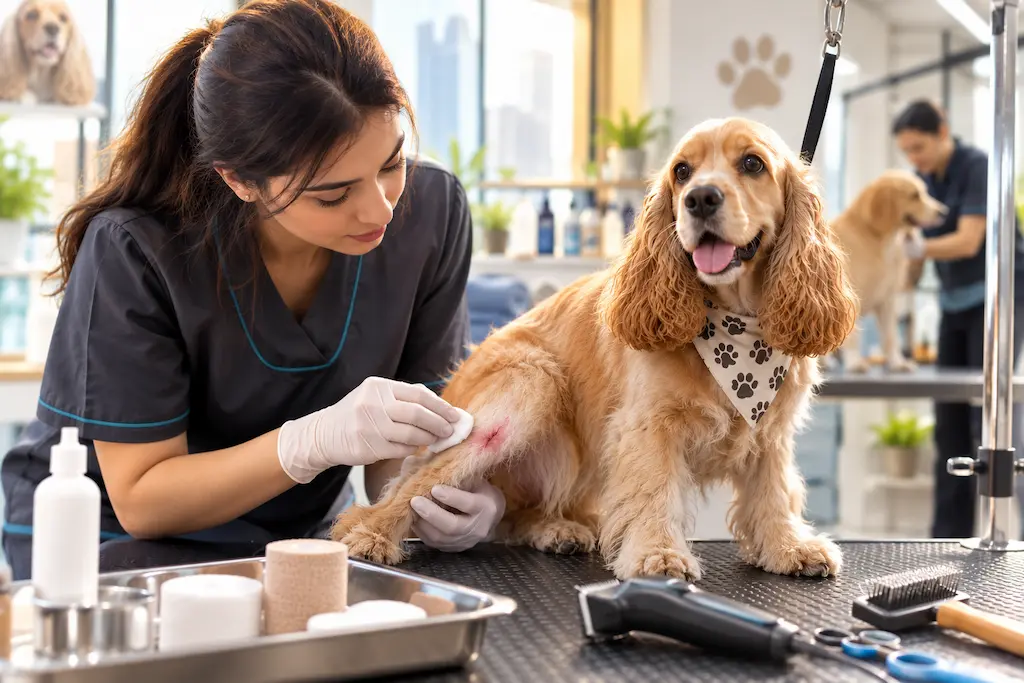
Dogs generalise fear quickly. One rushed session, one nicked nail, or one clipper burn can attach itself permanently to the smell of shampoo or the sound of a dryer. This is why understanding common pet grooming injuries and how to treat them matters, an injury your dog barely reacted to at the time can shape their behaviour for years.
2. The dryer is genuinely loud to them
Dogs hear frequencies up to roughly 45,000 Hz, more than double the human ceiling of about 20,000 Hz. High-velocity dryers used in professional salons commonly run in the 85–95 decibel range. To a dog, that is not background noise, it is a sustained, high-pitched roar directed at their head. Ear and face drying is where most grooming meltdowns start.
3. They were never handled young
The primary socialisation window closes at around 14 weeks of age. Puppies who weren’t taught that paws, ears, tails and muzzles can be touched calmly often stay sensitive for life. If your dog is fine everywhere except their feet, this is usually why.
4. Something actually hurts
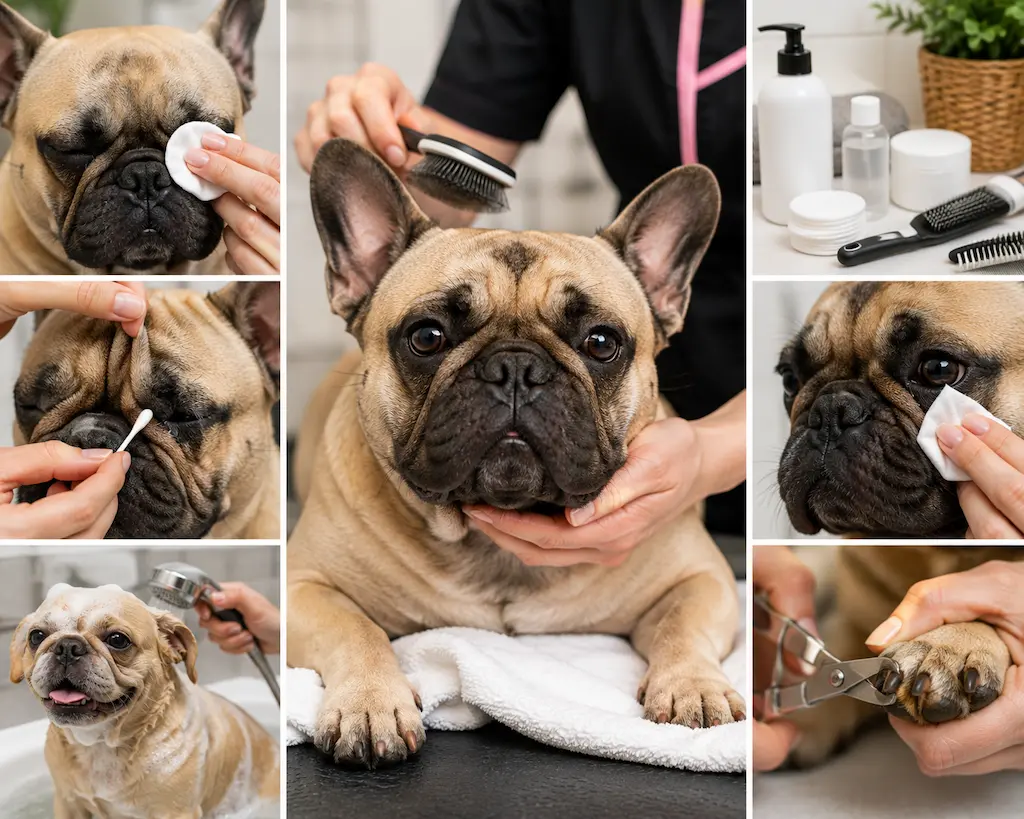
Fear can be pain in disguise. Matting that pulls at the skin, an ear infection, arthritic hips that hate standing on a table, sore eyes, or overgrown nails pressing into the nail bed all make grooming genuinely unpleasant. Flat-faced breeds are especially prone to facial sensitivity, so a routine tailored to their eyes and skin folds makes a real difference to how much handling they will tolerate.
5. The journey exhausted them before they arrived
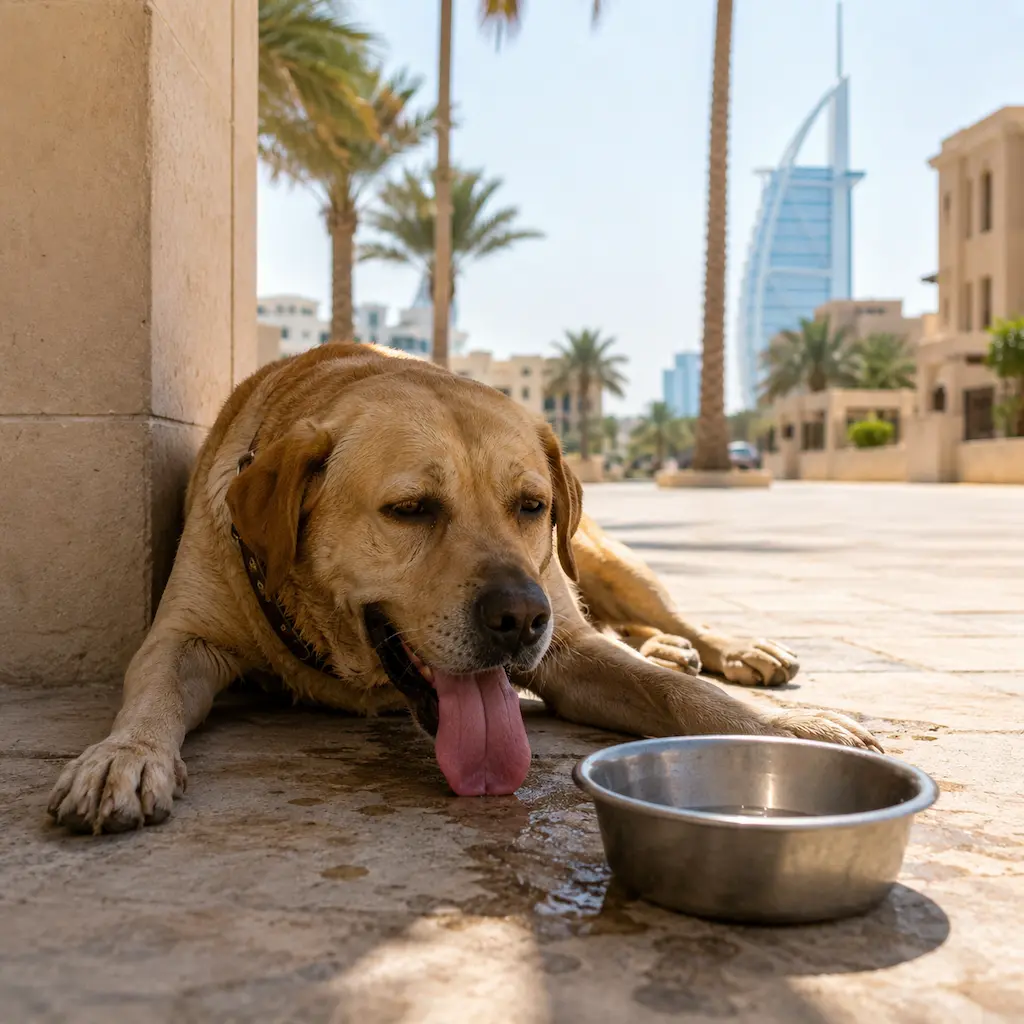
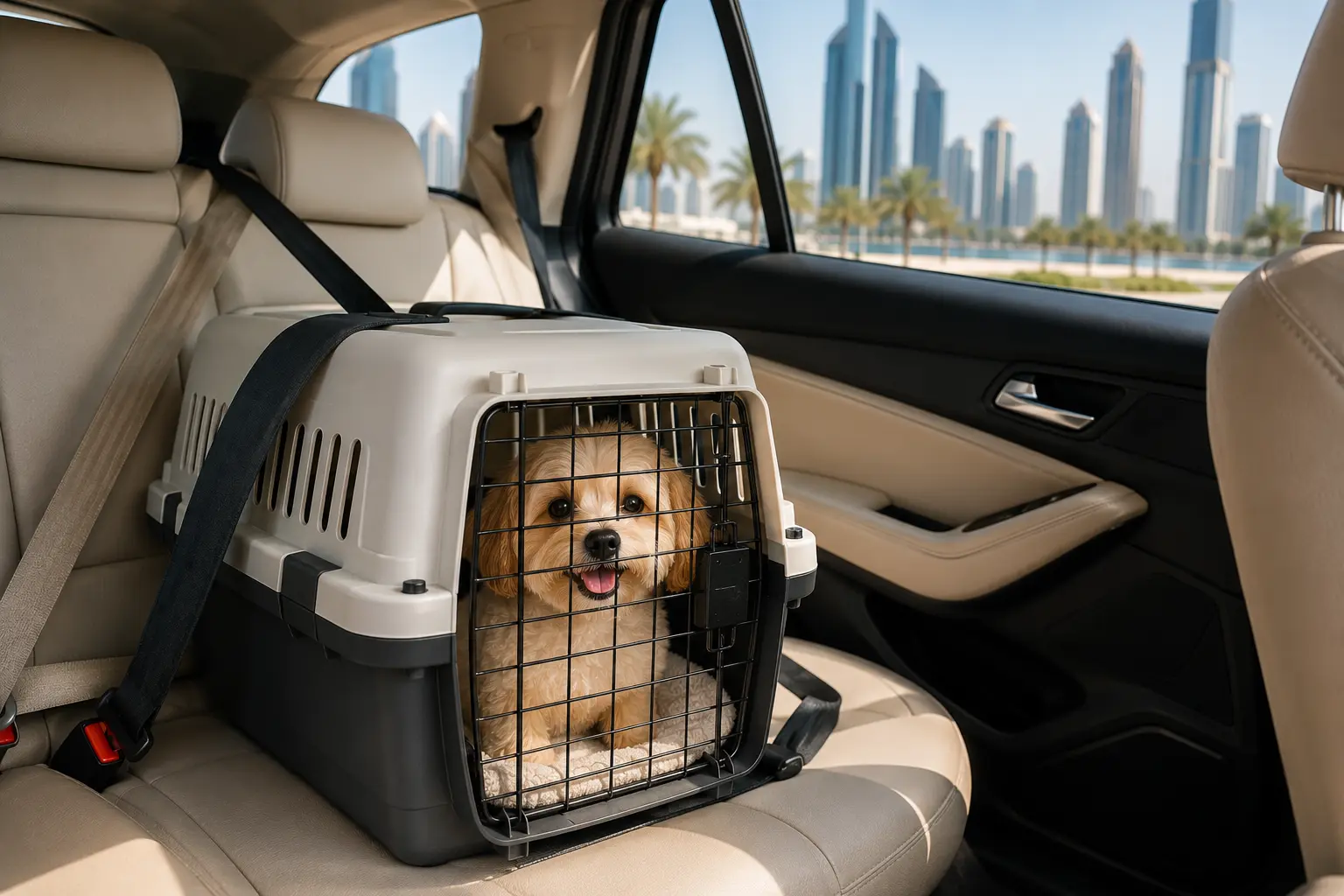
In Abu Dhabi and Al Ain, a dog can arrive at the salon already at the edge of its coping capacity. A hot car, heavy traffic on the Corniche or the Al Ain Road, and unfamiliar handling stack on top of each other. Heat stress also mimics anxiety, the panting, restlessness and drooling look almost identical, so learning to tell the two apart matters. A calm, climate-controlled transfer removes an entire layer of stress before the session even begins.
6. Grooming only happens when things are already bad
If your dog is only groomed once the coat is matted, the visit is guaranteed to hurt. Dematting a neglected coat is uncomfortable no matter how skilled the groomer is. Consistency prevents this. Regular short sessions keep the coat manageable, which keeps the experience painless.
7. Your own tension travels down the lead
Dogs read human breathing, voice pitch and muscle tension with uncomfortable accuracy. Owners who arrive apologising and anxious hand that state straight to the dog.
What to Do About It: A Practical Plan
1. Rule out pain first: Before assuming it’s behavioral, have a vet check ears, skin, joints, nails and teeth. Fear that appeared suddenly in an adult dog is a medical question until proven otherwise.
2. Rebuild the association at home: Leave the brush and nail clippers on the floor as ordinary furniture. Reward your dog for sniffing them. No grooming yet that’s the point.
3. Desensitize in small, boring doses: Handling should become dull before it becomes acceptable.
| Week | Daily focus | Session length |
|---|---|---|
| 1 | Touch shoulders and back, treat, stop | 30 seconds |
| 2 | Add ears and muzzle, brush 3–4 strokes | 1–2 minutes |
| 3 | Hold each paw briefly, tap nails with clippers | 2–3 minutes |
| 4 | Dryer on lowest setting in another room, then closer | 3–5 minutes |
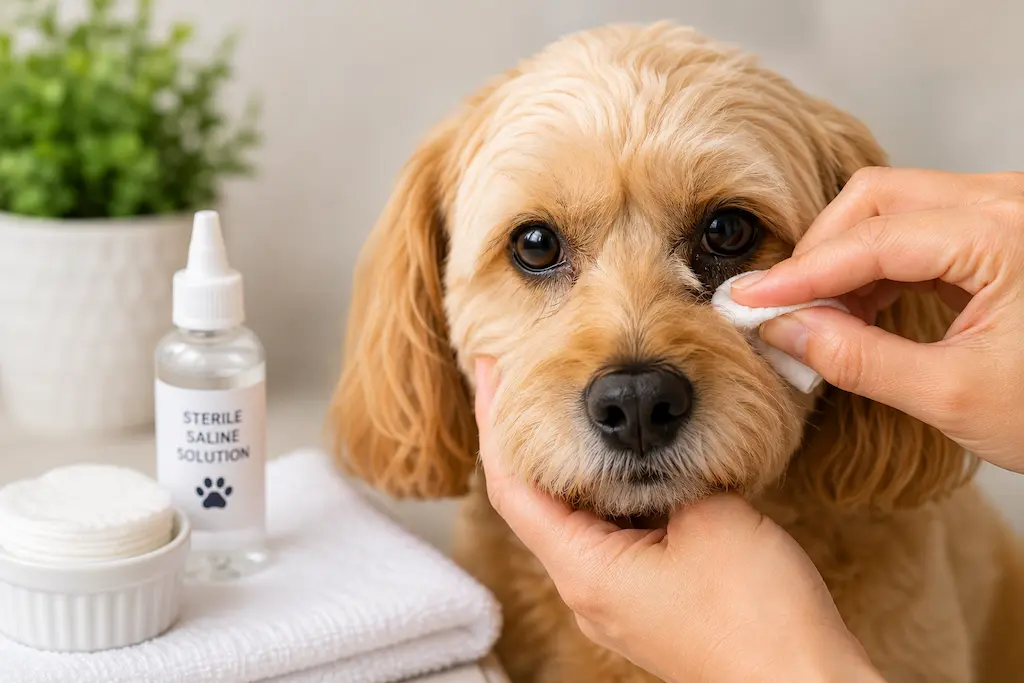
4. Practise face and paw work gently. These are the two highest-stress zones. Use a soft damp cloth around the eyes and muzzle rather than diving straight in with a brush — it teaches your dog that hands near the face are safe.
5. End every session early and well: Stop while your dog is still relaxed, not after they’ve panicked. A session that ends at 80% is a win. A session that ends in a struggle undoes a month of work.
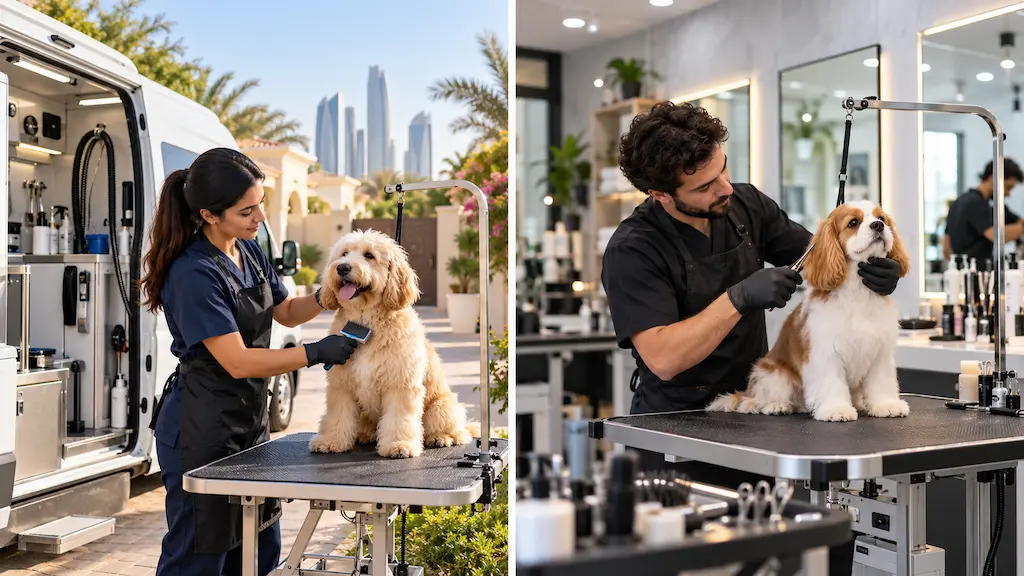
6. Consider grooming at home: For severely fearful dogs, removing the car journey, the waiting area and the other dogs eliminates most triggers at once. Mobile grooming works well here, provided the standards are right this safety checklist for mobile pet grooming in Abu Dhabi covers what to verify before booking.
7. Choose the groomer, not the pricE: A fear-aware groomer will let your dog explore the room, will work in shorter sessions, and will tell you honestly when to stop. Ask how they handle anxious dogs before you book, and treat a vague answer as a warning sign.
Know What a Calm Session Actually Looks Like
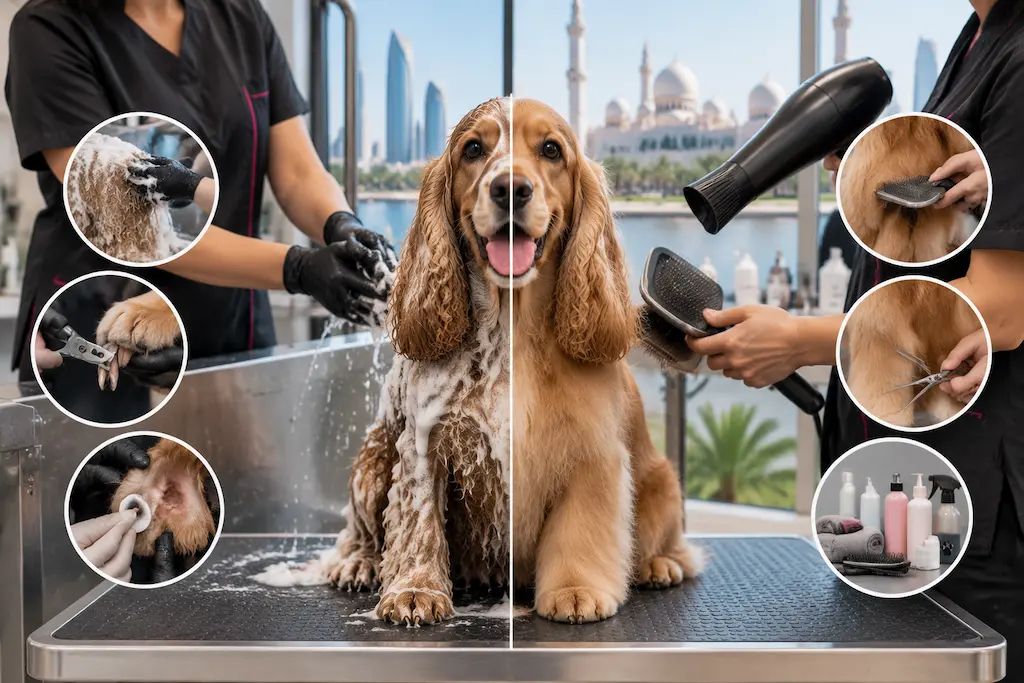
Owners often can’t tell whether a session went badly because they don’t know what a good one involves. A proper groom moves through brushing, bathing, drying, trimming, nail care and ear cleaning at a pace the dog can handle not a rushed sequence squeezed into a booking slot. Knowing that order gives you a benchmark, and lets you ask better questions when you collect your dog.
When to involve a professional: If your dog snaps, freezes completely, or cannot be touched at all, stop home training and speak to your vet about a referral. Some dogs need veterinary support alongside behavioural work, and pushing through fear on your own makes it worse.
Fear of grooming is common, and it is fixable in most dogs. It just moves at the dog’s pace, not yours.
Frequently Asked Questions
Can a dog grow out of being scared of grooming?
Rarely on its own. Untreated fear usually deepens, because each stressful session confirms the dog was right to worry. With desensitisation and calm handling, though, most dogs improve significantly.
Should I use a calming supplement or sedative before grooming?
Only on veterinary advice. Over-the-counter calming products vary widely in effectiveness, and true sedation needs a vet’s assessment of your dog’s health first. Never sedate a dog at home before a grooming appointment without telling the groomer.
Is mobile grooming better for an anxious dog?
Often, yes. It removes the car journey, the waiting area and the presence of unfamiliar dogs three major triggers in one step. Dogs who are territorial at home are the exception and may do better in a neutral salon.
How long should I wait between sessions if my dog panicked? Don’t wait for the coat to force your hand. Keep doing short, positive handling sessions at home during the gap so the next appointment isn’t your dog’s only association with grooming.
My dog is only scared of nail trimming. Is that normal?
Very. Paws are highly sensitive, and one nail cut too short leaves a lasting memory. Work on paw handling separately, reward for a single nail, and build from there.
When should I involve my vet instead of a groomer?
If the fear appeared suddenly in an adult dog, if your dog snaps or shuts down completely, or if grooming reveals skin, ear or joint problems. Sudden behaviour change is a medical question until proven otherwise.
Fear of grooming is common, and it is fixable in most dogs. It just moves at the dog’s pace, not yours.