


Every groomer knows the look. An owner walks in cradling a lint roller like a security blanket, sees the fur already drifting off their dog onto my floor, and asks the question I hear more than almost any other: “Is there any way to make this stop?”
The honest answer is no, you can’t switch shedding off. It’s a natural part of how a dog’s coat renews itself. But after years at the grooming table, I can tell you that you can absolutely control it. The difference between a home buried in fur and a manageable one usually comes down to a handful of habits: the right brushing, the right nutrition, and steering clear of a few well-meaning mistakes.
Here’s exactly how I coach owners to keep dog shedding under control.
Why dogs shed: the basics
Shedding is just the hair cycle doing its job old or damaged hair falls out to make way for new growth. How much your dog sheds depends on breed, season, and overall health. A Golden Retriever will always out-shed a Poodle.
Here’s the part most owners don’t know: in double-coated breeds, it’s the soft undercoat that sheds heavily, while the coarser outer “guard” coat barely sheds at all. And according to the American Kennel Club, those breeds “blow” their undercoat in big seasonal clear-outs, typically spring and fall.
Shedding also ramps up with stress, poor nutrition, or skin problems which is why getting to the root cause matters more than chasing the fur around your living room.
The Abu Dhabi shaving mistake (please don’t do this)
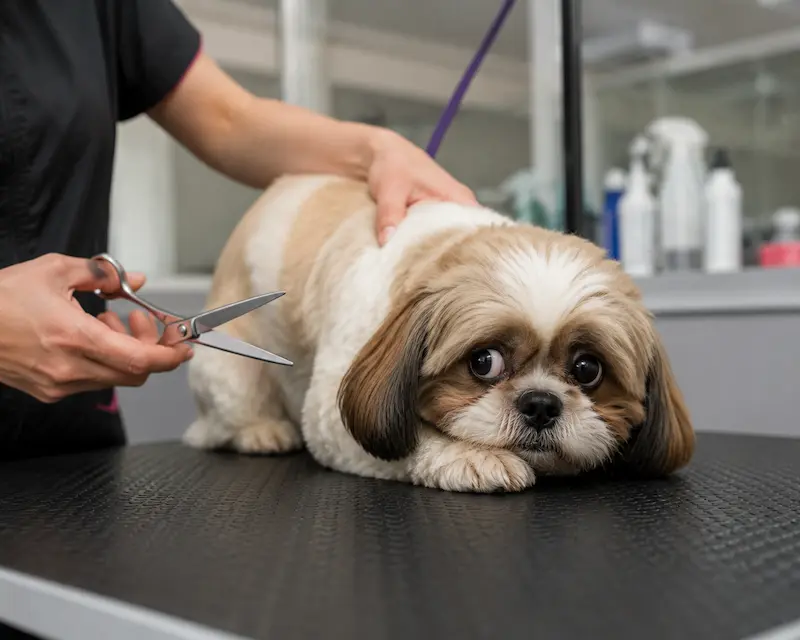
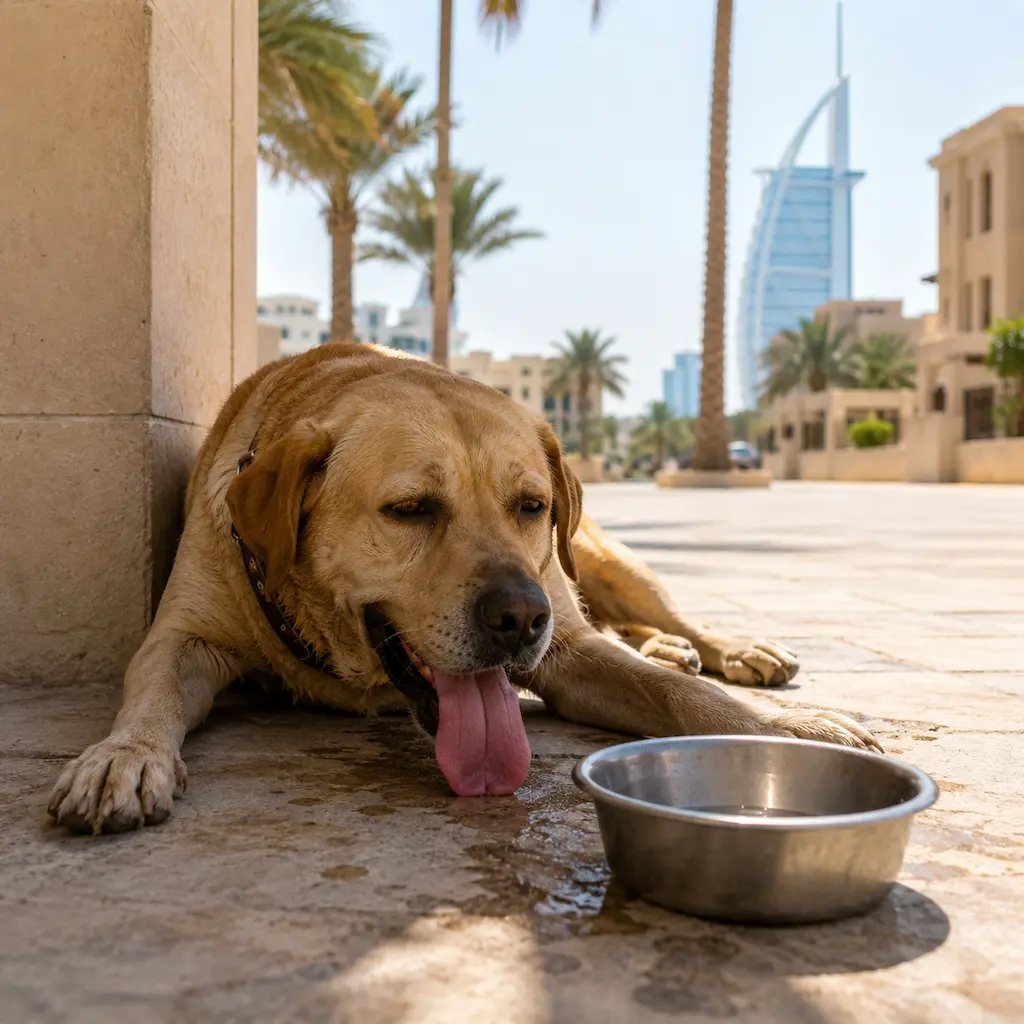
This is the one I feel strongest about. Every summer, owners ask me to shave their double-coated dog “to keep him cool and cut the shedding.” It’s completely understandable in this heat and it’s exactly the wrong move.
The AKC’s chief veterinary officer warns that shaving a double coat removes the very layer that insulates a dog against heat, leaving them more prone to overheating and sunburn and it can cause the coat to grow back patchy or damaged. A dog’s double coat keeps them cool as well as warm; strip it, and you take away their built-in temperature control.
1. Regular grooming: your first line of defence
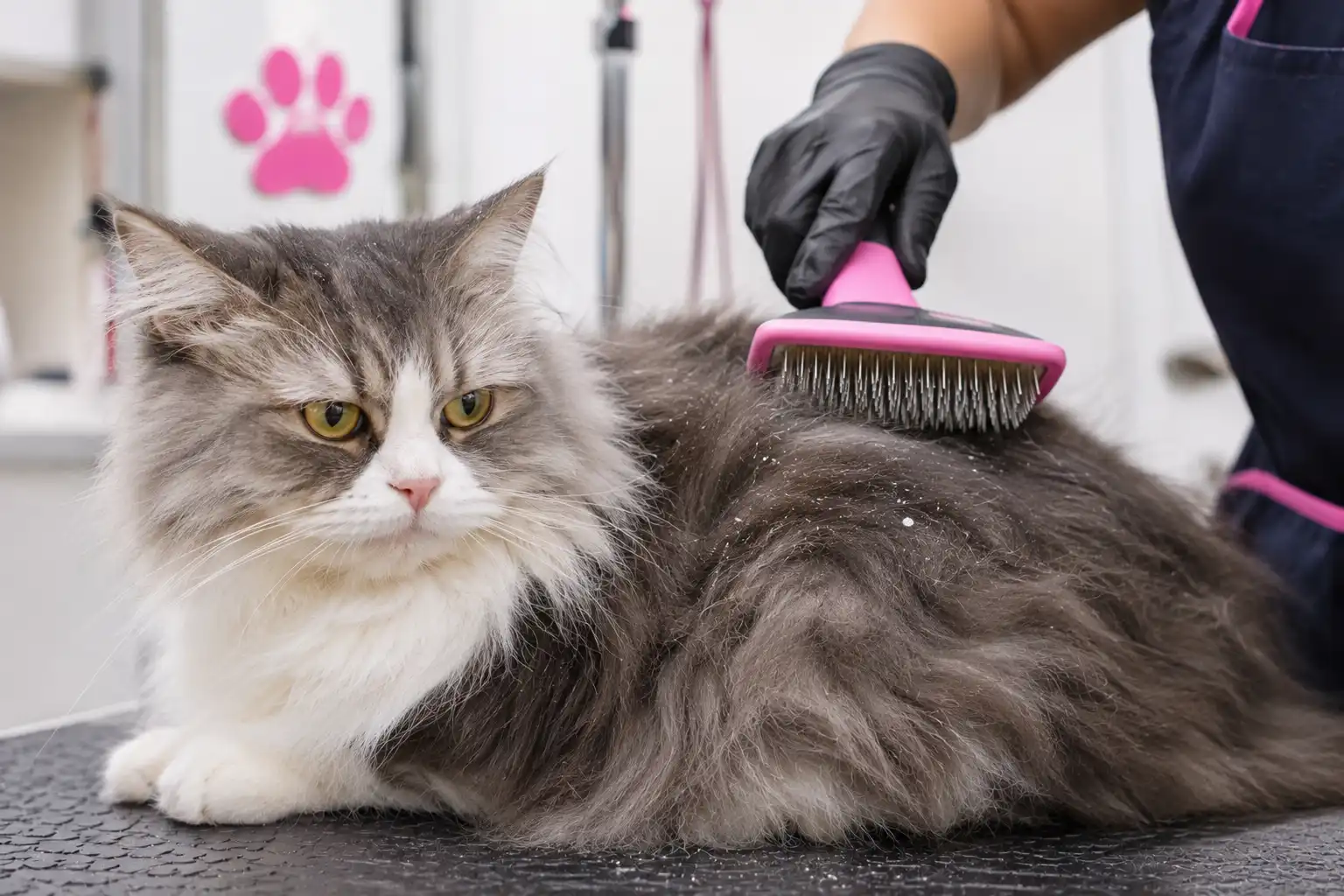
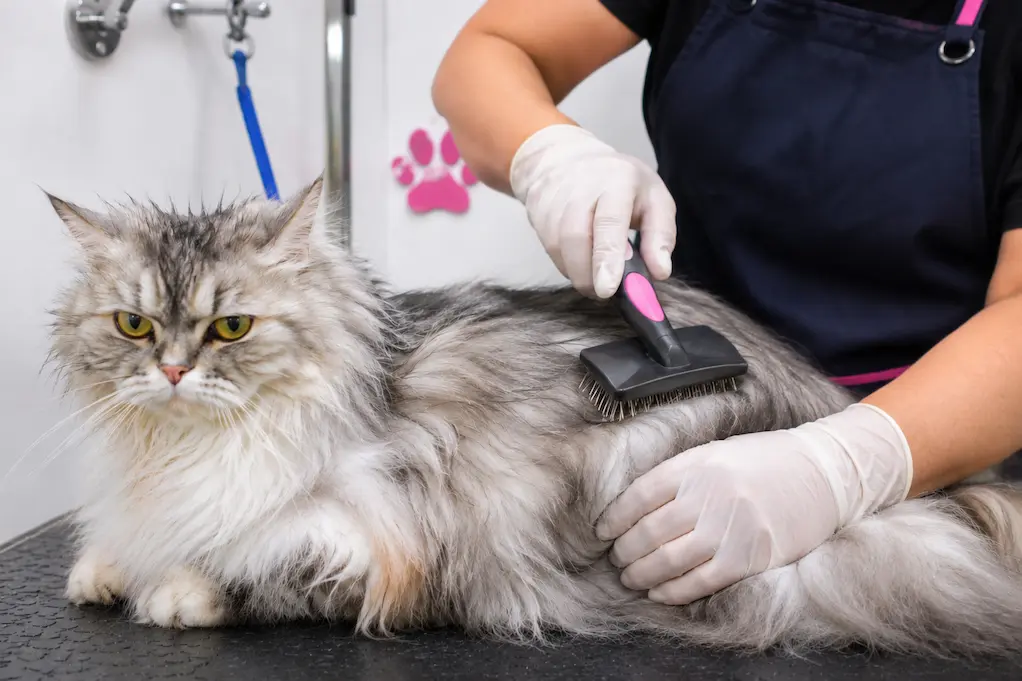
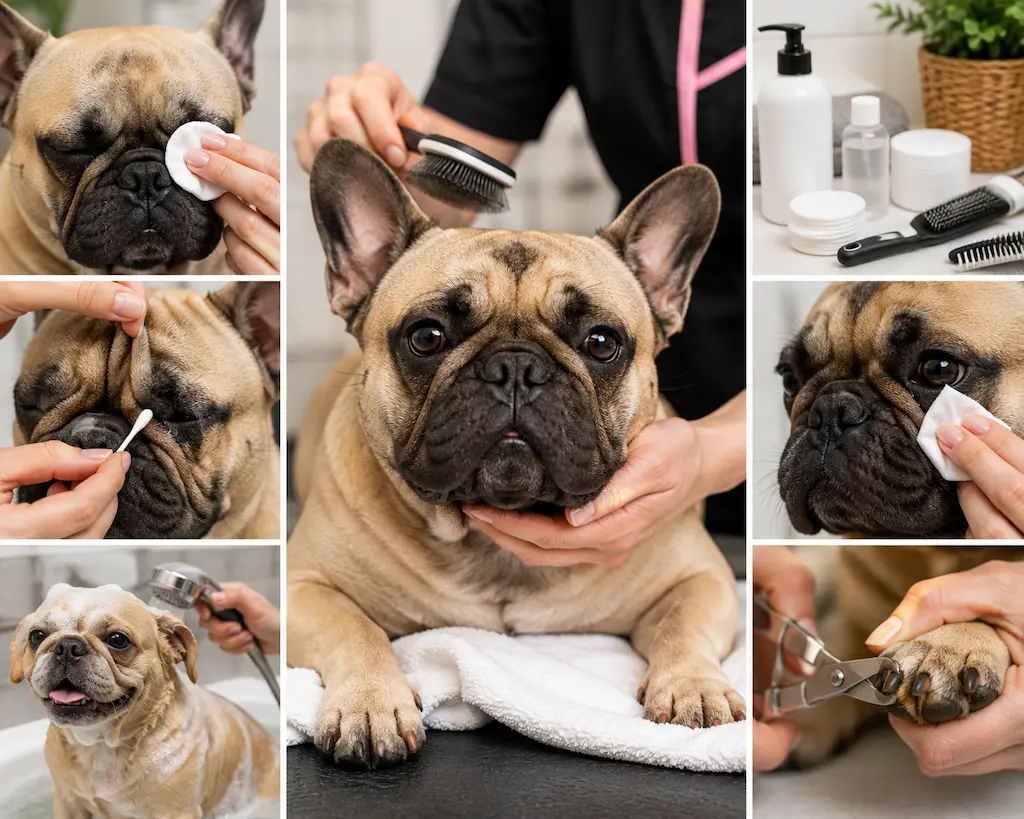
Brushing is the single most effective way to manage shedding, it catches loose hair before it lands on your floor. But the tool has to match the coat:
| Coat type | Best tools | How often |
|---|---|---|
| Short-haired | Rubber brush, grooming glove | A few times a week |
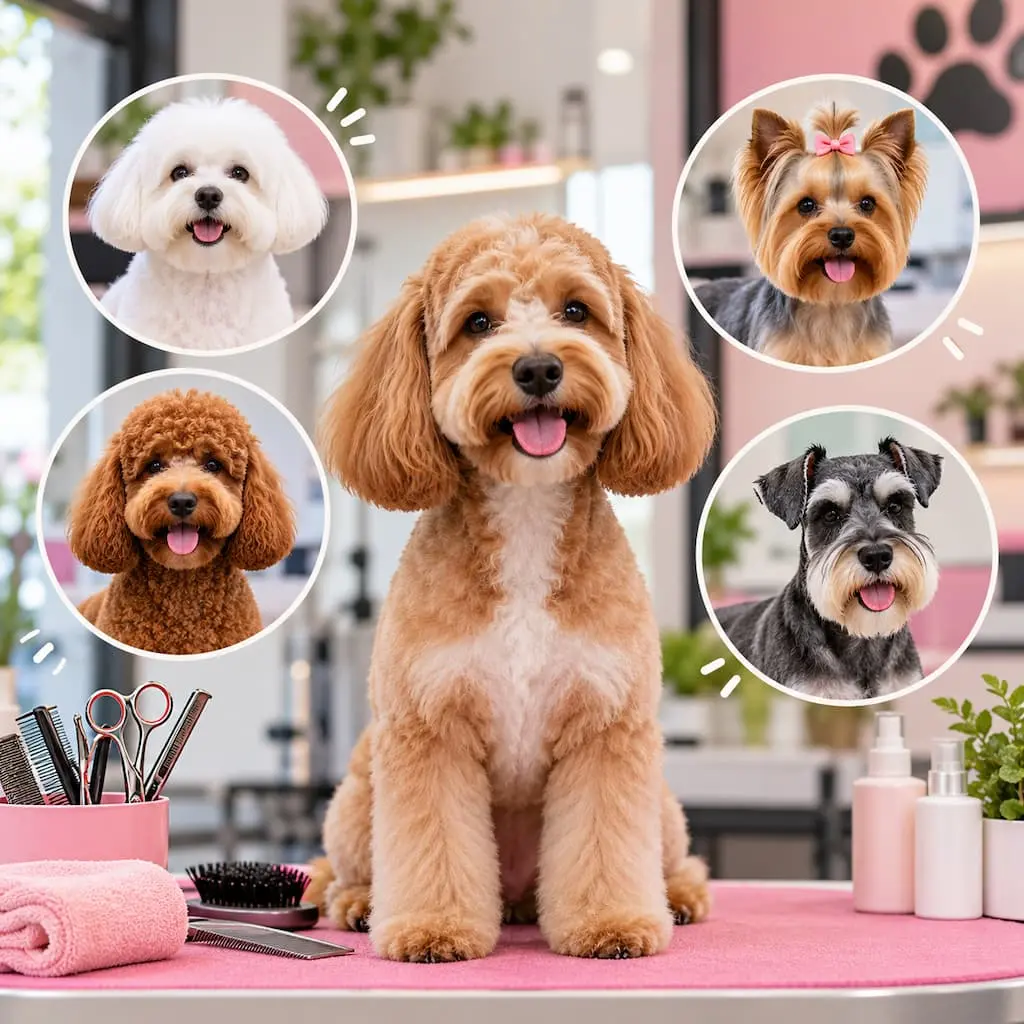
| Double-coated | Undercoat rake, deshedding tool, slicker | Daily, especially during a coat blow |
| Long/silky | Slicker + comb to prevent mats | Most days |
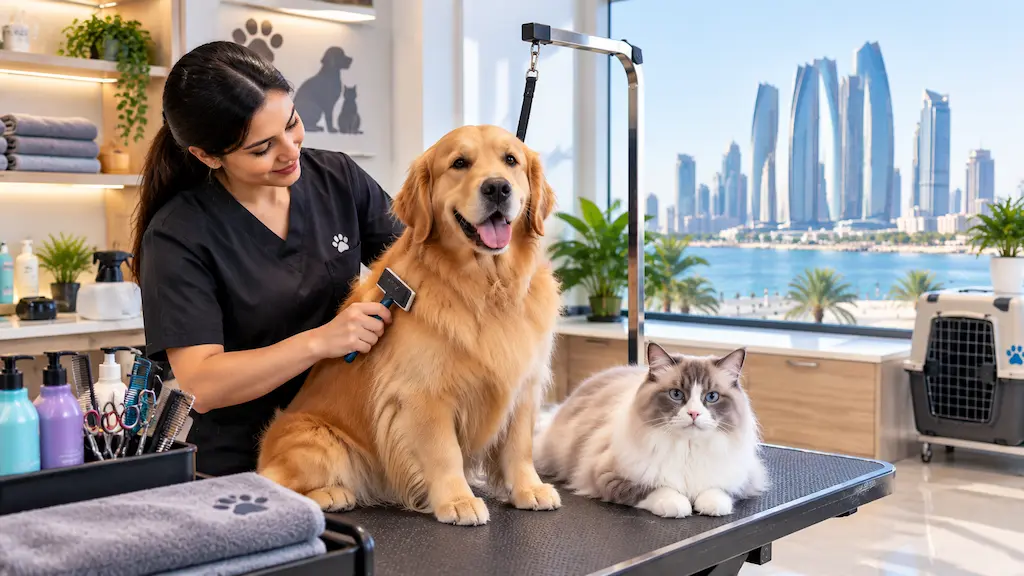
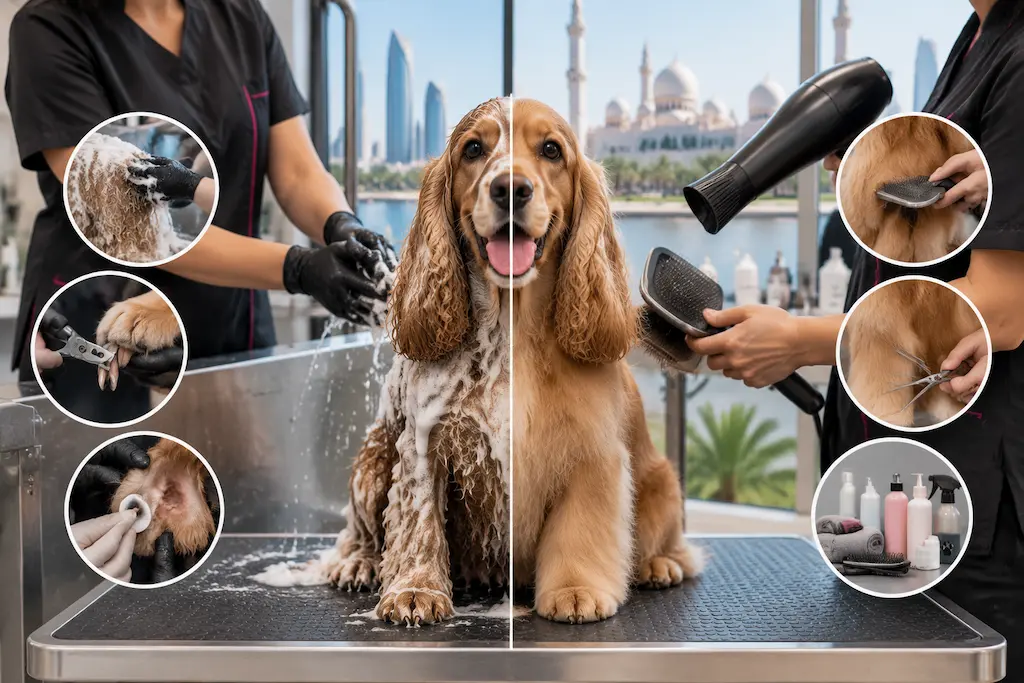
Professional dog grooming in Abu Dhabi adds tools most owners don’t have at home high-velocity dryers, in particular, pull out far more loose undercoat than any brush. And every grooming session is a chance to check the skin for irritation, parasites, or unusual bumps.
2. Bathe your dog the right way
A bath every 4–6 weeks helps loosen and release excess hair while keeping the skin clean. Two rules:
- Always use a dog-specific shampoo human products dry the skin, and dry skin sheds more.
- Ask your vet about de-shedding or medicated shampoos if your dog sheds heavily; some are formulated to strengthen the coat and reduce breakage.
3. Improve your dog’s diet
Coat health starts on the inside. A poor diet low in fatty acids, vitamins, and minerals shows up fast as a dull, shedding-prone coat.
- Omega-3 and omega-6 fatty acids (found in fish oil) support skin and coat health, and are widely recommended by vets and groomers for reducing excess shedding.
- High-quality protein fuels strong, healthy hair growth.
- Hydration dehydrated skin dries out and sheds more, so keep fresh water available.
4. Home grooming that actually helps
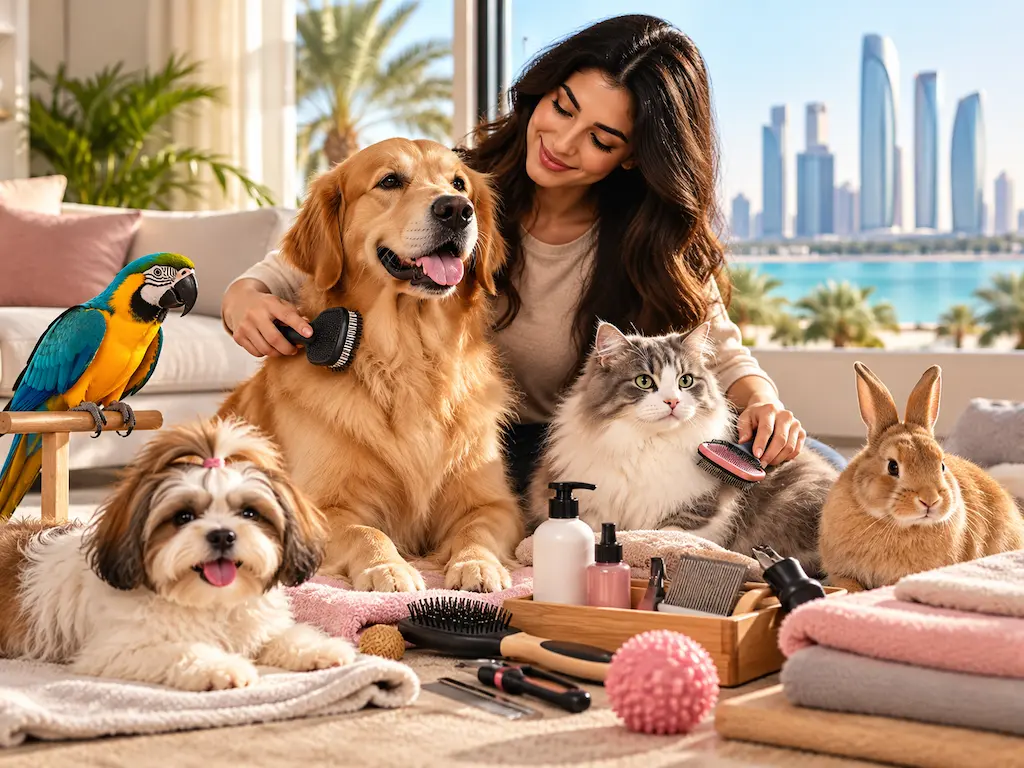
Plenty of owners prefer grooming at home it’s convenient, and those short sessions genuinely strengthen the bond with your dog. Match the tools to the coat, keep sessions short and positive with treats and praise, and you’ll remove a surprising amount of fur before it ever reaches your sofa.
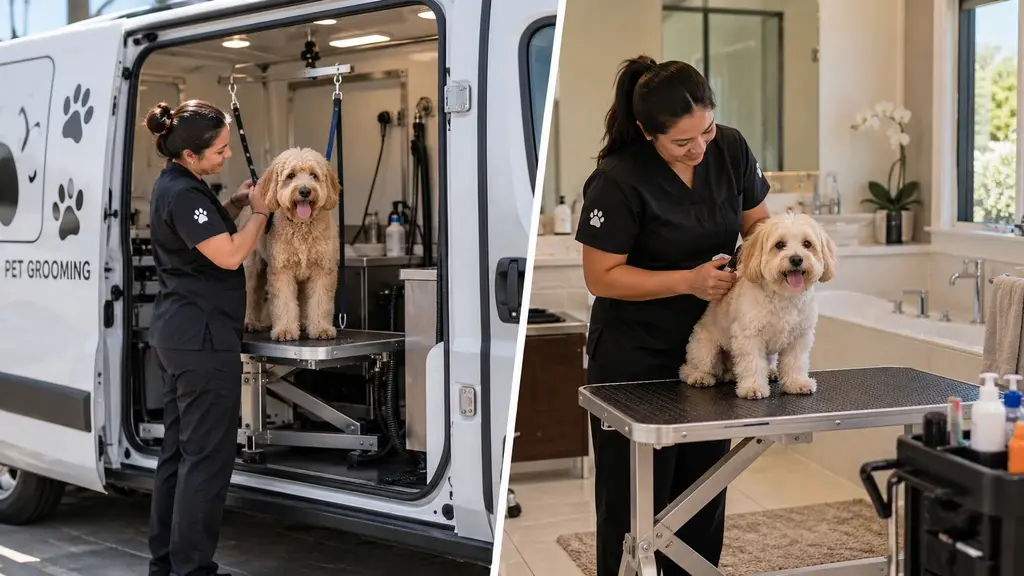
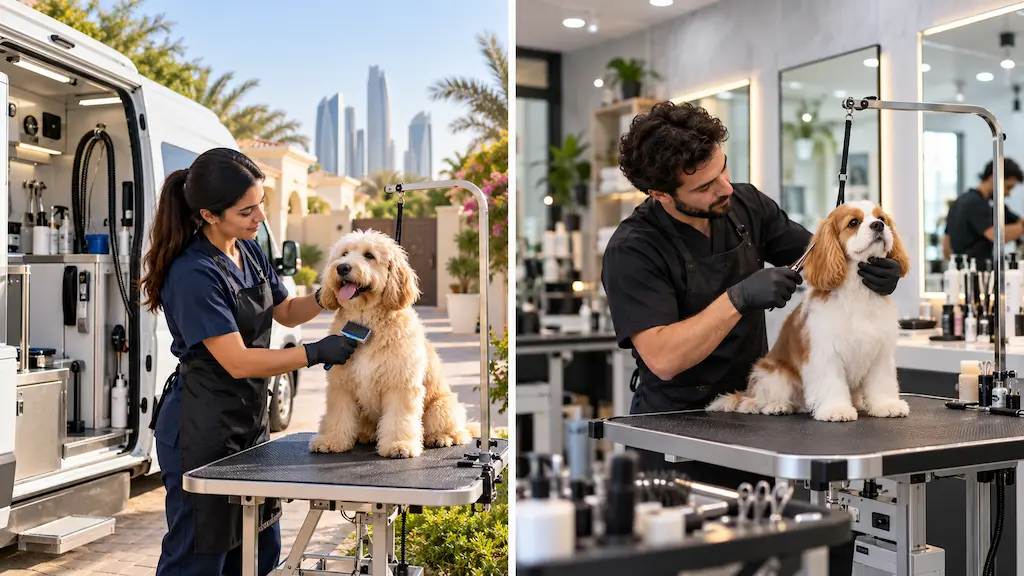
When home sessions aren’t enough, mobile grooming in Abu Dhabi brings the full professional setup including those force dryers right to your door.
5. Keep your home clean and hair-free
Even with great grooming, some fur is inevitable. To stay ahead of it:
- Vacuum regularly with pet-hair-rated equipment.
- Wash beds, blankets, and covers weekly.
- Keep lint rollers or a damp rubber glove handy for clothing and furniture.
6. Rule out health issues
Sometimes heavy shedding is a symptom, not just a nuisance. Allergies, thyroid imbalances, and skin infections can all trigger sudden hair loss. Watch for:
- Bald patches or uneven shedding
- Red or irritated skin
- Excessive scratching
If any of these appear, see your vet. It’s also worth ruling out common skin conditions that show up as shedding and a poor coat our guides on seborrhea in dogs and dog dandruff in the Abu Dhabi climate walk through what to look for.
7. Seasonal shedding: what to expect
Many dogs shed harder in spring and fall as they adjust their coats to the changing temperature the “coat blow” I mentioned earlier. During these 2–4 week windows, step up to daily brushing to stay ahead of the fur (and the matting that comes with a neglected undercoat). One note for our region: with life lived largely in air-conditioning, a lot of Abu Dhabi dogs shed fairly steadily year-round rather than in two sharp seasonal bursts, so consistency matters more here than timing.
8. Manage stress
Stress shows up in the coat. Loud noises, a house move, or separation anxiety can all push shedding up. A calm environment, regular exercise, and enough mental stimulation genuinely help keep stress-related shedding down.
9. When to call in the professionals
If shedding feels unmanageable no matter what you try, that’s our cue. Between the right tools, coat-specific products, and a trained eye for skin issues, professional pet grooming in Abu Dhabi doesn’t just reduce the fur it keeps your dog healthier overall.
Frequently asked questions
How can I reduce my dog’s shedding?
Regular brushing with the right tool for your dog’s coat, a diet rich in omega-3 fatty acids, baths every 4–6 weeks with dog-specific shampoo, and professional de-shedding when needed. You can’t stop shedding, but this combination controls it dramatically.
Should I shave my dog to stop shedding in the heat?
No, not if your dog is double-coated. Shaving removes the insulating layer that actually keeps them cool, raising the risk of overheating and sunburn, and the coat often grows back damaged. Regular de-shedding is the safe way to cut both fur and heat.
How often should I brush a heavy-shedding dog?
Double-coated breeds do best with daily brushing, especially during a seasonal coat blow. Short-haired dogs are usually fine with a few sessions a week.
Does diet really affect shedding?
Yes. A poor diet produces a dull, shedding-prone coat, while good protein and omega-3/omega-6 fatty acids support healthier skin and fur. If shedding worsened after a food change, that’s often the cause.
When is shedding a sign of a health problem?
Bald patches, red or irritated skin, and constant scratching all point to a possible underlying issue allergies, thyroid problems, or a skin infection. See your vet if you notice these.
Conclusion
You’ll never stop your dog shedding completely and honestly, you shouldn’t want to. What you can do is control it: consistent brushing with the right tools, a coat-supporting diet, sensible bathing, and resisting the urge to shave. Do that, and you’ll have a healthier coat and a far cleaner home.
And when the fur gets ahead of you as it does for all of us in this heat a professional deshed makes short work of it.