





You are brushing your cat when you notice tiny white flakes scattered across its fur. At first, they might look like dust, but when they keep appearing, you begin wondering whether your cat has a skin problem.
Cat dandruff is a common concern among pet owners. It occurs when dead skin cells become visible in the coat, often appearing as small white flakes along the back, near the tail, or around the neck.
A few flakes may not indicate anything serious. However, persistent dandruff can sometimes signal dry skin, inadequate grooming, parasites, or an underlying health condition.
Understanding the possible causes can help you choose safe coat care methods without making your cat’s skin more uncomfortable.
What Does Cat Dandruff Look Like?
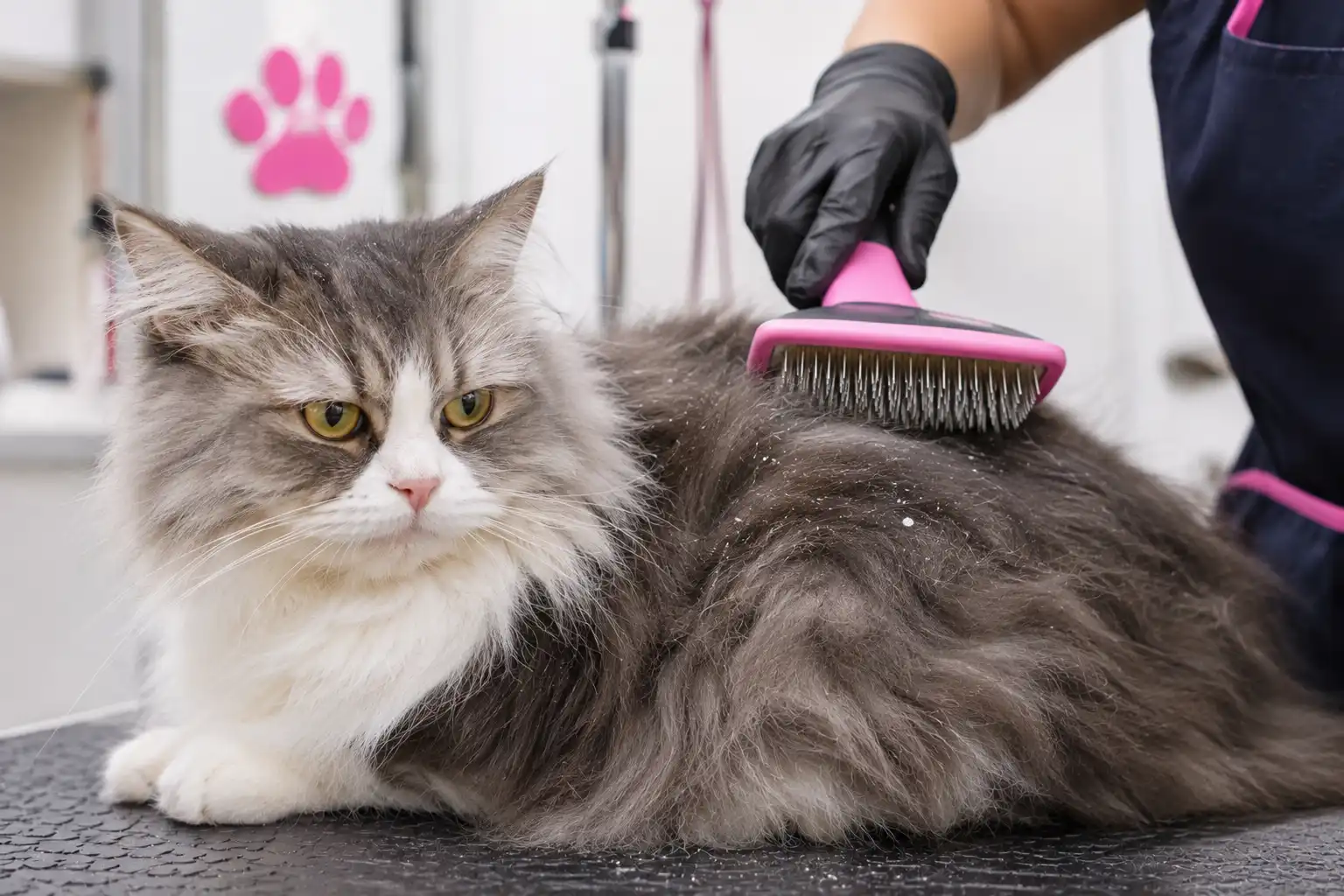
Cat dandruff usually appears as small, white or pale flakes sitting on the fur or close to the skin.
You may notice:
- White flakes scattered across your cat’s back
- Dry or rough-looking skin beneath the coat
- Flakes becoming more visible during brushing
- Dull fur or an uneven coat texture
- Increased scratching or licking
- Flaky patches around the lower back or tail
Dandruff itself is a description of visible skin flakes, not a specific diagnosis.
Some cats have mild flaking without discomfort, while others develop dandruff alongside redness, hair loss, or excessive itching.
The accompanying symptoms often provide more useful clues than the flakes alone.
Why Does My Cat Have Dandruff?
Several factors can contribute to dandruff in cats. Identifying the underlying reason is important because not every case responds to the same grooming routine.
1. Dry Skin and Environmental Conditions
Dry skin is one possible cause of visible dandruff.
Low indoor humidity, repeated bathing, and unsuitable grooming products may contribute to skin dryness in some cats.
In Abu Dhabi, cats often spend considerable time indoors in air-conditioned rooms. If the indoor air is particularly dry, it may contribute to skin discomfort.
However, not every cat with dandruff has dry skin. Some develop flakes even when their skin produces excessive oil.
Before using moisturising treatments, check whether your cat has other symptoms such as itching, redness, or greasy fur.
2. Reduced Self-Grooming
Cats normally maintain their coats by licking and cleaning themselves.
When a cat stops grooming certain areas, dead skin cells and loose fur can accumulate.
Reduced grooming may occur in:
- Overweight cats that struggle to reach their backs
- Senior cats with reduced flexibility
- Cats experiencing arthritis or pain
- Cats recovering from illness
- Cats with dental discomfort
If the dandruff is concentrated near the lower back, observe whether your cat can comfortably reach that area.
A sudden reduction in grooming deserves veterinary attention, particularly if accompanied by changes in activity or appetite.
3. Excessive Skin Oil Production
Not all dandruff develops on dry skin.
Some cats experience excessive sebum production, resulting in visible flakes mixed with oily or clumped fur.
This may be associated with seborrhea or another underlying skin problem.
Some cats develop dandruff alongside greasy or oily fur, particularly when excess skin oils and dead skin cells accumulate.
Persistent greasy dandruff, especially when accompanied by odour or inflammation, should be assessed by a veterinarian.
4. Fleas, Mites and Other Parasites
Parasites can irritate your cat’s skin and cause flaking, itching, or hair loss.
Fleas may trigger intense scratching, particularly in cats with flea allergies. Certain mites can also cause excessive scaling.
One condition, sometimes called walking dandruff, is associated with Cheyletiella mites. Heavy scaling may develop along the back, and the flakes can sometimes appear to move.
If you suspect parasites, avoid applying random flea treatments or medicated shampoos. Some products made for dogs are toxic to cats.
A veterinarian can identify the cause and recommend a cat-safe treatment.
5. Allergies and Skin Infections
Allergies and infections may disrupt normal skin health.
Cats can develop allergic reactions to flea bites, environmental allergens, or certain food ingredients. Bacterial and fungal infections can also contribute to scaling.
Possible warning signs include:
- Persistent scratching
- Red or irritated skin
- Hair thinning or bald patches
- Crusts or scabs
- An unpleasant skin odour
- Repeated licking of affected areas
These symptoms should not be managed with grooming products alone.
For additional guidance on recognising possible irritation, read our article about skin sensitivities during grooming.
6. Nutrition and Underlying Health Conditions
Healthy skin depends on adequate nutrition, including essential fatty acids, protein, vitamins, and minerals.
Nutritional deficiencies can affect skin condition, although they are less likely in cats eating a complete and balanced commercial diet.
Certain illnesses can also affect the coat or reduce normal grooming behaviour.
Avoid assuming that dandruff means your cat needs fish oil or vitamin supplements. Excessive supplementation can be harmful.
If flaking persists or your cat shows other health changes, a veterinarian can assess whether diet or illness is contributing.
How to Get Rid of Cat Dandruff Safely
The safest approach depends on why the flakes are appearing.
If your cat is otherwise healthy and has only mild flaking, gentle coat maintenance may help. However, grooming should never replace treatment for parasites, infections, allergies, or other medical conditions.
Brush Your Cat Regularly
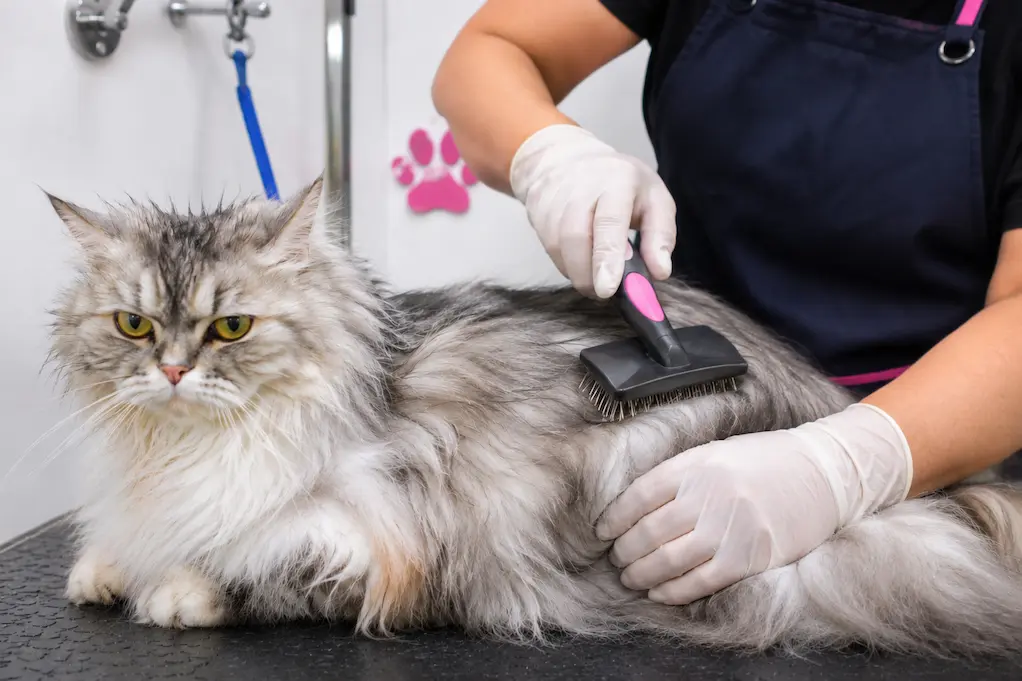
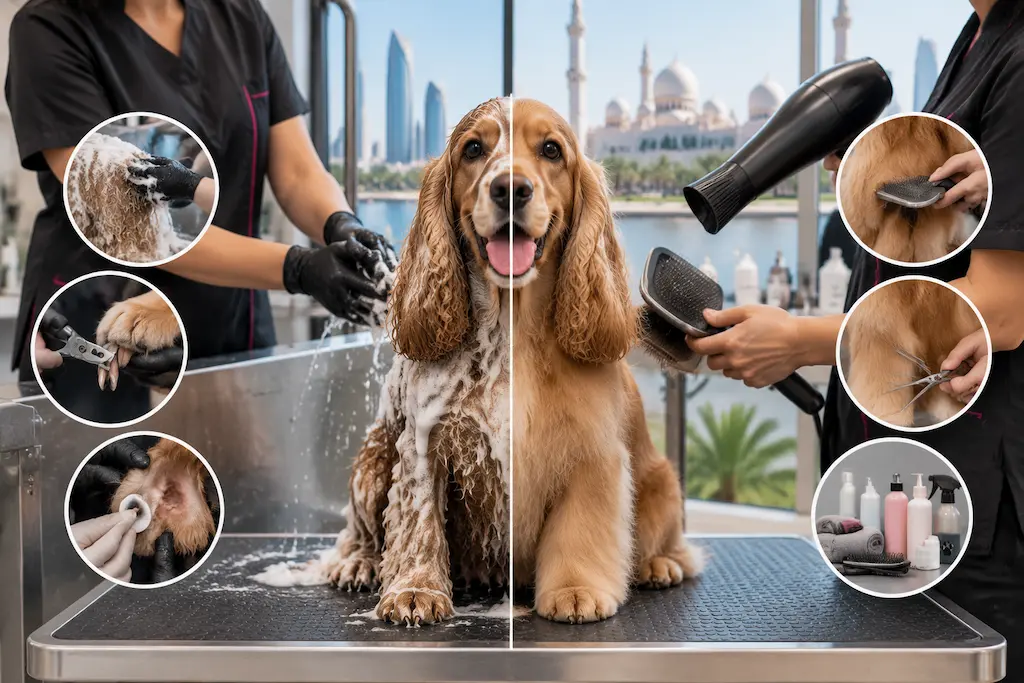
Gentle brushing removes loose fur and helps lift dead skin flakes from the coat.
Use a soft brush or grooming comb appropriate for your cat’s fur type. Avoid applying excessive pressure, particularly around areas where the skin appears sensitive.
For long-haired cats, frequent brushing helps reduce tangles that can make skin inspections difficult.
Short-haired cats may require less brushing, depending on their coat condition and ability to groom themselves. Regular brushing removes loose hair and flakes, especially experiencing excessive fur shedding in cats.
Avoid Unnecessary Bathing
Bathing is not always the best solution for cat dandruff.
Most healthy cats maintain their coats without regular baths. Washing too frequently can remove protective skin oils and worsen dryness or irritation.
If bathing is genuinely necessary, use a suitable cat-specific shampoo and rinse thoroughly.
Never use human dandruff shampoo, dishwashing liquid, essential oils, or household cleaning products on your cat.
For cats with persistent scaling or suspected skin disease, ask a veterinarian whether a medicated shampoo is appropriate before bathing.
Support Proper Hydration
Fresh drinking water should always be available.
Some cats prefer running water, while others drink more readily from wide bowls placed away from their food and litter trays.
Wet food may also contribute to overall water intake, depending on your cat’s diet and veterinary recommendations.
Good hydration supports general health, but increasing water intake alone will not necessarily resolve dandruff caused by an underlying skin condition.
Check Your Cat’s Skin During Grooming
Part the fur gently while brushing to inspect the skin beneath it.
Pay attention to whether the flakes appear:
- Across the entire coat
- Mainly along the back
- Near the tail
- Around areas your cat frequently scratches
- Alongside redness, wounds, or bald patches
These observations can help your veterinarian investigate the problem if the dandruff continues.
Avoid scratching flakes away with your fingernails or using stiff brushes on irritated skin.
Get Professional Grooming Support When Appropriate
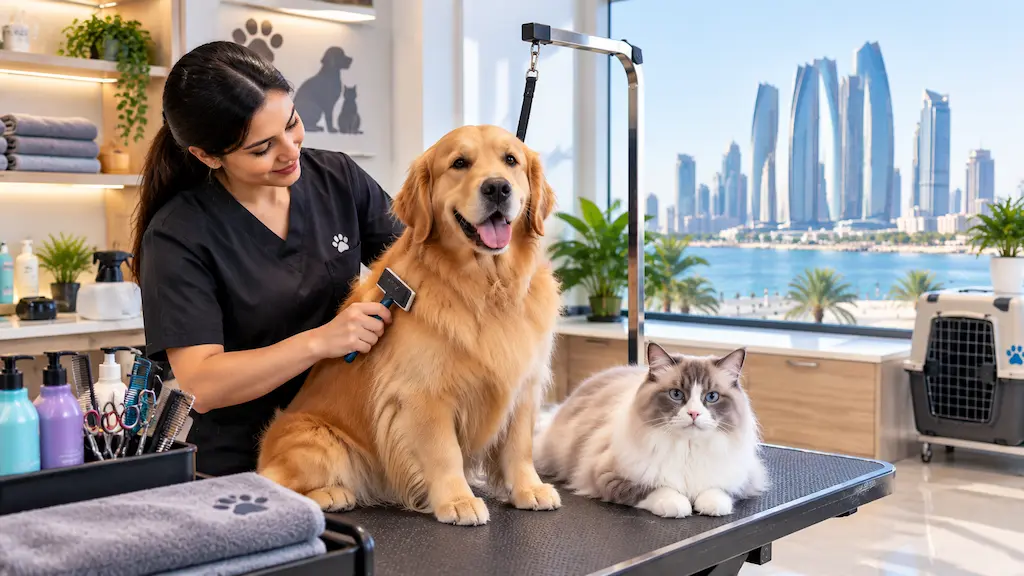
Cats with long coats, excess loose fur, or difficulty self-grooming may benefit from professional grooming assistance.
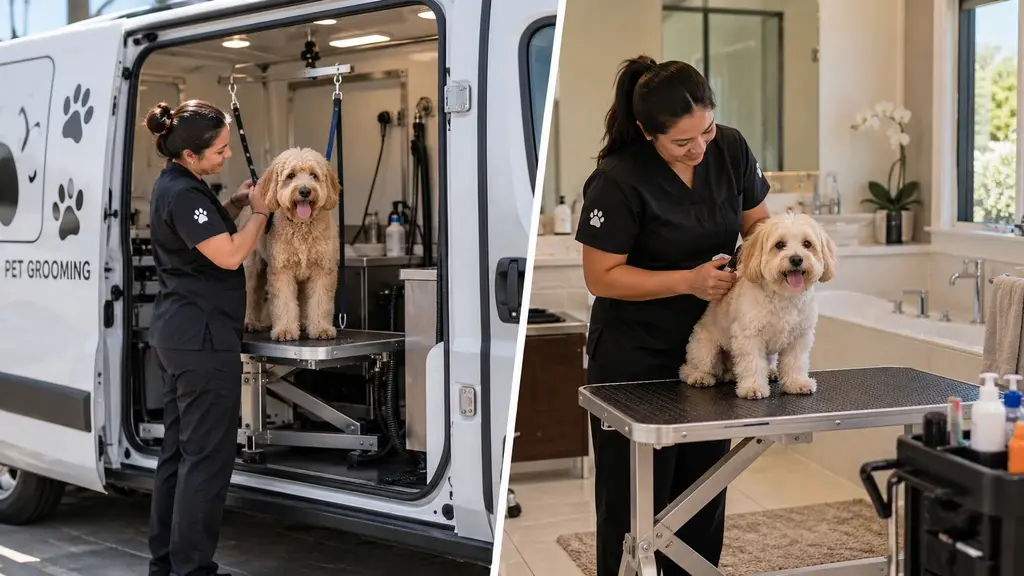
Groom Room provides mobile cat grooming in Abu Dhabi, including brushing, coat maintenance, and bathing when suitable for the individual cat.
Professional grooming can help remove loose hair and visible skin flakes, but it cannot diagnose or cure medical causes of dandruff.
Cats with unexplained persistent scaling, inflamed skin, or suspected infections should receive veterinary assessment before booking a grooming session.
Cat Dandruff vs Flea Dirt: How Can You Tell?
Cat owners sometimes mistake flea dirt for dandruff because both can appear as particles scattered through the coat.
However, they usually look different.
| Feature | Cat Dandruff | Flea Dirt |
| Appearance | White or pale flakes | Dark brown or black specks |
| Origin | Shed skin cells | Flea droppings |
| Common location | Back and other coat areas | Often near the lower back and tail |
| Wet tissue test | Usually remains pale | May leave reddish-brown staining |
Flea dirt contains digested blood, which explains why it can leave a reddish stain when moistened.
This simple comparison can help you recognise possible flea activity, but it does not replace a veterinary examination.
If you suspect fleas, use only appropriate veterinary-recommended parasite treatment.
When Should You Take Your Cat to the Vet for Dandruff?
Mild, occasional flaking without other symptoms may not require urgent treatment.
However, arrange a veterinary appointment if your cat develops:
- Persistent or worsening dandruff
- Severe itching or constant scratching
- Redness, swelling, or painful skin
- Hair loss or bald patches
- Crusts, wounds, or an unusual smell
- Greasy skin with excessive scaling
- Reduced grooming or difficulty moving
- Changes in appetite, weight, or activity
Skin problems that resemble simple dandruff can sometimes require parasite testing, skin examinations, or other veterinary investigations.
Seek prompt veterinary care if your cat appears seriously unwell, has extensive painful skin lesions, or stops eating.
How to Prevent Dandruff From Returning
Not every cause of cat dandruff is preventable, but consistent coat care can help maintain skin comfort and make changes easier to recognise.
A useful routine includes:
- Brushing according to your cat’s coat type and tolerance
- Checking the skin for unusual flakes or irritation
- Feeding a complete and balanced diet
- Providing constant access to fresh water
- Using only appropriate cat-safe grooming products
- Following veterinary guidance for parasite prevention
- Avoiding unnecessary baths and aggressive brushing
For general grooming maintenance, Groom Room’s guide to cat grooming do’s and don’ts explains how to maintain a coat without causing avoidable irritation.
Pet owners who prefer regular professional coat maintenance can also explore pet grooming in Abu Dhabi for suitable grooming services.
Groom Room’s mobile pet grooming service brings grooming equipment directly to your location, reducing the need to transport your cat for routine appointments.
Final Thoughts
Cat dandruff is not always a sign of serious illness, but persistent flakes should not be ignored.
Dry skin, reduced self-grooming, parasites, skin conditions, and underlying health problems can all contribute to visible scaling.
Gentle brushing, appropriate grooming products, and routine skin checks can support healthy coat maintenance. However, persistent dandruff or accompanying symptoms should be investigated by a veterinarian.
For cats that need help with routine brushing and coat care, Groom Room offers professional mobile cat grooming in Abu Dhabi and Al Ain, helping owners maintain their pets’ comfort through gentle grooming tailored to their individual needs.
Frequently Asked Questions
Is cat dandruff normal?
A few occasional skin flakes can appear in an otherwise healthy cat. However, persistent dandruff, heavy scaling, or flakes accompanied by itching and redness may indicate an underlying skin problem.
Why does my indoor cat have dandruff?
Indoor cats can develop dandruff because of dry skin, reduced self-grooming, parasites, allergies, or other health conditions. Living indoors does not completely eliminate the risk of skin problems.
Can I use coconut oil to treat cat dandruff?
Coconut oil is not a proven treatment for the various causes of feline dandruff. Applying oils may make the coat greasy, encourage licking, or cause digestive upset if ingested. Consult a veterinarian before using home remedies.
Does brushing help reduce cat dandruff?
Gentle brushing can remove loose skin flakes and hair, improving the appearance of the coat. However, if dandruff results from parasites, infection, allergies, or illness, brushing alone will not resolve the underlying problem.
Can cat dandruff spread to humans?
Ordinary shedding of dead skin cells is not contagious. However, some conditions that resemble dandruff, including certain mite infestations and fungal infections, can affect people or other pets. Seek veterinary advice if a contagious skin condition is suspected.
