
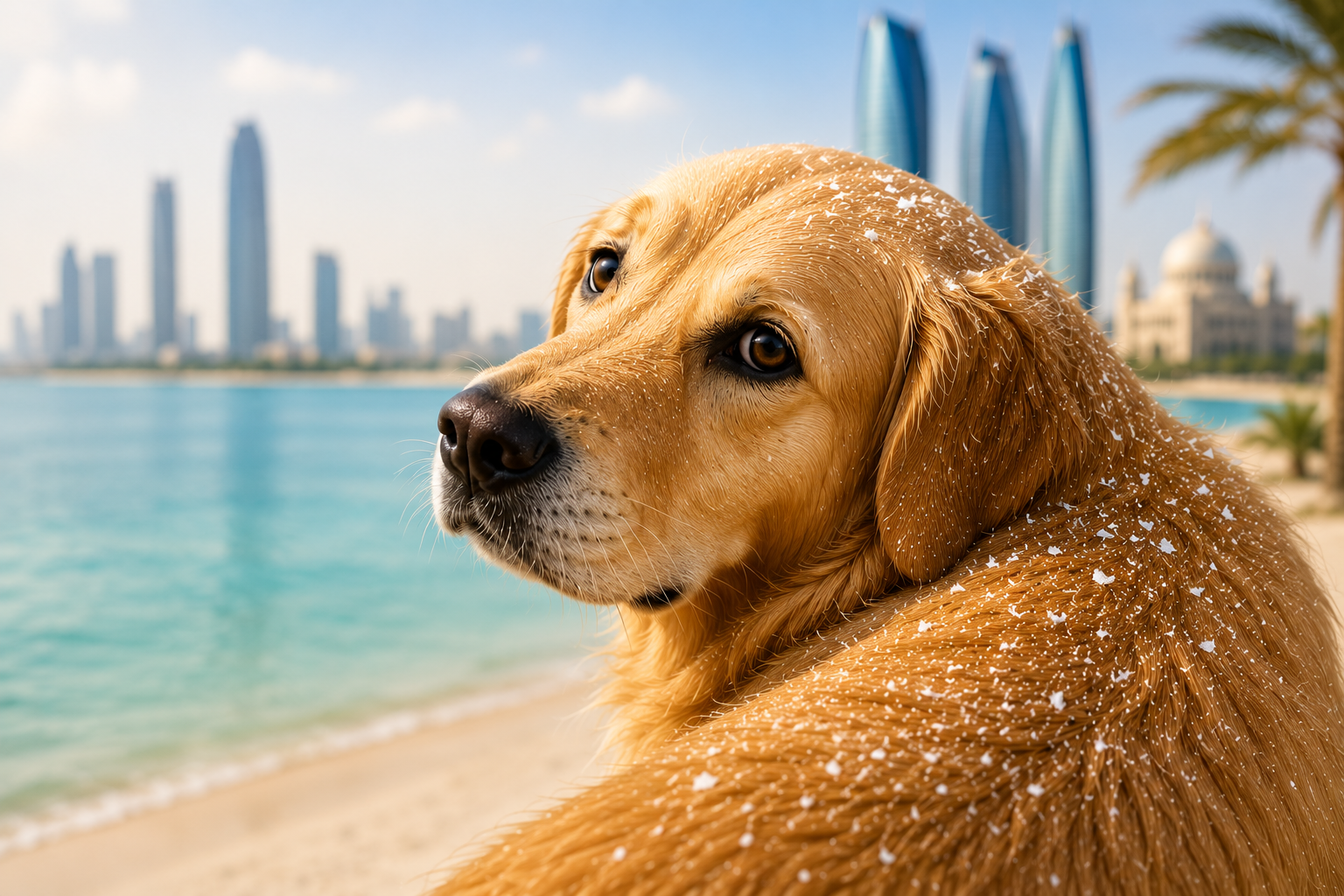
Every June, groomers across Abu Dhabi hear some version of the same request: “It’s so hot, can you just shave him down?” A Golden Retriever owner recently asked exactly that, convinced her dog’s thick coat was making the summer unbearable for him. When the groomer explained that shaving would actually make her dog more vulnerable to the heat, not less, she was stunned. Like many pet parents in the UAE, she assumed less fur automatically meant a cooler, more comfortable dog.
It’s an understandable assumption, and a common one in warmer climates like the UAE. But for double-coated breeds, shaving can do far more harm than good. Understanding how a double coat actually works, and learning the right way to groom around it, is essential to keeping your dog healthy, comfortable, and looking their best through the hottest months of the year, something any good provider of pet grooming in Abu Dhabi will factor into every summer appointment.
Let me know if you’d like the keyword placed differently (e.g., only once, or earlier in the first sentence) or want me to keep adjusting the rest of the blog post as you share it.
What Is a Double Coat?
A double-coated dog has two distinct layers of fur, each doing a different job:
- Undercoat: The soft, dense layer closest to the skin that provides insulation.
- Topcoat (guard hairs): Longer, coarser hairs that protect the undercoat and skin from water, dirt, and UV rays.
Breeds like Golden Retrievers, Huskies, German Shepherds, Border Collies, and Pomeranians all fall into this category. These dogs shed their undercoats seasonally, a process known as “blowing coat,” usually during spring and fall.
Why You Should Never Shave a Double-Coated Dog
Shaving might seem like the obvious fix for a dog panting through a Gulf summer, but here’s why vets and groomers advise against it:
1. It disrupts natural temperature regulation: The undercoat insulates against heat as well as cold, trapping a layer of air close to the body that helps regulate temperature. Removing it strips that protection away entirely.
2. It increases the risk of sunburn and skin damage: Without the topcoat, skin is exposed directly to UV rays, raising the risk of sunburn, irritation, and long-term skin damage.
3. It leads to poor, uneven regrowth: Once shaved, a coat can grow back patchy or in a different texture. In some cases, the undercoat regrows faster than the topcoat, crowding it out and making the dog more prone to matting and skin irritation.
4. It doesn’t actually reduce shedding: Improperly removing a double coat can damage hair follicles, which often makes shedding worse, not better, once the coat regrows
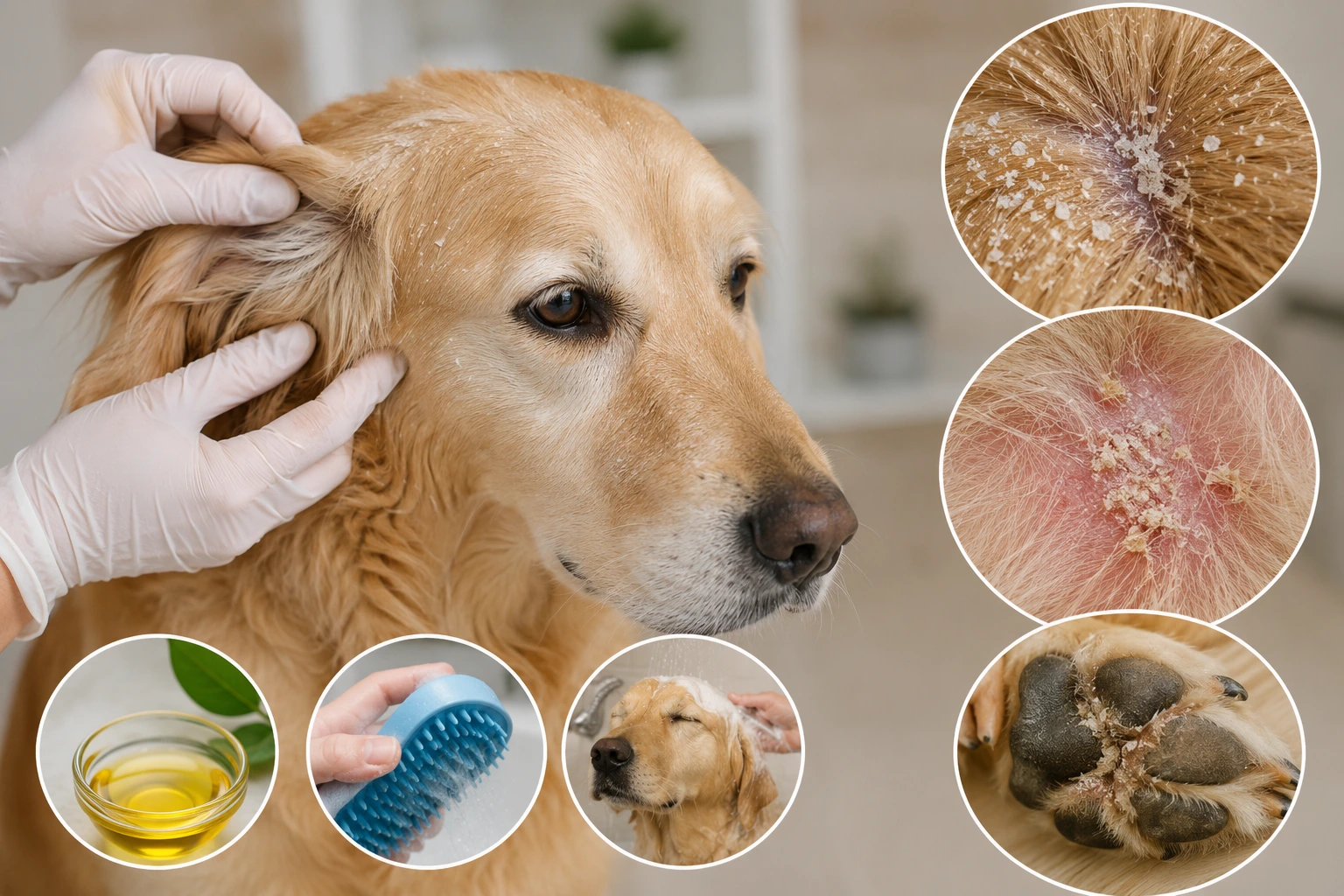
If your dog is already showing signs of matting, flaky skin, or coat damage from a previous shave or from parasites, it’s worth reading our guide on seborrhea in dogs and what a flaky, greasy coat is trying to tell you, since some of these symptoms overlap and are easy to misread as “just heat.”
Grooming Tips for Double-Coated Dogs
Shaving is off the table, so here’s what actually helps a double-coated dog stay cool and comfortable in the UAE climate:
- Brush regularly: Several times a week with an undercoat rake or slicker brush removes loose hair, prevents matting, and helps distribute natural oils through the coat.
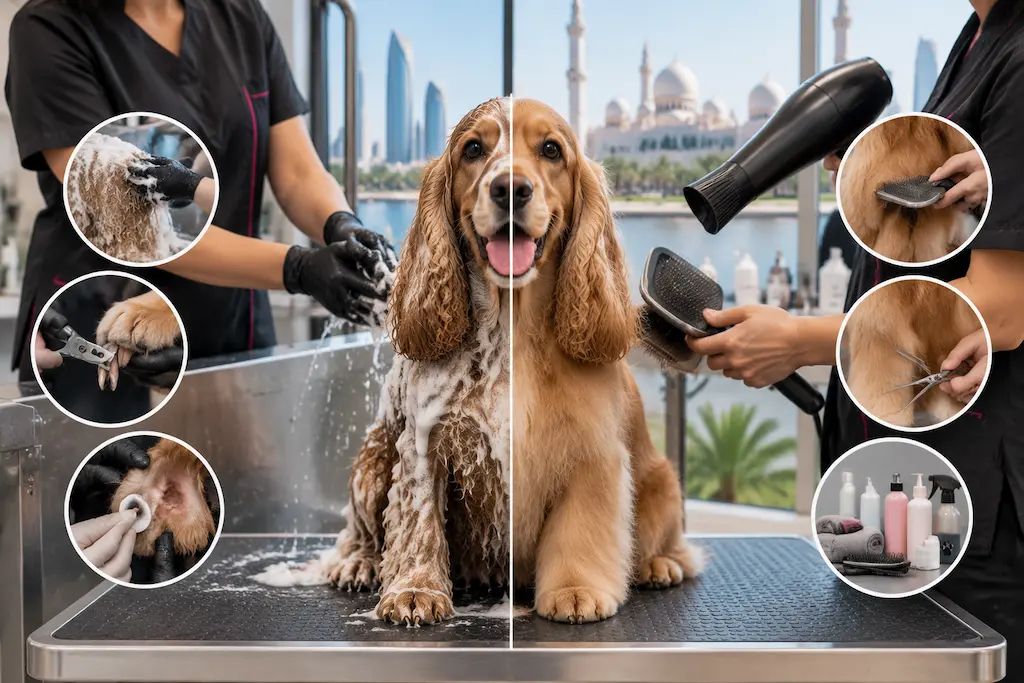
- Book professional de-shedding treatments: These use specialized tools to strip loose undercoat without damaging the protective topcoat, and are most effective during seasonal coat blowouts.
- Bathe with care: Double coats don’t need frequent baths, but when you do wash your dog, use a mild, dog-safe shampoo and dry the coat completely; trapped moisture can lead to skin infections and hot spots.
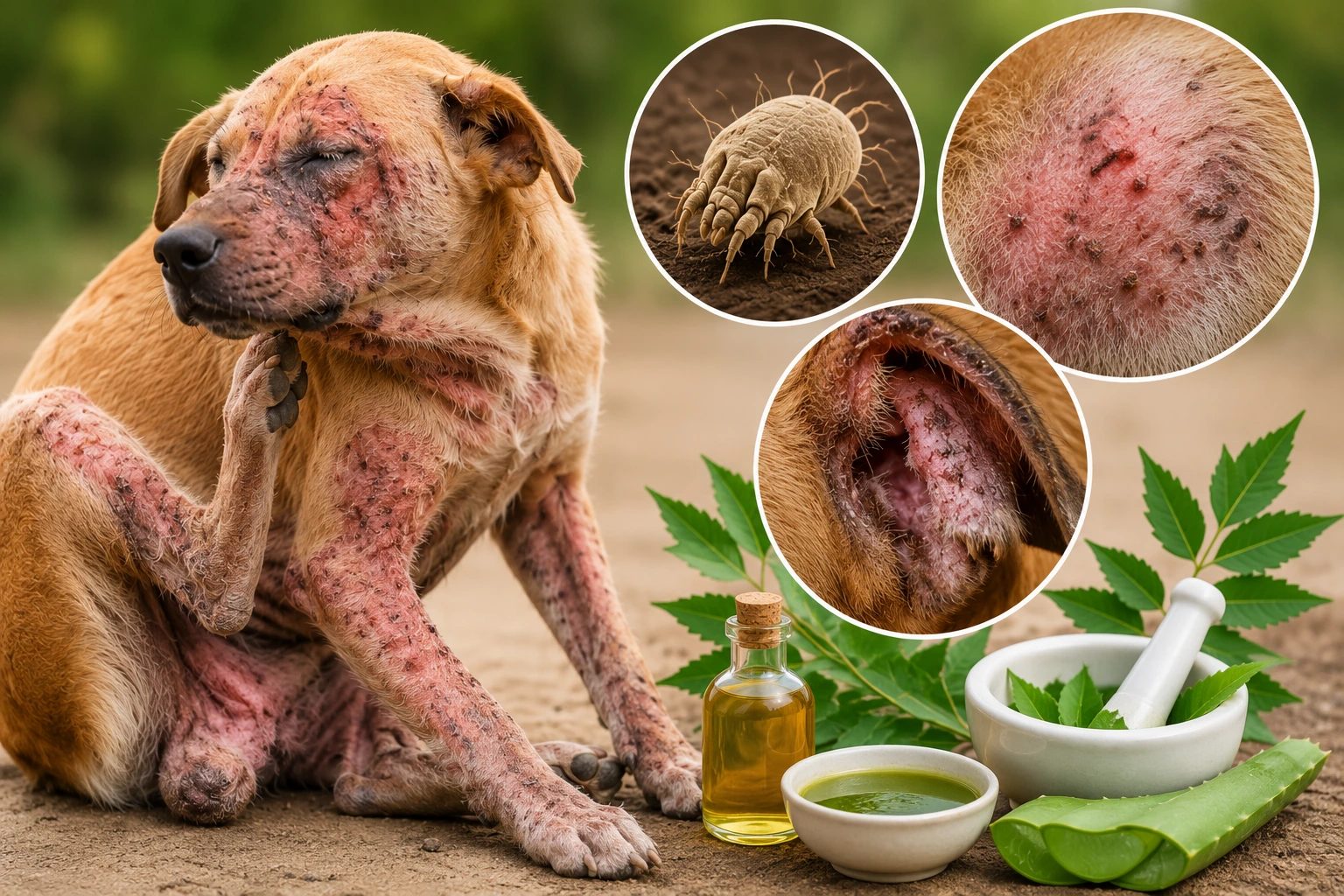
- Check for matting and skin issues regularly: Grooming sessions are a good opportunity to inspect for irritation, parasites, or hot spots hiding under a thick coat. If you notice persistent itching, hair loss, or crusty patches, it’s worth ruling out something like dog mange and the different forms it can take rather than assuming it’s just seasonal shedding.
- Adjust grooming with the seasons: During shedding season, step up brushing and professional grooming to manage the extra fur. In hotter months, a careful trim (never a shave) keeps the coat tidy and reduces overheating risk without removing its protective function.
A poorly handled trim can do its own kind of damage, so if you’re grooming at home, it’s worth knowing about the most common pet grooming injuries and how to avoid them before picking up clippers near a thick double coat.
Trust the Experts with Your Double-Coated Dog
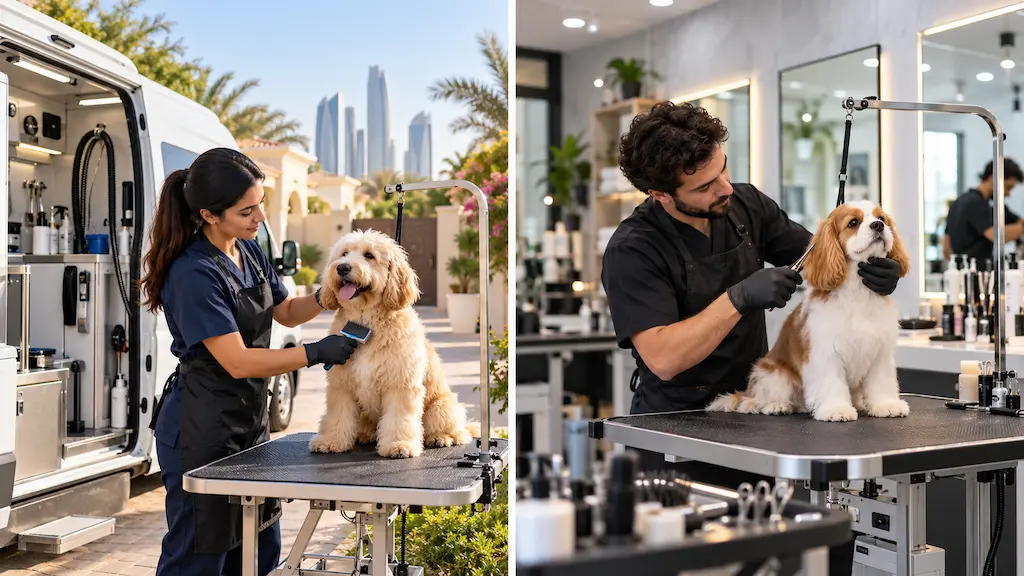
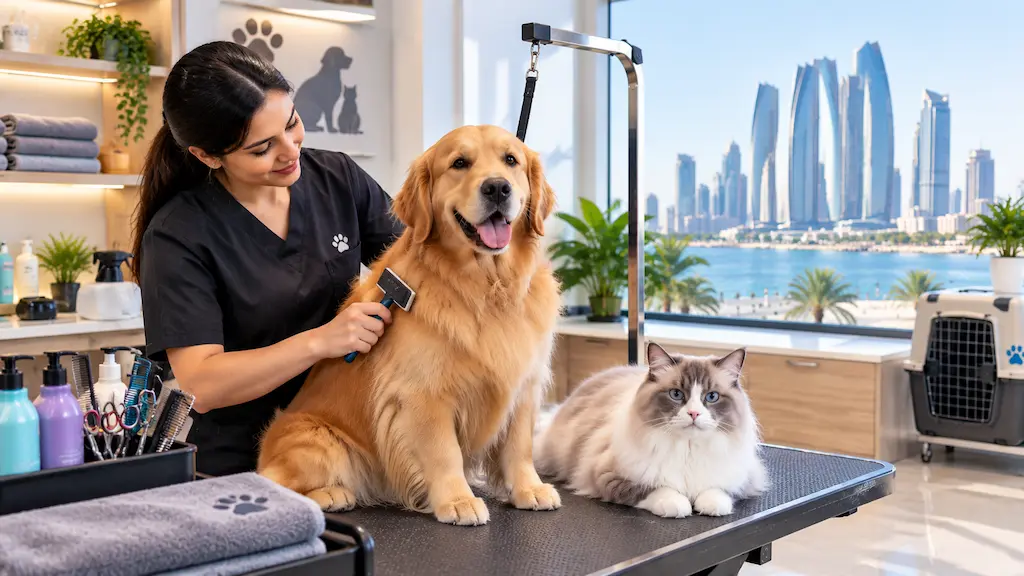
Caring for a double-coated dog properly takes knowledge, the right tools, and an understanding of exactly how much coat to remove and how much to protect. If you’re not confident handling it yourself, it’s best left to professionals. For pet parents in Abu Dhabi, The Groom Room’s dog grooming in Abu Dhabi services are tailored to the specific needs of double-coated breeds, with trained groomers who know how to trim safely without compromising your dog’s natural insulation. If getting your dog to a salon is the hard part, our mobile pet grooming service in Abu Dhabi brings that same breed-specific care straight to your doorstep.
Your dog deserves grooming that works with their coat, not against it, so trust The Groom Room, Abu Dhabi’s trusted pet grooming salon, to get it right.
Frequently Asked Questions
Is it ever okay to shave a double-coated dog?
Only in specific medical situations, such as severe matting that can’t be brushed out, certain skin conditions, or pre-surgical prep, and only under veterinary or professional groomer guidance. Routine summer shaving purely to “cool down” isn’t recommended.
How can I keep my double-coated dog cool in Abu Dhabi’s heat without shaving?
Regular brushing, professional de-shedding treatments, adequate hydration, shade, and avoiding peak-heat walks all help far more than shaving does, since the coat itself plays a role in regulating body temperature.
What’s the difference between de-shedding and shaving?
De-shedding removes loose, dead undercoat hair using specialized tools while leaving the topcoat and insulating structure intact. Shaving cuts the coat down to the skin, removing that protection entirely.
How often should double-coated breeds be professionally groomed?
Most double-coated dogs benefit from professional grooming and de-shedding every 4 to 8 weeks, with more frequent sessions during seasonal coat blowouts in spring and fall.
My dog’s coat looks patchy after a previous shave. Will it recover? In many cases, yes, though regrowth can take months and may come back a slightly different texture. Consistent brushing and professional grooming support healthier regrowth over time.
Conclusion
The instinct to shave a double-coated dog in the heat is understandable, but it works against the exact system your dog’s body relies on to stay cool. The undercoat and topcoat aren’t extra fur to get rid of in summer, they’re a built-in temperature regulation and protection system. The better path is regular brushing, professional de-shedding, and seasonal trims that manage the coat without stripping it away.
If you’re unsure how to care for your double-coated dog through the UAE’s warmer months, The Groom Room’s expert dog grooming team in Abu Dhabi can help you find the right balance between comfort and coat health. Book an appointment today and give your dog grooming that actually keeps them cool.