
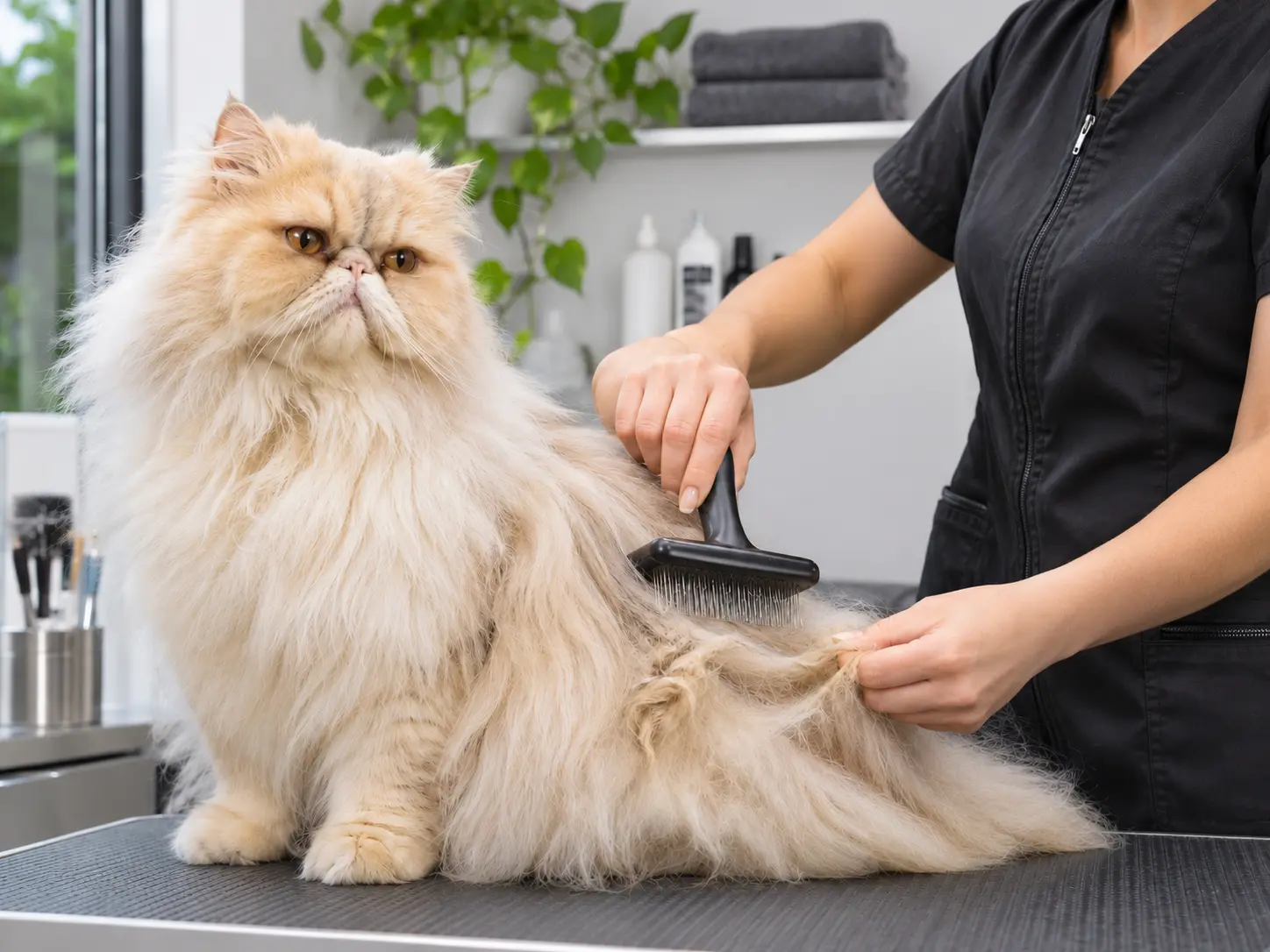



Persian cat fur gets matted because its long, fine hair sits over a dense undercoat that traps loose fur. Friction, moisture, shedding, and reduced self-grooming can cause these loose hairs to tangle together. Without regular combing, a small knot can gradually become a tight, uncomfortable mat.
Persian cat matting is common, but it is often preventable. The most effective approach is to comb through the entire coat, pay attention to areas where hair rubs together, and remove loose fur before tangles become difficult to manage.
Understanding how Persian coats behave can make everyday grooming easier and help you recognise when professional assistance is necessary.
Why Does Persian Cat Fur Mat So Easily?
Persian cats have long, dense coats that need more maintenance than most short-haired breeds. Three coat characteristics make them particularly vulnerable to matting.
1. A Dense Undercoat That Traps Loose Hair
Persian cats have a thick, soft undercoat beneath their longer outer fur.
As the coat sheds, loose undercoat hairs can become trapped among the surrounding strands instead of falling away naturally. Over time, these hairs collect close to the skin and begin forming tangles.
Regular brushing helps remove loose hair, but the comb must reach through the coat rather than simply smoothing its surface.
2. Fine Hair That Tangles Easily
Persian fur is soft and fine, making it more likely to twist and knot when individual hairs rub together.
Everyday activities such as walking, stretching, sleeping, and rubbing against furniture create friction.
When loose hair accumulates, even a small knot can grow into a dense mat.
3. Self-Grooming Cannot Maintain the Entire Coat
Cats naturally groom themselves by licking their fur, but Persian cats have more hair than their tongues can effectively manage.
Their dense coats are particularly difficult to maintain around the belly, armpits, hind legs, and other hard-to-reach areas.
This is why Persian cats often need daily assistance from their owners, even when they appear to groom themselves regularly.
How Does Persian Cat Fur Become Matted?
Matting usually develops gradually rather than appearing all at once.
- Loose hair accumulates: Shed undercoat becomes trapped among the longer strands.
- Friction creates tangles: Movement and rubbing cause hairs to twist together.
- Moisture and natural oils contribute: Dampness, saliva, skin oils, and dust can make tangled hair more difficult to separate.
- Knots become tighter: Additional loose hair collects around the original tangle.
- Mats develop close to the skin: The knot becomes dense and may pull against the skin when your cat moves.
A Persian cat can appear well-groomed on the surface while hidden mats develop underneath.
Common Causes of Persian Cat Matting
Although coat structure makes Persians prone to tangles, certain grooming habits and physical conditions increase the risk.
Brushing Only the Outer Coat
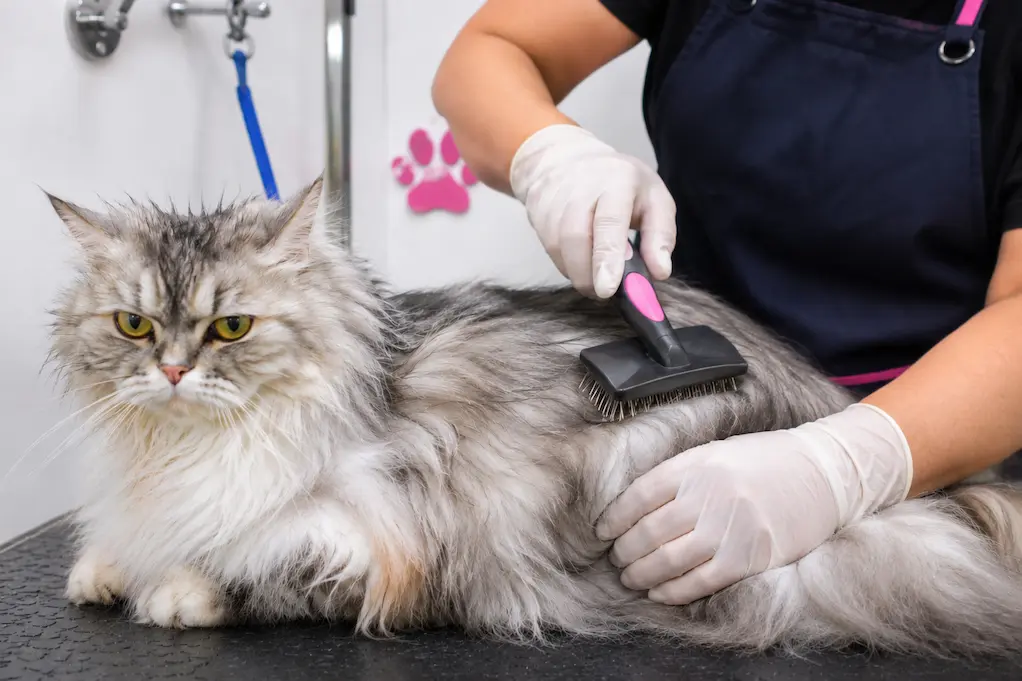
One of the most common mistakes is brushing the visible fur without reaching the undercoat.
The outer coat may look smooth while loose hair remains trapped near the skin.
A proper grooming routine involves separating the fur into small sections and carefully combing through each layer.
If a comb repeatedly catches in one area, check for tangles instead of pulling it through.
Missing Areas Where Fur Rubs Together
Mats commonly develop in areas where hair experiences frequent friction.
Check these locations regularly:
- Behind the ears
- Under the chin
- Around the chest
- Under the front legs
- Along the belly
- Between the hind legs
- Around the base of the tail
- Beneath collars
These areas may need more attention than the back or sides, where brushing is generally easier.
Seasonal Shedding and Coat Changes
Persian cats shed loose hair throughout the year, although the amount may vary with environmental conditions and natural coat cycles.
During heavier shedding periods, more loose fur can accumulate within the undercoat.
Persian kittens may also experience changes in coat texture and density as their adult fur develops.
Without regular removal, the accumulation of loose cat fur during shedding can increase the likelihood of tangles.
Damp or Dirty Fur
Moisture can make existing tangles harder to separate, particularly when the dense undercoat remains damp after bathing.
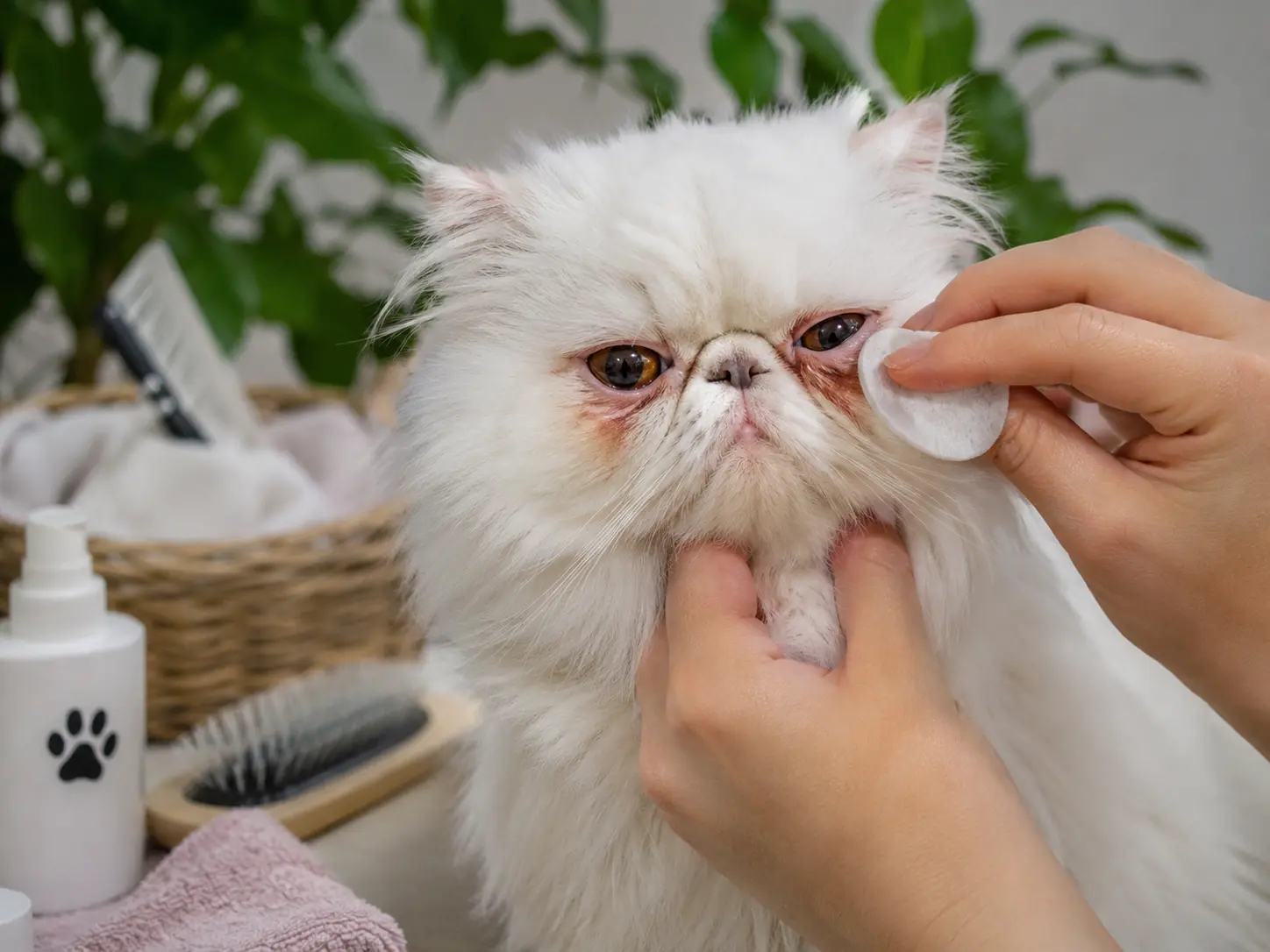
Persian cats may also experience watery eyes due to their facial structure. Moisture around the eyes can cause nearby fur to clump together.
Dirt, saliva, and leftover grooming products may also affect coat texture.
If your Persian frequently develops facial staining or damp fur around the eyes, gentle tear stain cleaning can help maintain the surrounding coat, although persistent eye discharge requires veterinary assessment.
A Dirty or Tangled Rear Area
Long fur around a Persian cat’s back end can collect litter, dirt, or faecal residue.
Once this material dries, it may become difficult to remove and contribute to uncomfortable tangles.
Regular hygiene checks and appropriate sanitary trimming can help maintain cleanliness without removing unnecessary coat hair.
Reduced Self-Grooming Due to Age or Health
Some Persian cats develop mats because they cannot groom themselves as effectively as before.
Possible reasons include:
- Excess weight
- Arthritis or joint discomfort
- Dental pain
- Reduced flexibility
- Illness or weakness
An overweight or older cat may struggle to reach its lower back and hindquarters.
If your Persian suddenly develops an unkempt or matted coat despite previously maintaining it well, consult a veterinarian to investigate possible health problems.
Bathing Without Removing Tangles First
Bathing a Persian cat while its coat contains knots can make those tangles more difficult to manage.
Wet fur may tighten around existing mats, and dense undercoats can take considerable time to dry completely.
Before bathing, check the coat carefully and address loose tangles that can be removed without discomfort.
Tight or painful mats should be assessed by an experienced groomer rather than washed or pulled apart.
Can the Wrong Shampoo Cause Persian Cat Matting?
Shampoo does not directly cause most matting, but unsuitable products and poor bathing techniques can affect the coat.
Human shampoos, certain dog shampoos, and harsh cleansing products may irritate feline skin or leave the fur difficult to manage.
For safe Persian cat coat care:
- Use shampoo specifically formulated for cats.
- Avoid bathing a coat containing tight mats.
- Rinse thoroughly to remove product residue.
- Dry the undercoat completely.
- Comb gently once the coat is sufficiently dry and comfortable to handle.
Persistent skin irritation, excessive oiliness, or unusual flaking may require veterinary attention rather than more frequent bathing.
How to Spot Matted Fur on a Persian Cat Early
Early tangles are usually easier to manage than established mats.
Check your Persian cat’s coat regularly, especially in areas where the fur rubs together.
Signs of developing mats include:
- Small knots that catch on a comb
- Fur separating into thick clumps
- Flat, felt-like patches beneath the outer coat
- Hair pulling when your cat moves
- Excessive licking or nibbling at one location
- Discomfort when certain areas are touched
A small knot behind the ears or beneath the belly may be difficult to see without separating the surrounding fur.
During coat inspections, look for redness, irritation, or unusual odours beneath tangled areas.
How to Prevent Persian Cat Fur From Matting
Preventing mats is generally easier and more comfortable than removing them after they become tight.
1. Comb Your Persian Cat Daily
Most Persian cats benefit from daily coat maintenance.
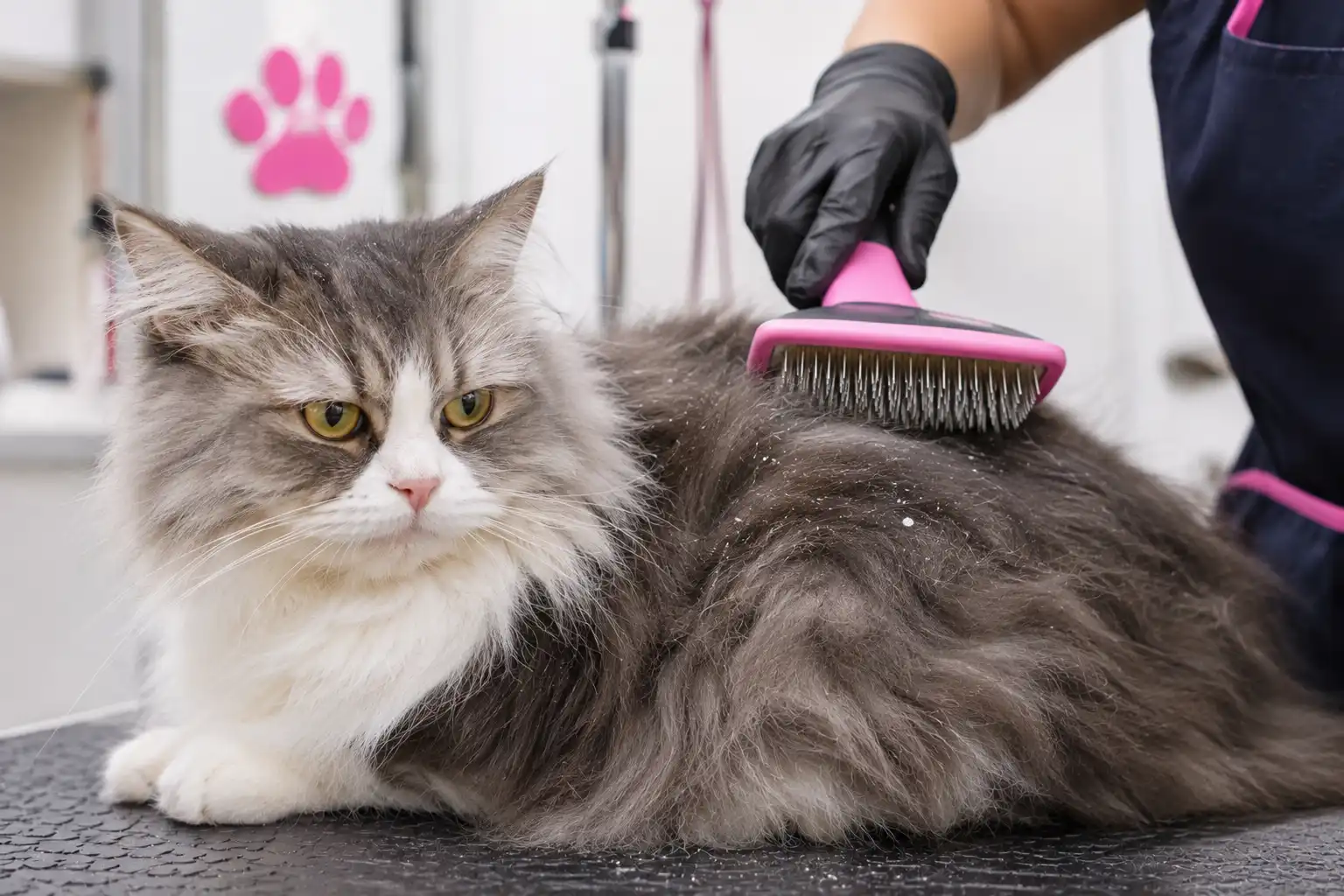
Use a suitable wide-toothed or metal grooming comb and work through the fur in small sections.
Part the coat gently so you can examine the undercoat without repeatedly pulling on the skin.
2. Pay Attention to High-Risk Areas
Start with the areas most likely to develop tangles, particularly behind the ears, around the armpits, beneath the belly, and near the hind legs.
These sections often need more careful handling than the back.
3. Remove Loose Undercoat Regularly
Removing shed fur reduces the amount of loose hair available to form knots.
A gentle brushing and combing routine can help keep the coat manageable, especially during heavier shedding.
Avoid aggressive de-shedding tools or excessive brushing that may irritate the skin.
4. Keep the Face and Rear Clean
Check the fur around your cat’s eyes, chin, and hindquarters for moisture or debris.
Use appropriate cat-safe cleaning methods and dry the areas gently.
Professional sanitary trimming may help cats that repeatedly collect waste in their rear coat.
5. Dry the Coat Properly After Bathing
Persian fur can retain moisture beneath the surface.
If a bath is necessary, the coat should be dried carefully with methods your cat can tolerate.
Incomplete drying may encourage tangling and skin discomfort.
6. Maintain a Suitable Grooming Schedule
Some Persians require professional coat maintenance in addition to daily brushing.
The appropriate schedule depends on coat density, shedding, skin condition, and how well the cat tolerates grooming.
Consistent cat grooming in Abu Dhabi can help owners manage dense Persian coats when routine home brushing is not sufficient.
7. Keep Grooming Sessions Short and Calm
Persian cats may resist long grooming sessions, particularly when their coats are tangled.
Introduce grooming gradually and reward calm behaviour.
Several short, gentle sessions can be more manageable than one prolonged brushing session.
Stop if your cat becomes distressed or shows signs of pain.
What Should You Do If Your Persian Cat Already Has Mats?
The safest approach depends on the size, location, and tightness of the mat.
Small, loose tangles: Gently separate the outer hairs with your fingers and use an appropriate comb without pulling against the skin.
Tight or skin-level mats: Do not attempt to cut them with household scissors. Cat skin is thin and can become trapped within a mat.
Mats around sensitive areas: Tangles around the belly, armpits, or hindquarters are particularly risky to remove at home.
Multiple painful mats: Professional clipping or veterinary assistance may be necessary when combing would cause discomfort.
For cats with extensive matting, safe removal of matted cat fur requires an assessment of how closely the tangled hair sits against the skin.
Avoid using household oils, human detangling products, or sharp tools to loosen difficult mats.
If the skin beneath the mats is red, swollen, wounded, or unusually painful, consult a veterinarian before grooming.
When Does a Persian Cat Need Professional Grooming?
Some Persian cats remain comfortable with consistent home grooming, while others need additional assistance to prevent repeated matting.
Professional grooming may be appropriate when:
- Tangles return despite daily combing.
- The undercoat is difficult to maintain.
- Several mats develop in hard-to-reach areas.
- The coat becomes difficult to dry properly.
- Your cat cannot tolerate extended brushing sessions.
- Sanitary trimming is needed to maintain cleanliness.
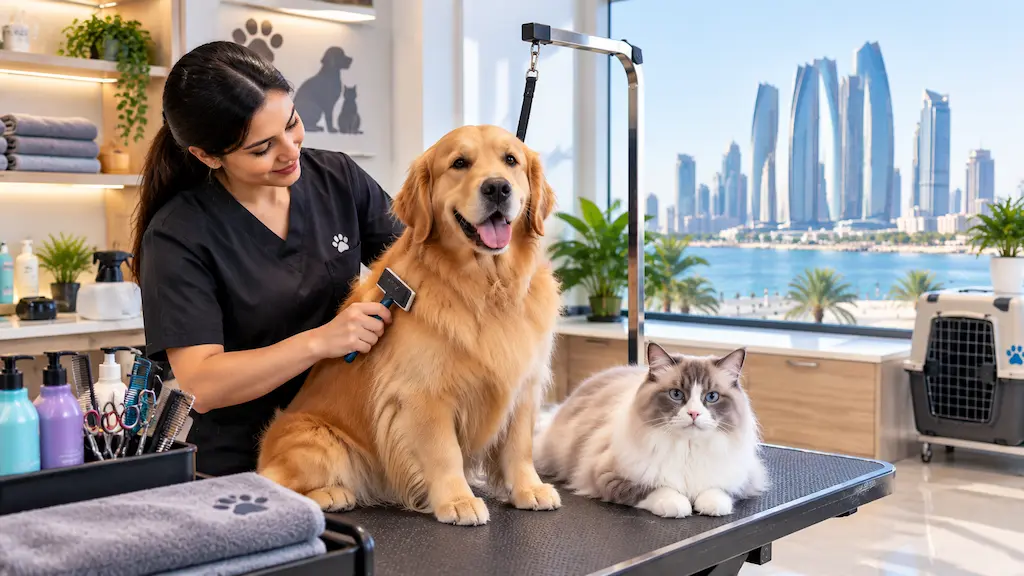
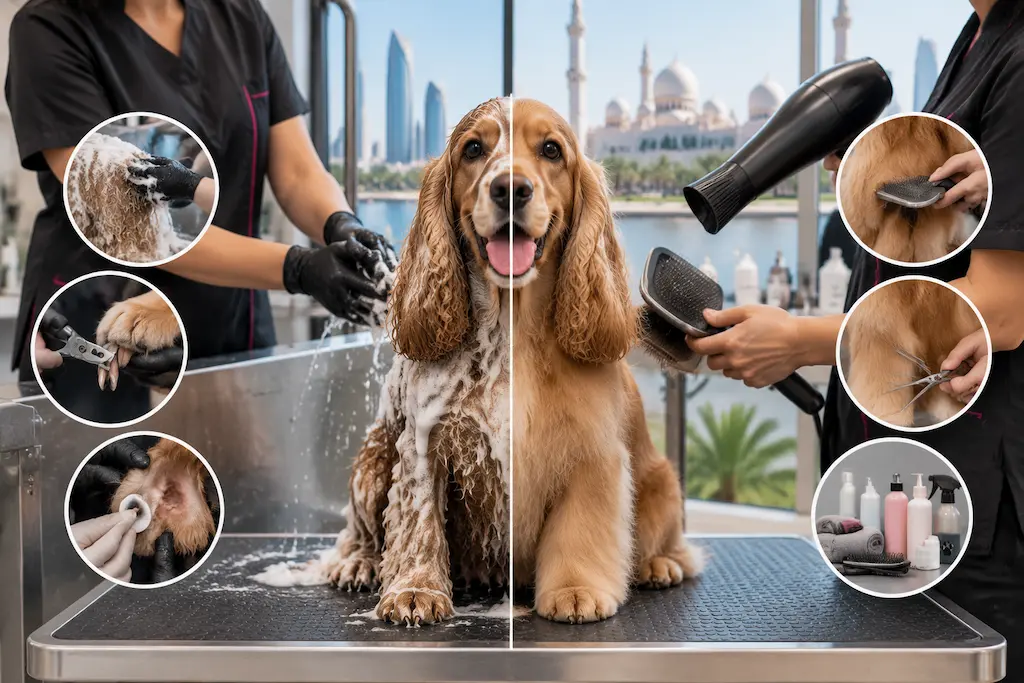
Groom Room provides professional cat grooming services, including bathing, brushing, de-shedding, and coat trimming suited to individual grooming needs.
An experienced groomer can assess whether tangles can be removed comfortably or whether clipping is a safer option.
Severely matted cats, especially those with damaged skin or significant pain, may require veterinary care.
Mobile Grooming for Persian Cats in Abu Dhabi
Persian cats that dislike carriers or long car journeys may benefit from grooming closer to home.
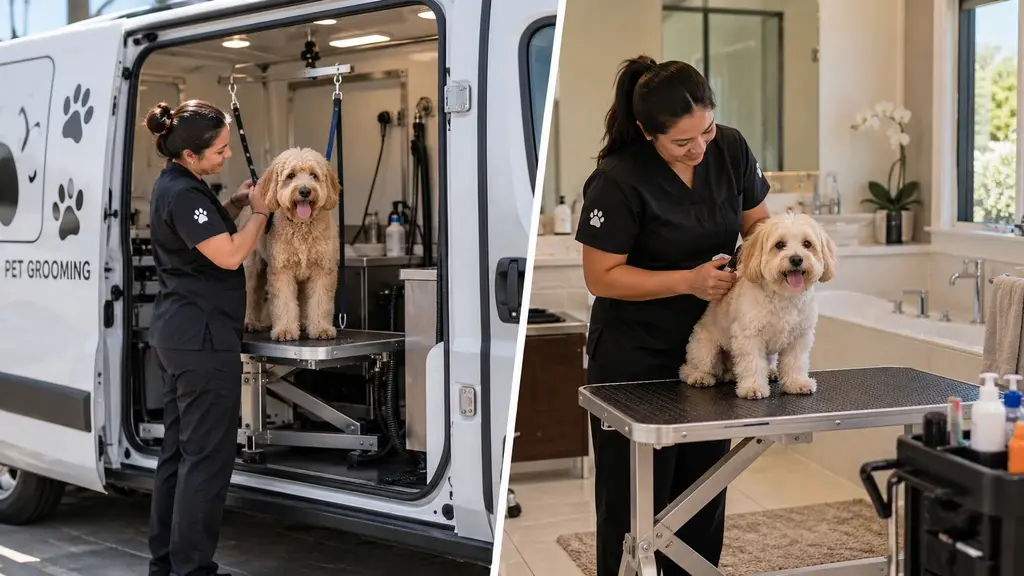
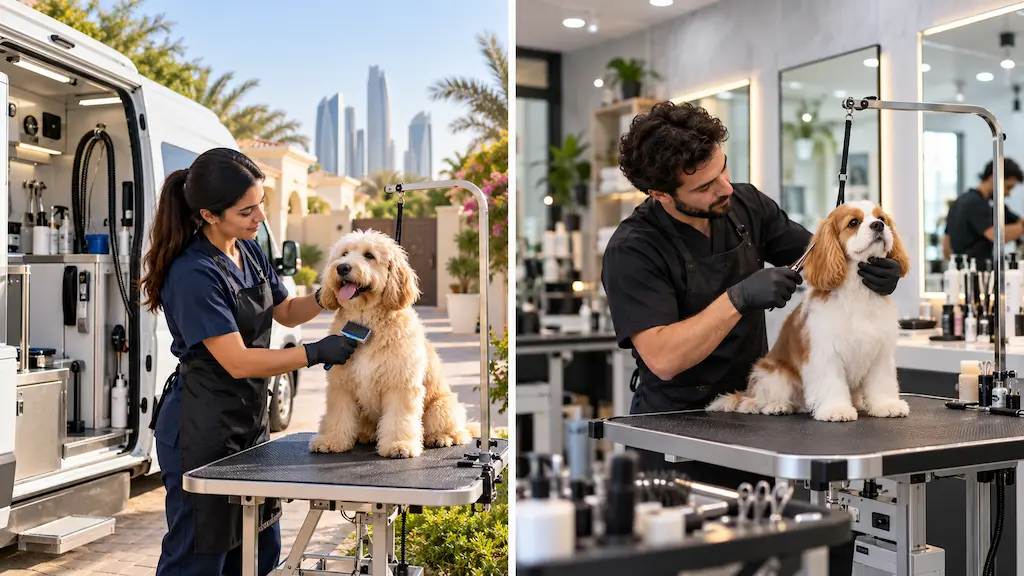
Groom Room’s mobile pet grooming in Abu Dhabi brings professional grooming equipment to your location in a fully equipped, air-conditioned vehicle.
This reduces the need to transport your Persian cat to a traditional grooming salon.
For cats with dense coats, the groomer can assess tangles, discuss coat maintenance, and select suitable grooming methods based on the cat’s condition and tolerance.
Before booking, mention whether your Persian has existing mats, sensitive skin, or difficulty being handled.
Final Thoughts
Persian cat matting develops mainly because long, fine fur and a dense undercoat trap loose hair. Friction, moisture, shedding, and reduced self-grooming can make tangles worse.
Daily combing, careful attention to friction areas, and regular coat inspections are the most practical ways to prevent painful mats.
If your Persian develops tight knots or repeatedly struggles with matting, professional grooming can help maintain the coat safely. Groom Room offers mobile cat grooming in Abu Dhabi and Al Ain, providing convenient coat care for Persian cats and other long-haired breeds.
Frequently Asked Questions
Is Matted Fur Painful for Persian Cats?
Yes, tight mats can pull against the skin when a cat moves, causing discomfort or irritation. Severe matting may restrict movement and hide underlying skin problems.
Why Is My Persian Cat’s Fur Suddenly Matted?
Sudden matting may develop because of heavier shedding, reduced grooming, weight gain, arthritis, dental discomfort, or illness. If the change is unexpected, particularly in an older cat, veterinary assessment is advisable.
Why Does My Persian Cat Get Mats on Its Back?
Loose undercoat can accumulate along the back, especially when a cat struggles to reach that area during self-grooming. Regular combing and checking for hidden tangles can help.
Is Brushing Once a Week Enough for a Persian Cat?
Usually not. Most Persian cats benefit from daily brushing or combing because their long, dense coats can develop tangles quickly.
How Often Should a Persian Cat Be Professionally Groomed?
Many Persian cats benefit from professional grooming approximately every four to eight weeks, although the ideal interval depends on coat condition, shedding, home maintenance, and individual needs.
Will Persian Cat Fur Grow Back After Mats Are Clipped?
In most healthy cats, fur grows back after clipping, although the rate varies. If the skin looks abnormal or hair does not regrow as expected, consult a veterinarian.