




Fatima noticed it first: a thin, soapy trail running from the mobile grooming van parked outside her building, straight into the street gutter. Her neighbor’s Labrador had just gotten a full wash-and-blow-dry, and the van was pulling away, leaving a small stream of gray water behind.
“Where does that even go?” she wondered. “And where did they get the water from in the first place?”
It’s a fair question, and one more pet owners are starting to ask as mobile grooming grows in popularity across the city. It’s convenient: no car ride, no waiting room, no stressed-out pet. But behind the calm, spa-like experience of pet grooming in Abu Dhabi delivered right to your doorstep is a logistical operation involving tanks, pumps, filtration, and, whether groomers like to admit it or not, environmental law. Let’s walk through exactly how it works.
Where Do Mobile Groomers Get Their Water?
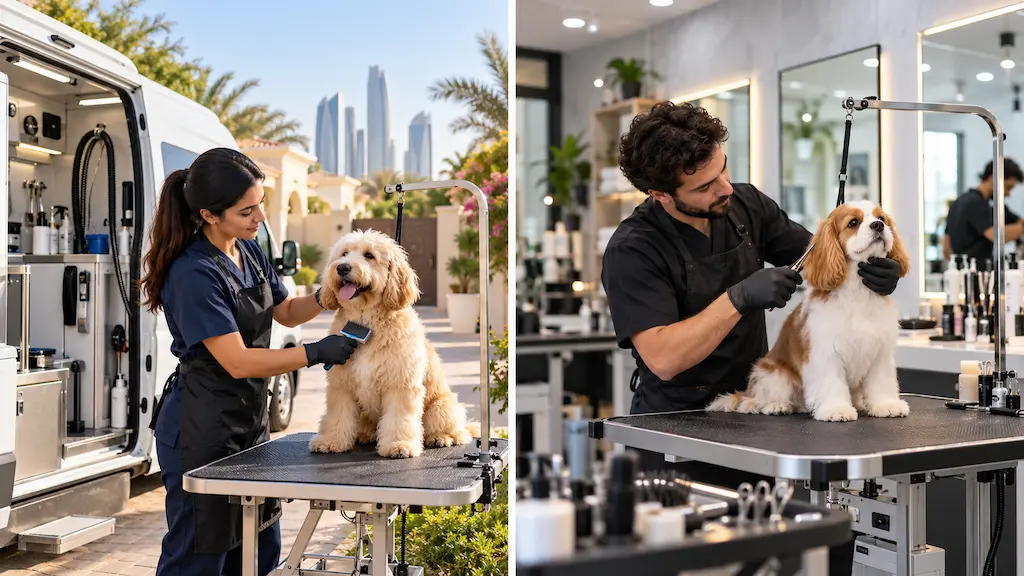
Professional mobile groomers come prepared, not improvised. A properly equipped grooming van typically carries:
- A freshwater tank built into the vehicle, holding enough clean water for several appointments back-to-back
- A generator or onboard power source to run water heaters, pumps, and dryers
- All grooming tools and products needed to handle a pet from nose to tail, without borrowing anything from the client’s home
Most vans are designed to run an entire day’s route on their onboard tank alone. That said, on unusually hot days or longer routes, a groomer might ask to top off their tank using your outdoor hose. It’s normal, and it’s usually just a convenience, not a sign they’ve run dry mid-job.
But What Happens to the Dirty Water?
This is where things get serious, and where a lot of groomers quietly cut corners. Used grooming water isn’t just “wet.” It’s wastewater, and it typically contains:
- Soap residue (yes, even the biodegradable kind)
- Loose pet fur
- Flea and tick treatment runoff
- General dirt and skin debris
If that water is dumped into a storm drain, it doesn’t get treated. It flows directly into creeks, rivers, or the ocean. That means even a shampoo marketed as “natural” or “eco-friendly” can still harm fish and aquatic ecosystems once it’s untreated and concentrated.
Pouring that water into a street, gutter, or parking lot isn’t a gray area. In most jurisdictions, it’s a straightforward violation of stormwater regulations.
Storm Drain vs Sanitary Sewer: The Distinction That Matters
Storm drain: Designed for rainwater runoff only. It leads directly into natural water bodies with no treatment in between.
Sanitary sewer: Handles wastewater from sinks, toilets, and, when done correctly, mobile grooming operations. This water is treated at a facility before it’s released back into the environment.
If you can’t tell which type of drain you’re looking at, the safe assumption is that it’s a storm drain. Don’t use it.
A Real-World Case: What Happens When It Goes Wrong
In several U.S. cities, including parts of California and Washington State, local water authorities have issued citations to mobile grooming and mobile detailing businesses for discharging wastewater into storm drains. Municipal stormwater programs, which fall under the Clean Water Act’s National Pollutant Discharge Elimination System (NPDES) framework, actively monitor and investigate reports of soapy runoff entering public drains, precisely because it’s one of the more common and preventable sources of non-point-source water pollution in urban areas.
The pattern in these cases is usually the same: a groomer, detailer, or car wash operator treats a storm drain as a convenient disposal point, gets reported by a resident or flagged during a routine inspection, and ends up facing fines plus a mandated correction plan. The fix is rarely complicated. It usually just means adding a filtration and containment step that should have been there from day one.
The takeaway for pet owners: a legitimate mobile grooming company should be able to explain, without hesitation, exactly how they handle wastewater. If a groomer shrugs off the question, that’s worth noting.
Best Practices Mobile Groomers Should Follow
A responsible mobile grooming operation should:
- Store all cleaning agents securely inside the van, sealed and labeled
- Filter out fur and solids before any wastewater disposal, to avoid clogging sewer lines
- Collect used water in an onboard holding tank, then empty it later at an approved facility or disposal point
- Dispose of wastewater only through a utility sink, mop sink, or toilet (with property owner permission), never onto landscaping or pavement
- Confirm local permit requirements, since some municipalities require a discharge permit before releasing wastewater into the sanitary sewer system
Being Spill-Ready
Even well-run operations can have an off day. That’s why credible mobile groomers maintain:
- A written spill response plan
- Annual staff training on spill cleanup and stormwater regulations
- Spill kits and Safety Data Sheets (SDS) on hand for every product used in the van
Protecting pets and protecting the environment aren’t separate goals. They go hand in hand.
Groom Room: Mobile Pet Grooming in Abu Dhabi, Done Right
If you’re looking for pet grooming in Abu Dhabi who take both your dog’s comfort and environmental responsibility seriously, Groom Room is worth knowing about.
Their vans are built around the standards outlined above:
- Freshwater tanks sized for full-day routes
- Onboard wastewater collection and filtration
- Groomers trained specifically in eco-safe grooming practices
- Wastewater disposal procedures that follow UAE environmental regulations
Whether you’re in downtown Abu Dhabi or further out in the suburbs, Groom Room brings the full grooming experience to your doorstep, without leaving a mess, literal or environmental, behind.
Frequently Asked Question
Do mobile groomers need to bring their own water?
Yes. Reputable mobile groomers carry an onboard freshwater tank sized for a full day’s appointments, so they rarely need to rely on a client’s hose.
Is it safe to let a mobile groomer use my outdoor hose?
Generally, yes. It’s a common, low-risk request, especially on hot days or long routes. It doesn’t indicate anything is wrong with their setup.
Can mobile groomers legally dump wastewater into the street or storm drain?
No. Storm drains lead untreated water directly into rivers, lakes, or the ocean. Discharging grooming wastewater there violates environmental regulations in most regions.
Is “eco-friendly” shampoo safe to pour down a storm drain?
No. Even biodegradable or natural shampoos can harm aquatic life when they enter waterways untreated and concentrated.
How can I tell if a mobile groomer disposes of water responsibly?
Ask directly. A trustworthy operator will describe their process clearly (onboard collection, filtration, and disposal through a sanitary sewer connection) without hesitation.
What should I do if I see a mobile groomer dumping wastewater illegally? Y
ou can report it to your local water or environmental authority, which typically handles stormwater violations under municipal pollution-control programs.
Conclusion
Mobile groomers get their water from onboard freshwater tanks, and occasionally, your garden hose. Where the dirty water goes matters just as much: it belongs in the sanitary sewer, filtered and properly disposed of, never in a storm drain, gutter, or parking lot.
When you’re choosing a mobile groomer, ask the question Fatima asked. The right answer is a sign you’ve found a team that takes both your pet’s care and the planet’s health seriously.
Choose Groom Room. Your pet, and the environment, will thank you.