



Every experienced cat groomer develops a kind of sixth sense for the moment a cat is about to turn. You learn to read it in the ears before you feel it in the claws, the flick sideways, the pupils blowing wide, the low tail that starts to thump. On the grooming table, missing those signals is how you get bitten. Reading them is how you keep a nervous cat calm and finish the job safely.
The truth is, your cat is always telling you how they feel just not in words. Learning to read the angry cat body language that comes before a swat or a hiss is one of the most useful things you can do as an owner. It helps you head off conflict, lower your cat’s anxiety, and build the kind of trust that makes every interaction grooming included easier.
Here’s what those warning signs mean, and what to do when you see them.
1. Understanding angry cat body language
Cats communicate through posture, ears, eyes, tail, and voice. According to the Cornell Feline Health Center, the classic signals fall into aggression and fear and often overlap. Here’s how I read them:
| Signal | What it looks like | What it usually means |
|---|---|---|
| Arched back | The “Halloween cat” back up, fur raised | Trying to look bigger; fear or defensive aggression |
| Flattened ears | Pinned back or rotated sideways (“airplane ears”) | Fear, irritation, or a warning |
| Dilated pupils | Wide, black centres | High arousal fear, overstimulation, or defence |
| Hissing / growling | Vocal warnings | “Back off” the last warning before a strike |
| Thumping / puffed tail | Lashing or bottle-brush tail | Clear agitation |
| Stiff, tense posture | Rigid, low, leaning toward the threat | Alert and ready to defend |
2. Why do cats get angry?
Cats don’t lash out for no reason. The common triggers I see:
- Territorial behaviour cats fiercely protect their space
- Stress and anxiety loud noises, visitors, or changes in routine
- Health issues pain, skin problems, or parasites making them irritable
- Overstimulation too much petting, or rough play
- Lack of grooming mats, ticks, or dirty fur causing real discomfort
3. How grooming reduces cat stress
Cats are fastidious self-cleaners, but they can’t fully manage their coat, nails, and skin alone — and discomfort feeds irritability. Regular grooming is tied directly to a calmer, happier cat.
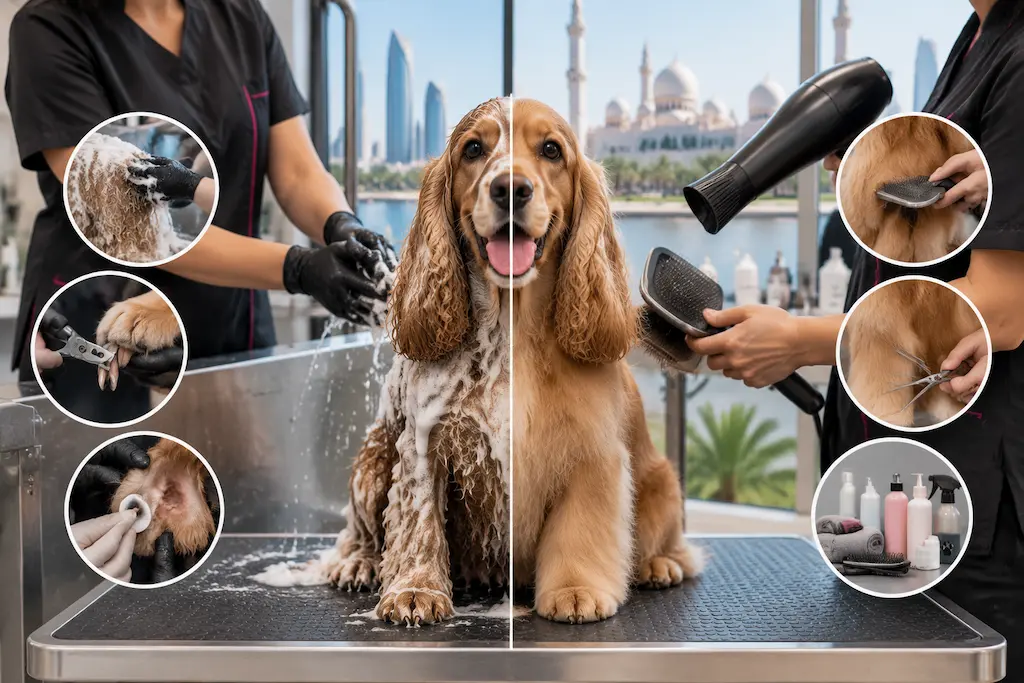
How professional pet grooming in Abu Dhabi helps:
- Removes painful mats and tangles
- Prevents parasites like ticks and fleas
- Cleans sensitive areas (eyes, ears, paws)
- Keeps the coat soft, clean, and shiny
- Reduces shedding and allergens
A comfortable, well-groomed cat is a calmer, less defensive, more affectionate cat. I see the difference on the table constantly.
4. Professional cat grooming in Abu Dhabi
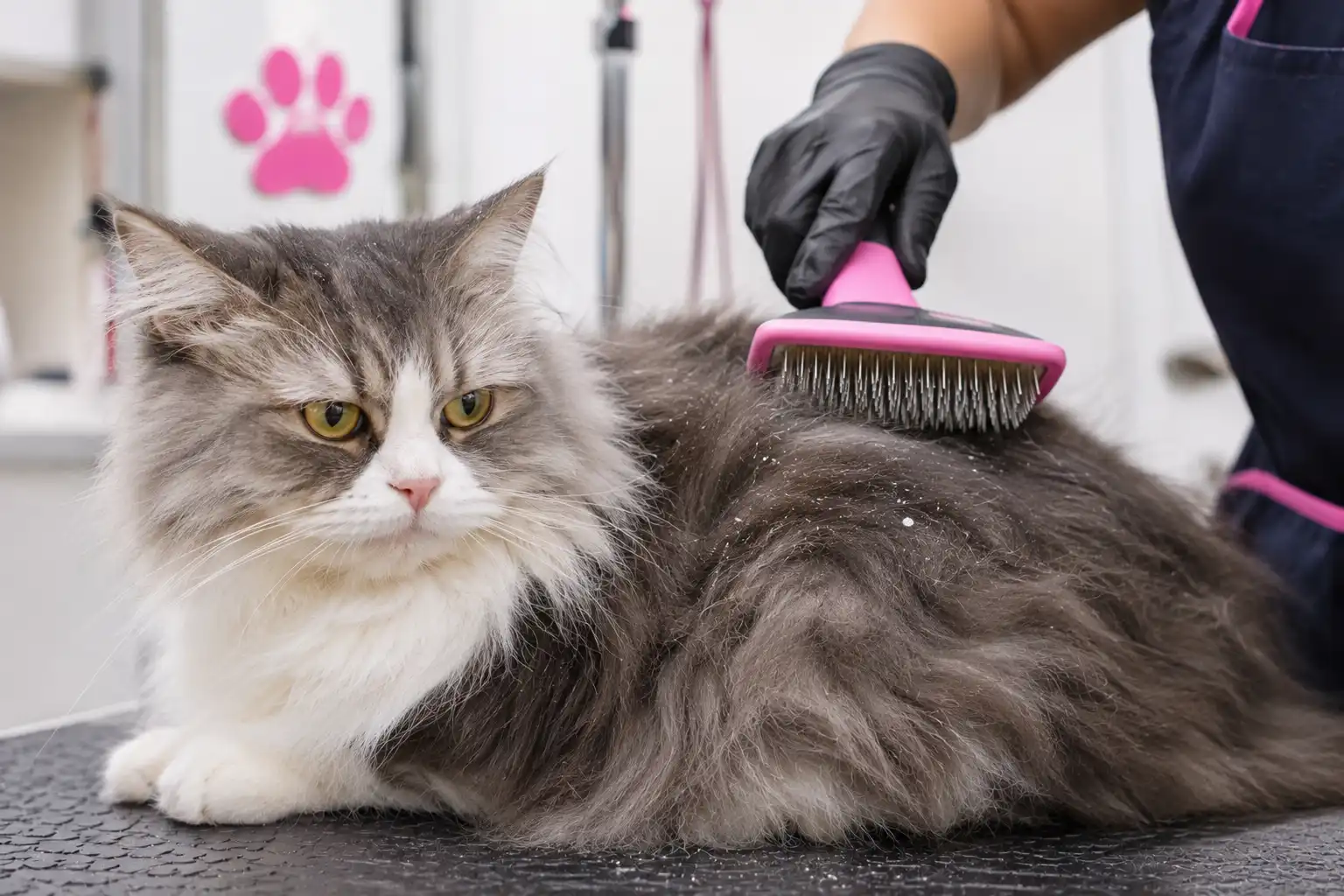
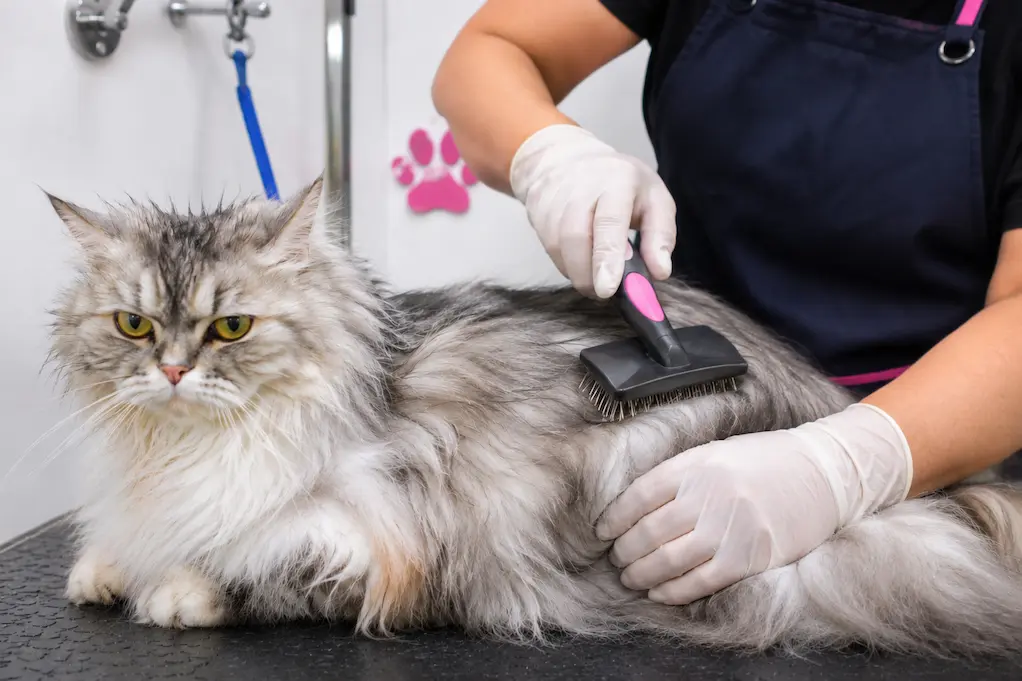
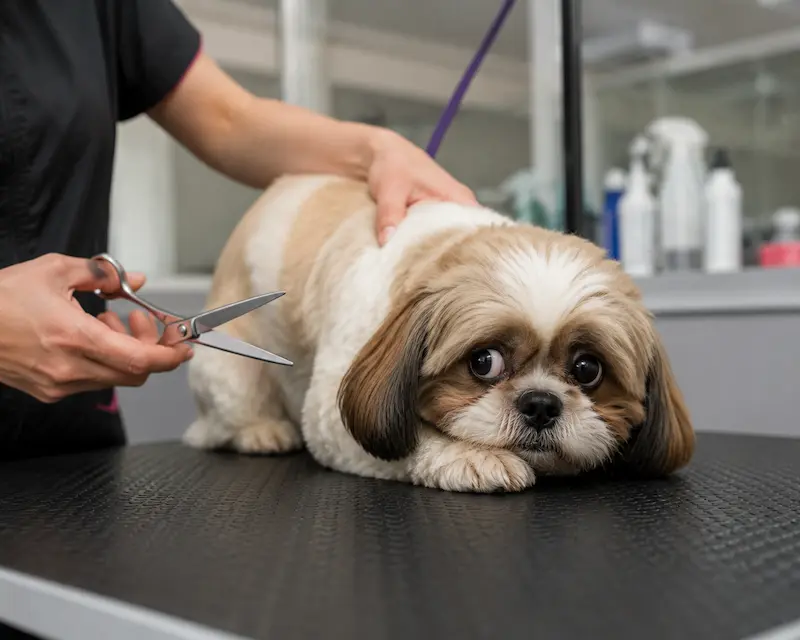
You can handle the basics at home, but professional cat grooming in Abu Dhabi means complete, low-stress care from people trained to read exactly the body language above. Handling a sensitive or aggressive cat is a skill knowing when to pause, when to reposition, and when to give a cat a minute is what keeps everyone safe.
What professional grooming covers:
- Safe nail trimming and brushing
- Stress-free bathing
- Tick and flea treatment
- Special care for long-haired breeds
- Calm, patient handling of anxious cats
5. How to calm an angry or stressed cat
When you spot the warning signs, here’s what actually works:
- Give space let them retreat to a safe spot and settle.
- Avoid eye contact a direct stare can feel like a threat.
- Use calming aids soft background sound or a pheromone spray can help.
- Keep a routine cats thrive on predictability.
- Schedule regular grooming comfort genuinely improves mood.
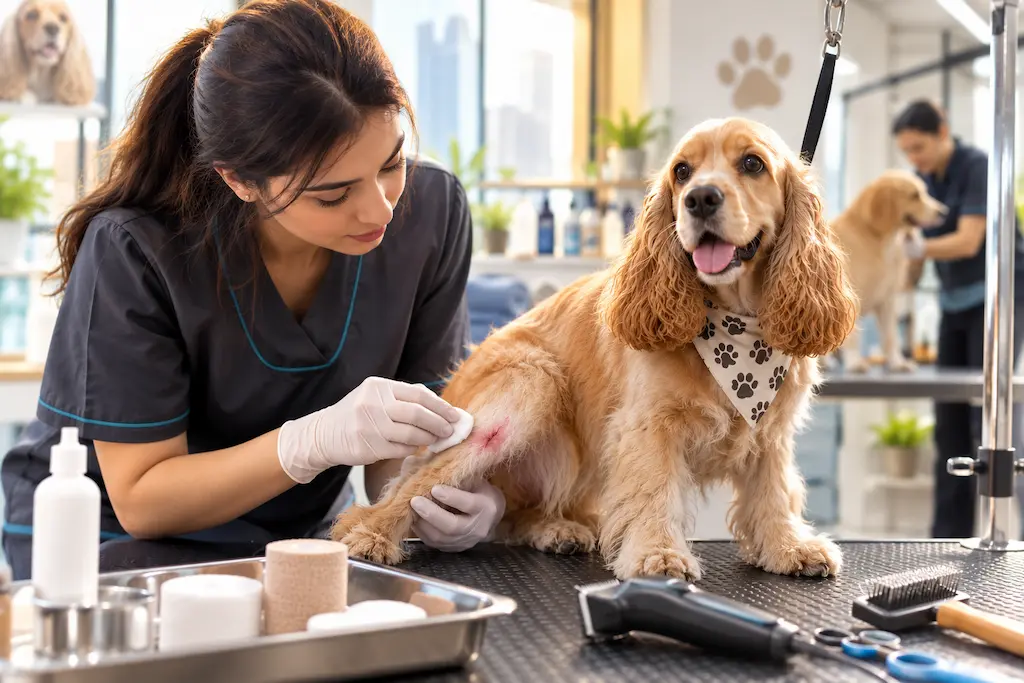
6. When to seek veterinary help
If your cat’s aggression is frequent or extreme, see a vet. Underlying causes like dental pain, skin infections, or injury are common and a cat in pain can’t tell you any other way. Cornell notes that early intervention gives the best outcome, so don’t wait it out.
Frequently asked questions
What does an angry cat’s body language look like?
Flattened or sideways ears, dilated pupils, an arched back with raised fur, a thumping or puffed tail, a stiff posture, and hissing or growling. Seeing several of these together is your cue to give your cat space.
Why is my cat suddenly aggressive?
Sudden aggression often signals pain or illness dental problems, skin issues, parasites, or injury. It can also come from stress, overstimulation, or territorial pressure. If it’s new or frequent, a vet check is wise.
Is my cat angry or just scared?
They overlap. Fearful cats tend to crouch, tuck the tail, and flatten the whiskers; aggressive cats stand tall and lean forward. Both may hiss and have dilated pupils so read the whole body and the situation.
Should I punish my cat for hissing or scratching?
No. Punishment increases fear and makes aggression worse. Give the cat space and let them calm down instead never grab a hissing or growling cat.
Can grooming really make my cat less irritable?
Yes. Mats, parasites, and dirty fur cause real discomfort, and discomfort feeds irritability. A well-groomed, comfortable cat is noticeably calmer which is why regular grooming is part of good behavior care, not just hygiene.
Conclusion
Learning to read the angry cat position is one of the kindest things you can do for your cat. Those posture, tail, ear, and eye cues are a language and once you speak it, you can step in before the hiss, give your cat what they need, and build real trust.
Regular care is part of that picture. Keeping your cat free of the mats, parasites, and skin irritation that quietly wind them up removes a whole category of stress triggers. With a little patience and the right grooming support even a tense, prickly cat can feel safe and settled.