
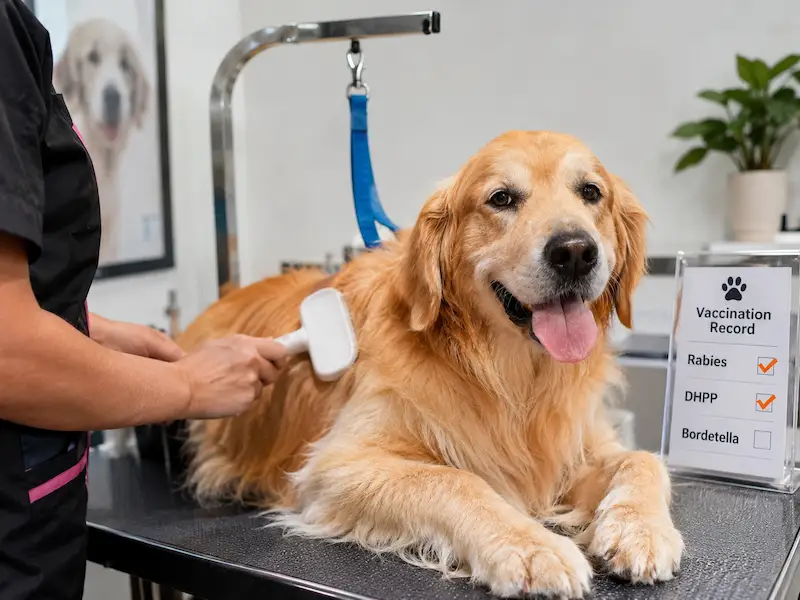
Before booking a grooming appointment, you might be asked whether your dog is vaccinated. It is a reasonable question, especially if your dog is healthy, stays mostly indoors, or has never visited a professional groomer.
The vaccines dogs need for grooming commonly include rabies and the core combination vaccine (DHPP or DHPPi). Some grooming facilities also request vaccination against kennel cough, depending on how their services operate and whether dogs share grooming areas.
However, vaccination requirements are not identical everywhere. A mobile groomer, traditional grooming salon, and pet boarding facility may have different policies.
For dog owners in Abu Dhabi, understanding these requirements helps prevent last-minute appointment problems while protecting their pets from avoidable infections.
Why Do Groomers Ask for Dog Vaccination Records?
Professional grooming involves close contact between dogs, people, grooming equipment, and sometimes other animals.
Even a clean grooming facility cannot completely eliminate the risk of infectious diseases.
Some infections spread through respiratory droplets, while others can spread through contaminated surfaces or objects.
Vaccination helps reduce the risk of certain serious infections and, depending on the vaccine, may reduce disease severity or transmission.
Groomers may request vaccination records to:
- Reduce the risk of infectious diseases.
- Protect other pets using the grooming facility.
- Verify that puppies have received appropriate veterinary protection.
- Follow their facility’s health and safety policies.
- Identify dogs whose vaccination records need reviewing.
Vaccination does not guarantee that a dog cannot become ill. Cleaning, disinfection, appropriate handling, and keeping sick animals away from grooming appointments remain equally important.
Which Vaccines Do Dogs Need for Grooming?
The exact requirements depend on the grooming provider. However, the following vaccines are commonly relevant when preparing a dog for professional grooming.
1. Rabies Vaccination
Rabies is a serious viral disease that affects the nervous system and can spread from infected animals to humans.
It is almost always fatal once clinical symptoms appear, which makes prevention essential.
Rabies vaccination is an important part of routine dog healthcare in the UAE. Many grooming facilities require proof that a dog’s rabies vaccination is current.
The appropriate vaccination and booster schedule depends on the dog’s age, vaccination history, vaccine used, and applicable local requirements.
If your dog’s rabies vaccination has expired or its status is uncertain, consult your veterinarian before arranging grooming.
2. DHPP or DHPPi Combination Vaccine
DHPP is a combination vaccine commonly used to protect dogs against several infectious diseases.
Depending on the vaccine formulation, the letters refer to:
- D – Canine distemper: A serious viral infection that may affect the respiratory, digestive, and nervous systems.
- H – Infectious canine hepatitis: A disease associated with canine adenovirus infection that can damage the liver and other organs.
- P – Canine parvovirus: A highly contagious infection that can cause severe vomiting, diarrhoea, and dehydration.
- P – Canine parainfluenza: A respiratory virus that can contribute to infectious coughing illnesses.
Some vaccination records use DHPPi, DHP, or similar abbreviations.
In Abu Dhabi, veterinarians also commonly provide combination vaccines that include leptospirosis protection, sometimes labelled DHPPiL or DHLPP.
Leptospirosis is a bacterial disease that can affect the kidneys and liver and may also infect humans.
These vaccines form an important part of preventive healthcare, particularly for dogs that visit places where other animals have been present.
A veterinarian can confirm which diseases your dog’s particular combination vaccine covers.
3. Bordetella or Kennel Cough Vaccination
Kennel cough is a common name for canine infectious respiratory disease complex, which can involve several different viruses and bacteria.
One important cause is Bordetella bronchiseptica.
Dogs can become exposed in places where multiple animals gather, including boarding kennels, daycare facilities, and some grooming salons.
The Bordetella vaccine helps reduce the risk or severity of illness caused by this bacterium, but it does not prevent every type of kennel cough.
Some grooming providers request it, while others do not.
A dog that regularly visits shared pet facilities may benefit from additional respiratory disease protection based on its exposure risk.
If your dog is coughing, sneezing excessively, or showing other signs of respiratory illness, postpone grooming and consult a veterinarian, even if its vaccinations are current.
Are Kennel Cough Vaccines Mandatory for Dog Grooming in Abu Dhabi?
Not every grooming provider has the same kennel cough vaccination policy.
Facilities offering boarding or daycare alongside grooming may have stricter vaccination requirements because dogs spend more time around one another.
A grooming salon that handles several dogs simultaneously may also consider respiratory disease protection particularly important.
However, the fact that one facility requires Bordetella vaccination does not mean every groomer in Abu Dhabi is legally required to request it.
The safest approach is to confirm the provider’s requirements before booking and ask your veterinarian whether kennel cough vaccination is appropriate for your dog’s lifestyle.
Do Dogs Need Different Vaccines for Mobile Grooming?
The recommended medical vaccinations do not automatically change simply because a dog receives grooming at home.
However, the grooming environment can influence potential exposure to other animals.
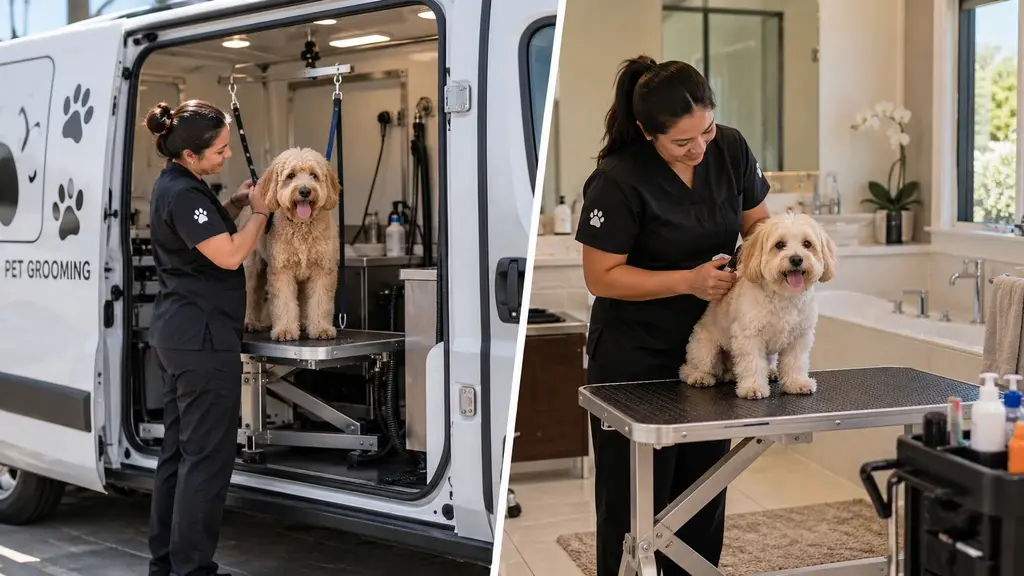
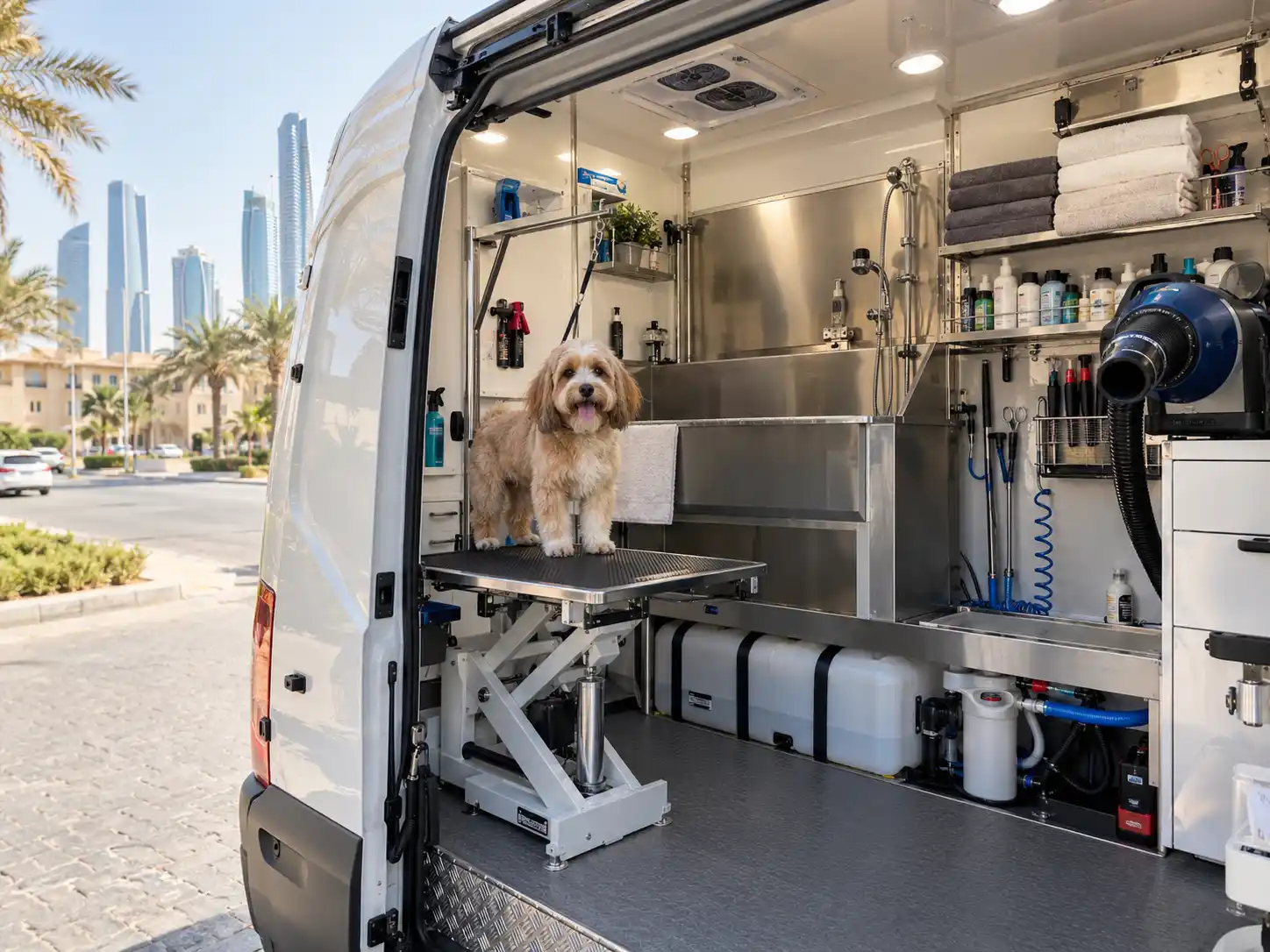
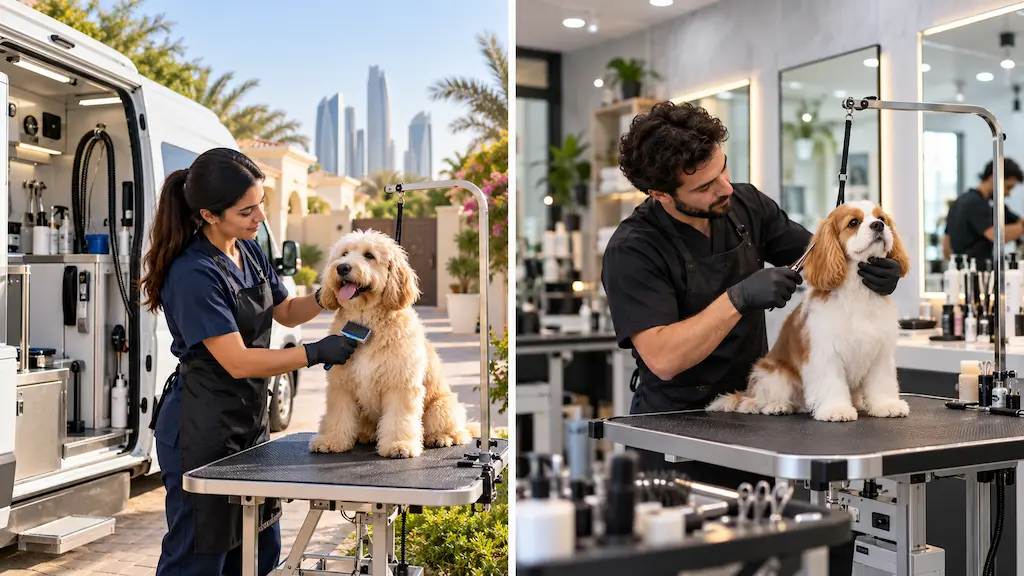
With mobile pet grooming, a groomer typically provides an individual session inside a specially equipped vehicle near the owner’s home.
This may reduce direct contact with unfamiliar dogs compared with a busy shared grooming salon.
Nevertheless, grooming tools, tables, and equipment must still be cleaned and disinfected appropriately between appointments.
Mobile grooming does not replace vaccination, and an unvaccinated dog is not automatically safe from infection simply because it receives an individual appointment.
For dog owners considering mobile grooming versus traditional pet salons, differences in animal contact, hygiene procedures, and appointment arrangements can be relevant considerations.
Can Puppies Get Groomed Before They Are Fully Vaccinated?
Puppies often need early exposure to brushing, gentle handling, nail care, and grooming equipment.
These experiences can help them become more comfortable with grooming as they grow.
However, young puppies are also more vulnerable to infections, especially before completing their initial vaccination series.
Puppy vaccination schedules commonly begin around six to eight weeks of age, with repeated doses during the following months. The timing varies according to veterinary recommendations and the puppy’s individual circumstances.
When Is It Safe to Book a Puppy’s First Grooming Appointment?
There is no universal age at which every puppy becomes ready for professional grooming.
The appropriate time depends on:
- The puppy’s age and vaccination history
- Whether the primary vaccination series is complete
- The grooming provider’s health requirements
- The level of contact with other dogs
- The puppy’s overall health and temperament
Some puppies may begin carefully controlled introductory grooming before completing every vaccination, provided their veterinarian considers the exposure risk acceptable and the grooming provider agrees.
Other puppies should wait until sufficient vaccine protection has developed.
An individual grooming session may reduce contact with other animals, but the environment must still be properly disinfected.
How Long Should You Wait After Vaccination Before Grooming?
Vaccines do not always provide immediate protection.
The time needed to develop an immune response depends on the specific vaccine, the dog’s age, and whether it is receiving an initial vaccination or a booster.
For example, some facilities require a waiting period after a dog’s first vaccination series or Bordetella vaccination.
There is no single waiting period that applies to every vaccine and every grooming provider.
Dogs may also experience temporary mild tiredness or discomfort after vaccination.
If your dog has just received a vaccine, ask your veterinarian when it can safely attend grooming and confirm whether the grooming provider has its own waiting-period policy.
Avoid booking an appointment while your dog is experiencing an adverse reaction or appears unwell.
What Happens If Your Dog’s Vaccinations Are Overdue?
If your dog’s vaccination record shows an overdue dose, contact your veterinarian before booking grooming.
The veterinarian can review the dog’s medical history and determine whether another vaccine or booster is necessary.
An overdue vaccination does not always mean that every part of the vaccination series must be restarted.
The appropriate approach depends on the vaccine and the dog’s previous protection.
Grooming providers may postpone an appointment until vaccination documentation meets their policies.
Never alter vaccination dates or assume that an expired record will be accepted.
What Vaccination Documents Should You Prepare?
Many professional grooming providers may ask to see your dog’s vaccination card or veterinary record.
Before the appointment, check that the document includes the relevant information.
| Information | Why it matters |
| Dog’s name or identification | Matches the record to the pet |
| Vaccines administered | Shows which diseases are covered |
| Vaccination dates | Confirms when the vaccines were given |
| Next due dates or validity | Helps identify overdue vaccinations |
| Veterinary clinic details | Supports verification of the record |
Digital vaccination records may be accepted by some providers, while others prefer a physical vaccination booklet.
Confirm the required format when arranging your appointment.
Can Sick Dogs Be Groomed If They Are Vaccinated?
A dog can develop an illness even when its vaccinations are current.
Vaccination protects against specific diseases but does not prevent every infection or medical condition.
Postpone grooming and seek veterinary advice if your dog develops:
- Persistent coughing or sneezing
- Vomiting or diarrhoea
- Fever or unusual tiredness
- Suspected contagious skin infections
- Unexplained discharge from the eyes or nose
- Other signs of infectious illness
Grooming may increase stress or discomfort for an already unwell dog.
It can also expose grooming staff or other animals to infection.
Wait until your veterinarian confirms that your dog is sufficiently recovered before rescheduling.
Preparing Your Vaccinated Dog for a Grooming Appointment
Once your dog’s vaccination status has been reviewed and the appointment is appropriate, a few preparations can help make the experience more comfortable.
Check the coat for tangles, inform the groomer about any medical conditions, and mention previous difficulties with handling.
Dogs that become frightened by dryers, clippers, or unfamiliar people may need a slower introduction.
For a dog already scared of grooming, gradual handling, positive reinforcement, and calm appointments can be more helpful than rushing through a complete grooming session.
Owners arranging dog grooming in Abu Dhabi can discuss their pet’s grooming needs and vaccination status with Groom Room before confirming an appointment.
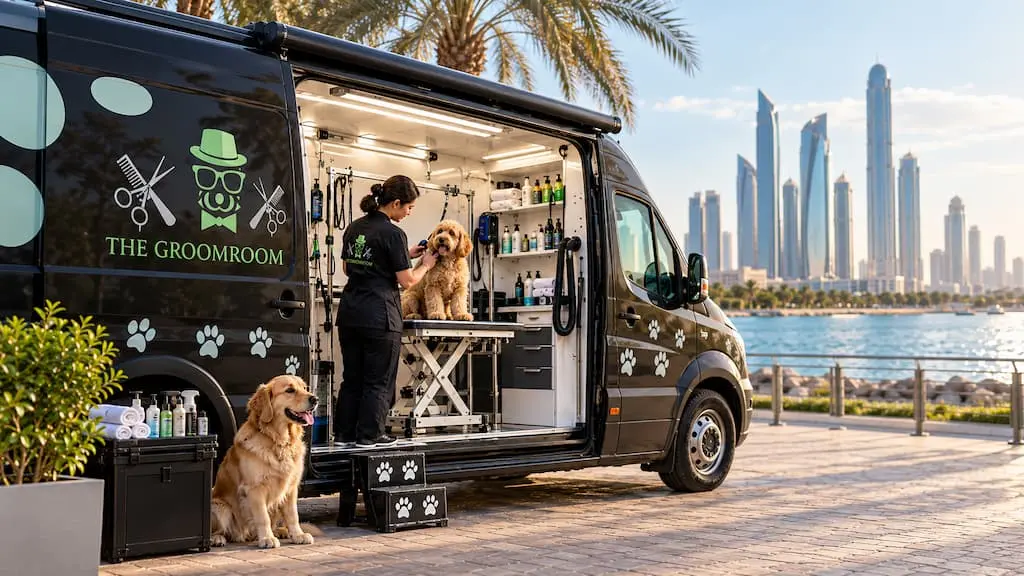
Groom Room offers routine bathing, brushing, coat trimming, nail care, and other grooming services through its mobile grooming arrangements.
Individual vaccination requirements should always be confirmed directly with the team rather than assumed.
Final Thoughts
The vaccines dogs need for grooming commonly include rabies and core combination vaccinations such as DHPP or DHPPi. Some providers also require kennel cough protection, particularly when dogs share facilities with other animals.
However, grooming requirements and veterinary vaccination recommendations are not always identical.
Before booking, review your dog’s vaccination record, confirm the grooming provider’s policy, and speak to your veterinarian about any missing vaccines or appropriate waiting periods.
Groom Room offers professional pet grooming in Abu Dhabi and Al Ain, with mobile grooming options designed for convenient routine coat care. Confirming your dog’s vaccination status before the appointment helps make the grooming process safer and easier to arrange.
Frequently Asked Questions
Can I take my dog to a groomer without a rabies vaccine?
Some grooming providers may refuse appointments when a dog’s rabies vaccination is missing or overdue. Rabies vaccination is also an important public-health requirement in the UAE. Check your dog’s status with a veterinarian and confirm the groomer’s policy before booking.
Is the DHPP vaccine required for grooming?
Many grooming facilities request proof of current core vaccinations, including protection against distemper, parvovirus, and canine adenovirus. Requirements differ between providers, so check which combination vaccines are accepted.
Does my dog need a kennel cough vaccine for mobile grooming?
Not necessarily. The need depends on the grooming provider’s policy and your dog’s exposure risk. Individual mobile appointments may involve less direct contact with unfamiliar dogs, but they do not eliminate infection risk.
Can a fully vaccinated dog still get kennel cough?
Yes. Kennel cough can involve several infectious organisms, and vaccination does not protect against every cause. Vaccinated dogs can still develop respiratory infections, although appropriate vaccination may reduce the risk or severity of certain infections.
Do indoor dogs need vaccines before grooming?
Dogs that spend most of their time indoors still need an appropriate veterinary vaccination plan. Indoor living does not eliminate exposure to diseases during walks, veterinary visits, travel, or grooming appointments.