
Your dog’s paws work hard every day. Whether they’re walking across tiled floors, playing in the garden, or exploring sandy paths in Abu Dhabi, their paw pads provide cushioning, grip, and protection.
But while most owners remember to brush their dog’s coat and trim their nails, the hair growing between the paw pads is easy to overlook.
Dog paw pad grooming helps keep this area tidy, reduces trapped debris, and allows the pads to make better contact with walking surfaces. When done correctly, it can make everyday movement more comfortable, especially for dogs with thick or fast-growing paw hair.
The key is knowing what needs trimming, what should be left alone, and when professional help is the safer choice.
What Is Dog Paw Pad Grooming?
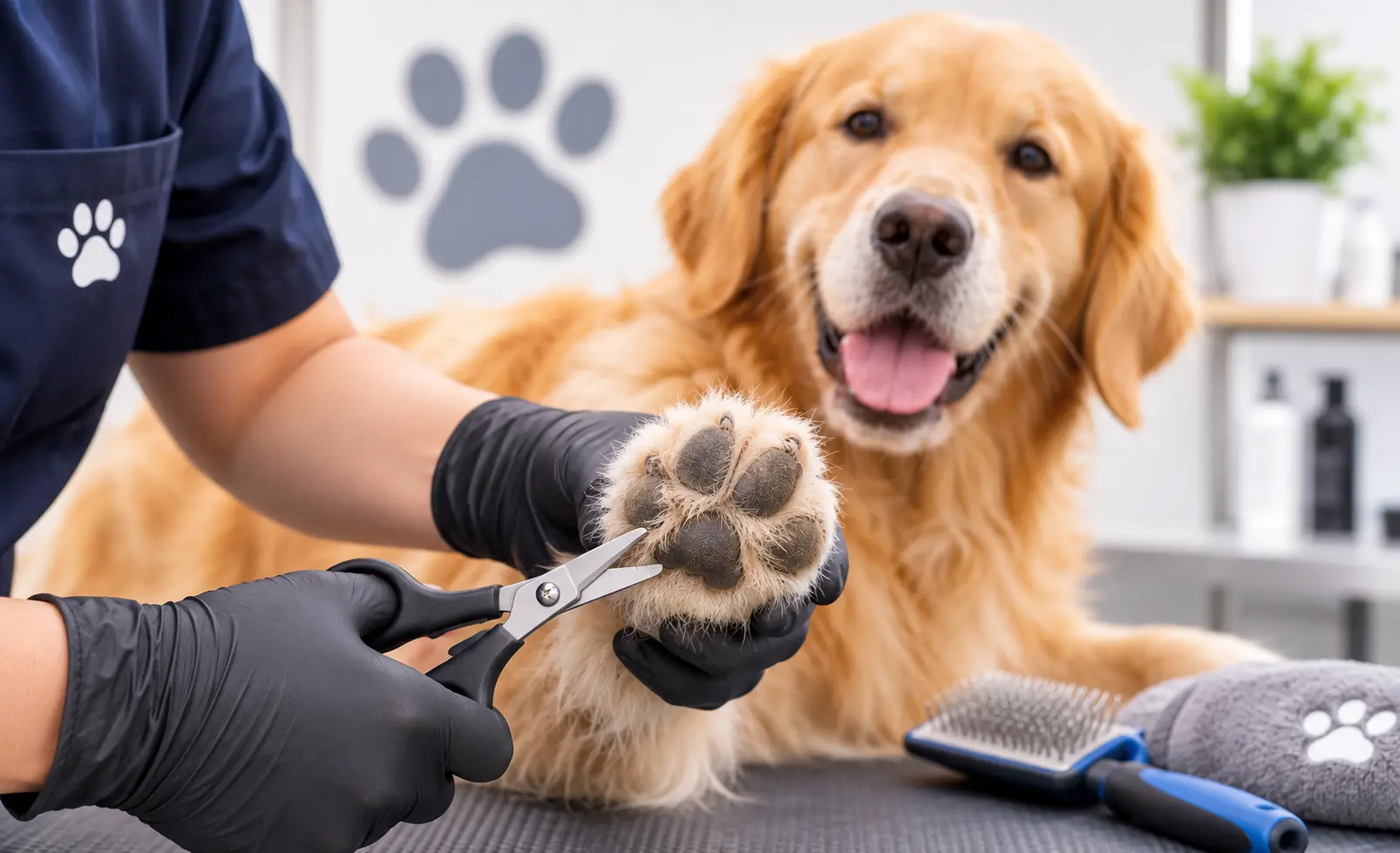
Dog paw pad grooming involves maintaining the hair around and between the pads underneath your dog’s feet. It also includes checking the pads for irritation, trapped objects, and changes in skin condition.
Paw pads are made of thick, specialised skin that provides cushioning and traction. They naturally develop a tough outer surface, so they do not need to be shaved, scrubbed, or softened excessively.
The goal of paw grooming is to remove unnecessary hair and debris without disturbing healthy skin.
Some breeds, including Shih Tzus, Poodles, Maltese, and Golden Retrievers, may develop considerable hair around their feet. When this hair extends over the pads, it can become tangled or interfere with grip.
Short-haired dogs may need little trimming, but regular paw inspections are still worthwhile.
Why Is Dog Paw Pad Grooming Important?
1. Helps Improve Traction on Smooth Floors
Have you noticed your dog sliding slightly when turning on tiles or polished floors?
Overgrown hair can cover the paw pads, reducing direct contact between the pads and the floor. This may contribute to slipping, particularly in long-haired dogs.
Carefully trimming the excess fur allows the pads to contact the surface more effectively.
However, slipping can also result from joint pain, weakness, long nails, or other mobility problems. If it continues after grooming, a veterinary assessment is advisable.
2. Reduces Dirt and Debris Trapped Between Pads
Long paw hair can collect sand, dust, small pieces of vegetation, and other debris.
As your dog walks, these materials may become tangled in the fur and cause discomfort.
Keeping the hair at an appropriate length makes it easier to inspect the spaces between the pads and remove loose debris.
For everyday cleaning after walks, Groom Room’s guide on keeping dog paws clean explains simple hygiene habits that complement regular paw grooming.
3. Helps Prevent Painful Matting
Dogs with dense or curly coats can develop small, tight mats between their toes.
These tangles may pull on the surrounding skin when the dog walks. Severe matting can also hide redness, irritation, or trapped objects.
Regular inspection and appropriate trimming help prevent excess fur from becoming tightly tangled.
Never pull apart painful mats or attempt to cut them out with household scissors. The skin between a dog’s pads is delicate and easy to injure.
4. Makes Paw Problems Easier to Notice
When excess hair is kept under control, it becomes easier to examine the pads and spaces between the toes.
During grooming, you may notice:
- Cracked or unusually dry pads
- Redness between the toes
- Small cuts or abrasions
- Swelling or tender areas
- Foreign objects caught in the fur
- Excessive licking of one paw
These changes are not always grooming problems. Persistent irritation, swelling, or pain may indicate an injury or skin condition that needs veterinary attention.
How to Groom Dog Paw Pads Safely at Home
Not every dog needs frequent paw hair trimming. If the fur is short, clean, and not covering the pads, regular inspection may be enough.
When trimming is necessary, follow a calm and careful approach.
Step 1: Check Your Dog’s Paws Before Grooming
Choose a quiet, well-lit area with a non-slip surface.
Gently lift one paw and examine the pads, nails, and spaces between the toes.
Look for redness, swelling, wounds, embedded objects, or painful mats. If your dog pulls away because of pain, do not continue.
A dog with an injured or inflamed paw should be assessed by a veterinarian before trimming.
Step 2: Clean and Dry the Paws
Use a soft cloth dampened with lukewarm water to remove surface dirt and loose sand.
Gently separate the toes to check for debris, but avoid forcing them apart.
Dry the paw carefully, including the spaces between the toes. Clean, dry fur is easier to assess before trimming.
There is no need to use shampoo every time you clean your dog’s paws.
Step 3: Choose Appropriate Grooming Tools
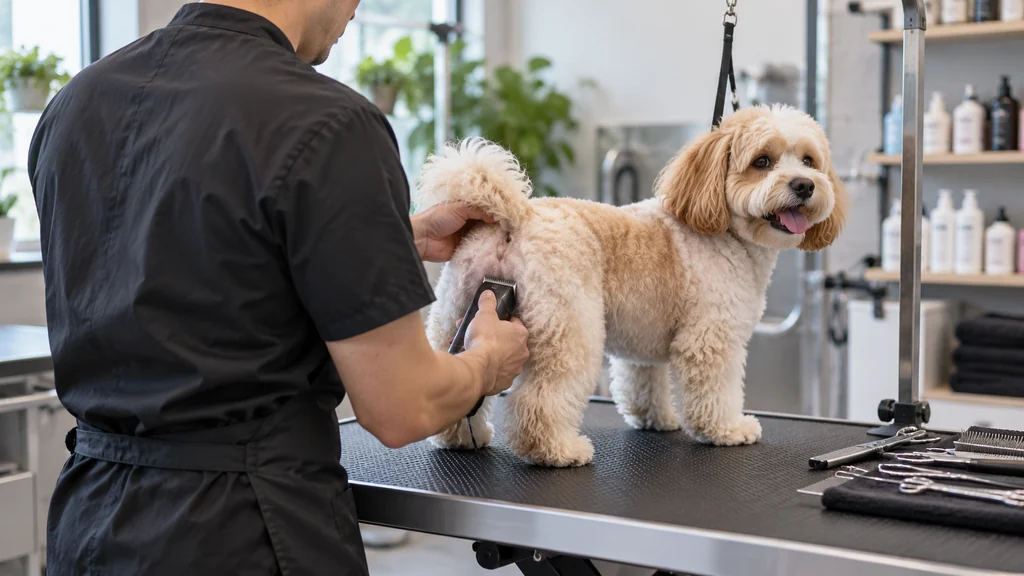
For actual paw hair trimming, a small, quiet pet grooming clipper with a suitable blade may be used by someone trained in its safe handling.
Keep a soft cloth, suitable comb, and treats nearby.
Avoid using household scissors near the pads. A sudden movement can cause a serious cut.
If you have never used pet clippers around paw pads, ask a professional groomer to demonstrate the technique before attempting it yourself.
Step 4: Trim Only the Hair That Needs Removing
The aim is to shorten fur that extends over the paw pads, not to shave deeply into the spaces between the toes.
An experienced groomer can carefully trim the hair so it sits approximately level with the pads, without pressing the blade into the skin.
Avoid digging between the pads, pulling the toes apart forcefully, or repeatedly passing clippers over one area.
Clipper blades can become hot, and the skin around the pads is particularly sensitive.
If your dog moves suddenly, becomes distressed, or will not hold still, stop rather than trying to complete the trim.
Step 5: Check the Pads After Grooming
Once grooming is complete, examine each paw again.
Make sure there is no loose hair caught between the toes and no signs of irritation.
Allow your dog to stand and walk naturally. Observe whether the paws look comfortable and whether any unusual licking or limping develops.
Reward calm behaviour so future paw handling becomes easier.
How Often Should You Trim Hair Between Dog Paw Pads?
There is no fixed trimming schedule that suits every dog.
The right interval depends on the breed, coat growth, activity level, and how quickly the fur extends over the pads.
For dogs with continuously growing coats, paw hair may need attention during regular grooming appointments. Dogs with shorter paw hair may require little or no trimming.
Check the underside of your dog’s feet every week and after walks in areas with heavy sand, grass seeds, or debris.
Consider a trim when the fur:
- Extends over the walking surface of the pads
- Becomes tangled or matted
- Regularly traps dirt or sand
- Makes paw inspections difficult
- Appears to contribute to slipping on smooth floors
Paw hair trimming and nail maintenance are separate tasks. For information about nail length and safe clipping, read our guide on how often to trim dog nails.
Protecting Dog Paw Pads in Abu Dhabi’s Climate
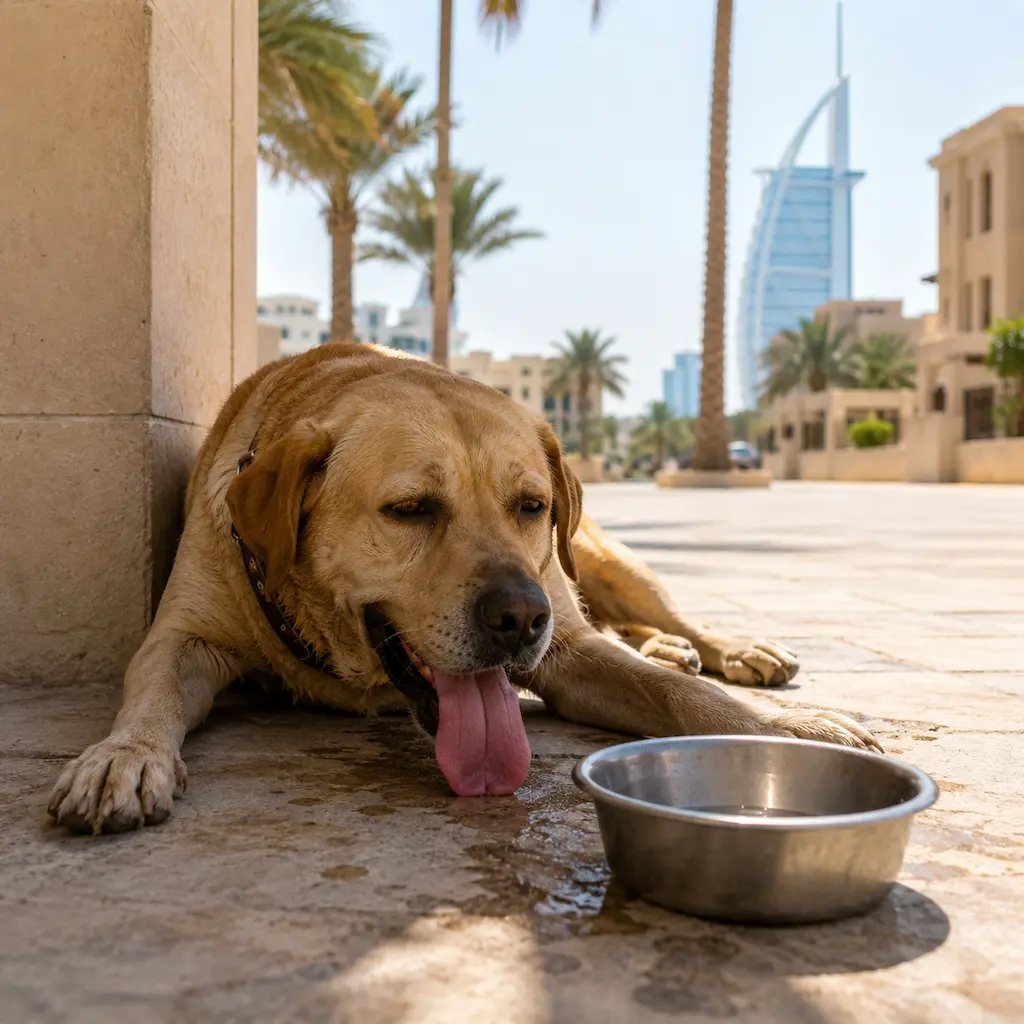
Paw grooming is particularly relevant for dogs living in Abu Dhabi and Al Ain, where outdoor surfaces can become extremely hot during warmer months.
Even well-groomed paw pads can be injured by hot pavement, asphalt, artificial grass, or sand.
To protect your dog:
- Schedule walks for cooler times of the day.
- Check whether walking surfaces are comfortable before allowing your dog onto them.
- Choose shaded paths and cooler surfaces whenever possible.
- Inspect paws after walking on sand or rough ground.
- Remove loose debris and dry the spaces between the toes.
- Consider properly fitted protective dog boots where appropriate.
Routine grooming does not make paw pads resistant to burns.
If your dog suddenly refuses to walk, limps, or develops blisters or peeling skin after exposure to hot ground, contact a veterinarian promptly.
Should You Apply Paw Balm?
A suitable dog paw balm may help manage mild dryness in otherwise healthy pads, but not every dog needs one.
Choose a dog-safe, non-irritating product and use it as directed. Avoid human moisturisers, heavily fragranced creams, and essential oils.
Paw balm cannot repair burns, deep cracks, or infected wounds. These conditions require veterinary assessment.
Common Dog Paw Grooming Mistakes to Avoid
Paw grooming is a delicate task, and doing too much can be just as problematic as neglecting the area.
Trimming too deeply: Hair should not be removed aggressively from between the toes. Close clipping can irritate or injure sensitive skin.
Using inappropriate scissors: Sharp household scissors are unsafe around moving paws and tight mats.
Ignoring your dog’s behaviour: Repeated pulling away, growling, or struggling may indicate fear or discomfort. Forcing the session increases the risk of injury.
Applying unsuitable products: Strong cleansers, perfumes, and human skin products can irritate the pads.
Treating an injured paw as a grooming issue: Swelling, open wounds, discharge, and persistent limping require veterinary attention rather than additional clipping or washing.
Dogs that are uncomfortable with paw handling may benefit from gradual positive training. Groom Room’s article on dogs scared of grooming explains ways to make handling more manageable.
When Is Professional Paw Pad Grooming Better?
Professional grooming may be the safer option when your dog has thick paw hair, tightly matted fur, sensitive skin, or difficulty remaining still during trimming.
A groomer can assess the coat around the pads, choose suitable tools, and work gradually without removing unnecessary hair.
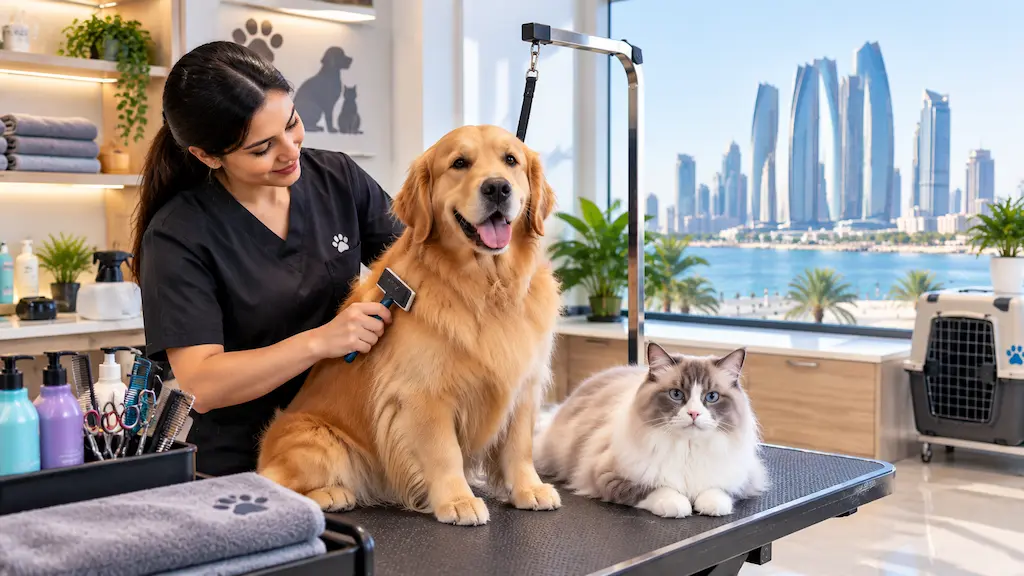
At Groom Room, our dog grooming in Abu Dhabi includes paw pad care as part of our professional grooming services.
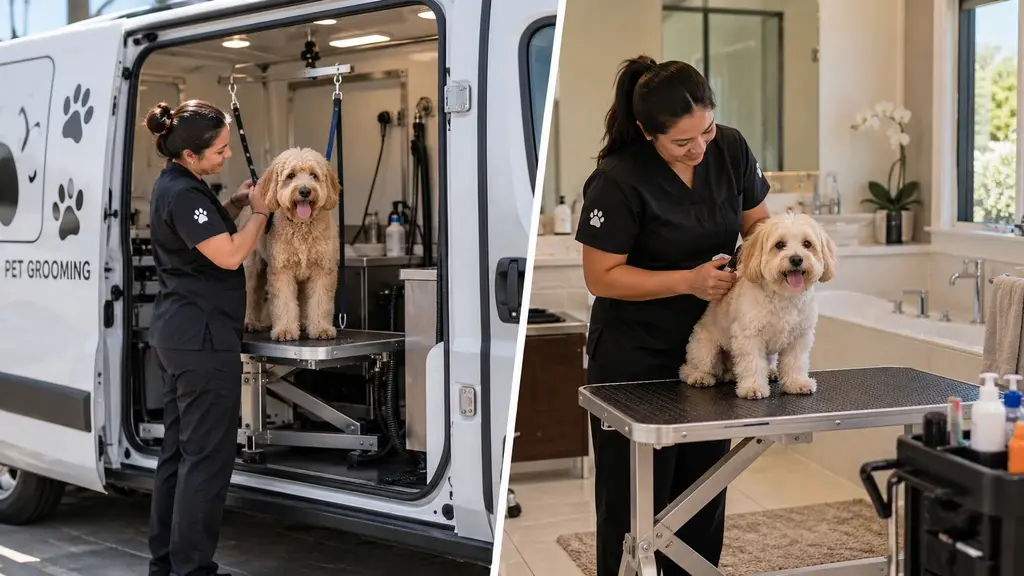
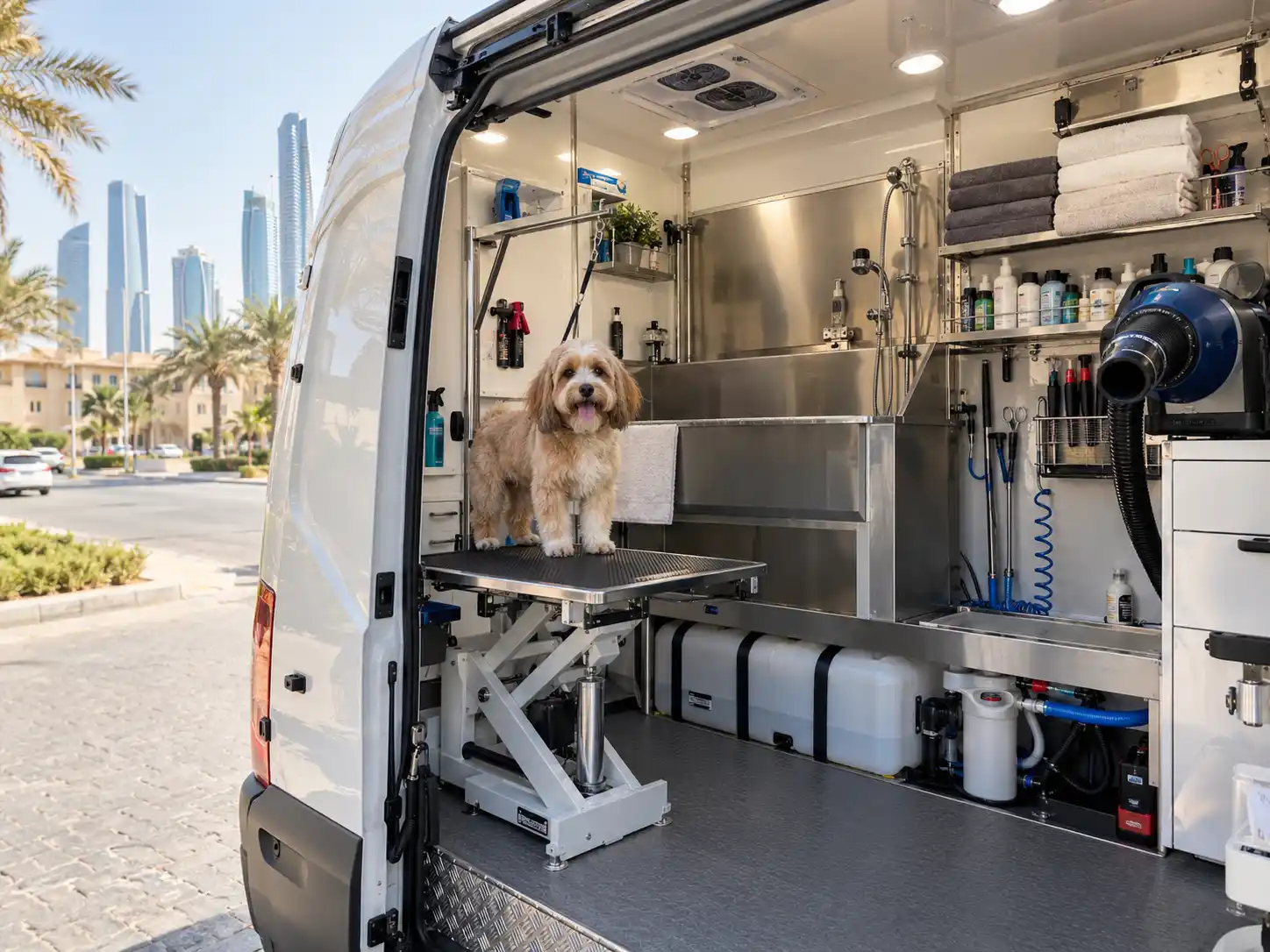
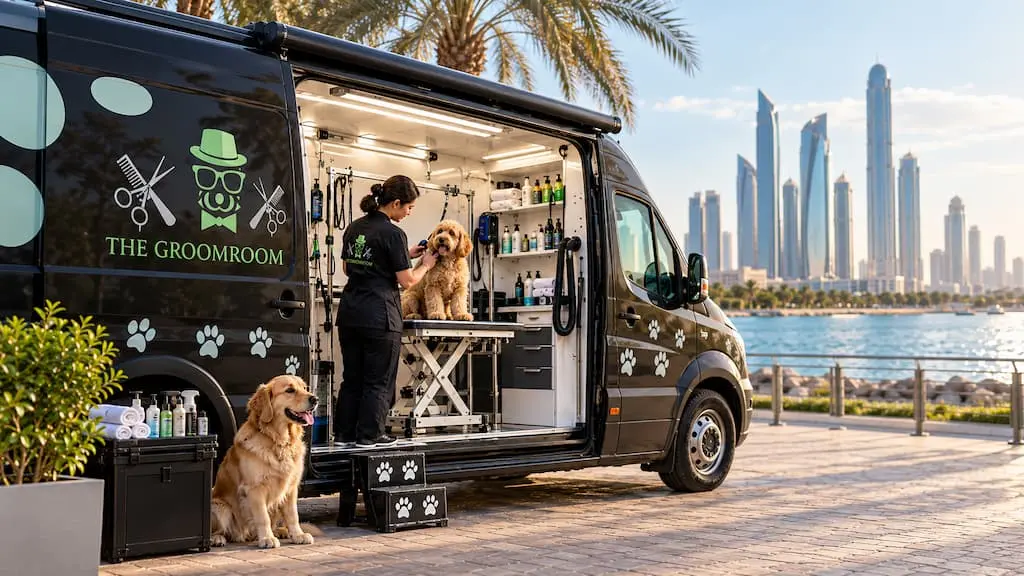
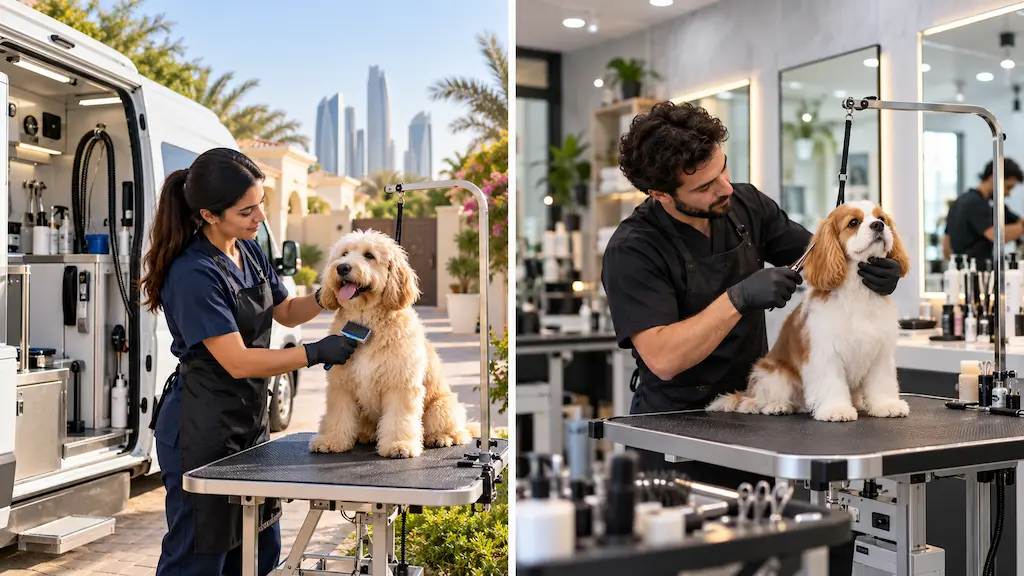
Our mobile grooming service brings grooming to your location, making routine coat and paw maintenance more convenient for pet owners in Abu Dhabi and Al Ain.
If your dog has painful paws, unexplained inflammation, or an existing injury, veterinary care should come before a grooming appointment.
Final Thoughts
Dog paw pad grooming is a small part of a grooming routine, but it can make a meaningful difference to your dog’s everyday comfort.
Keeping excess hair under control helps reduce trapped debris, prevents uncomfortable matting, and allows the paw pads to contact walking surfaces properly.
The safest approach is simple: inspect regularly, trim only when necessary, use appropriate tools, and never force a nervous dog through the process.
For owners who prefer professional assistance, Groom Room provides mobile dog grooming in Abu Dhabi and Al Ain, including gentle paw pad care tailored to each dog’s coat and grooming needs.
Frequently Asked Questions
Is it safe to trim hair between a dog’s paw pads?
Yes, when the hair needs trimming and the work is performed carefully with appropriate tools. The fur should be shortened without cutting the skin or clipping deeply between the toes. If you are inexperienced, professional grooming is safer.
Does paw pad hair cause dogs to slip?
Excess hair covering the pads can reduce contact with smooth surfaces and contribute to slipping. However, long nails, joint problems, and other mobility conditions can also cause poor traction.
Should dog paw pads be completely shaved?
No. Routine paw grooming does not require shaving the pads themselves or removing every hair between the toes. Only excess fur that interferes with the pads or becomes tangled generally needs trimming.
Why does my dog lick its paws after grooming?
Occasional licking may occur, but persistent licking can indicate irritation, discomfort, allergies, or an injury. Check for redness or tenderness and contact a veterinarian if the behaviour continues.