




It’s the speed that catches owners off guard. A dog comes onto my table looking perfectly fine, I part the fur behind the ear, and there it is a red, weeping, angry patch that wasn’t there yesterday. By the time most people spot a hot spot, it’s already spread, because the dog’s been quietly licking and chewing at it under a thick coat where nobody could see.
If you’ve ever found one of these raw, moist, irritated patches on your dog, you’ve met acute moist dermatitis and you know how fast it turns from a small itch into a painful, infected mess. The good news: caught early, many mild hot spots can be soothed at home. The better news: most are preventable once you understand what causes them.
Here’s what I’ve learned about hot spots from years at the grooming table plus what the vets say, and when you genuinely need one.
What the evidence says (and why Abu Dhabi dogs are at risk)
This isn’t just groomer folklore. According to Cornell University’s College of Veterinary Medicine, hot spots are most common in dogs with long or thick coats, and warm weather drives more cases hence the nickname. The Groomers Club adds that thick-coated breeds (Golden Retrievers, Labradors, German Shepherds, Rottweilers) are especially prone, and that dogs kept wet from swimming or bathing are at higher risk because moisture stays trapped against the skin.
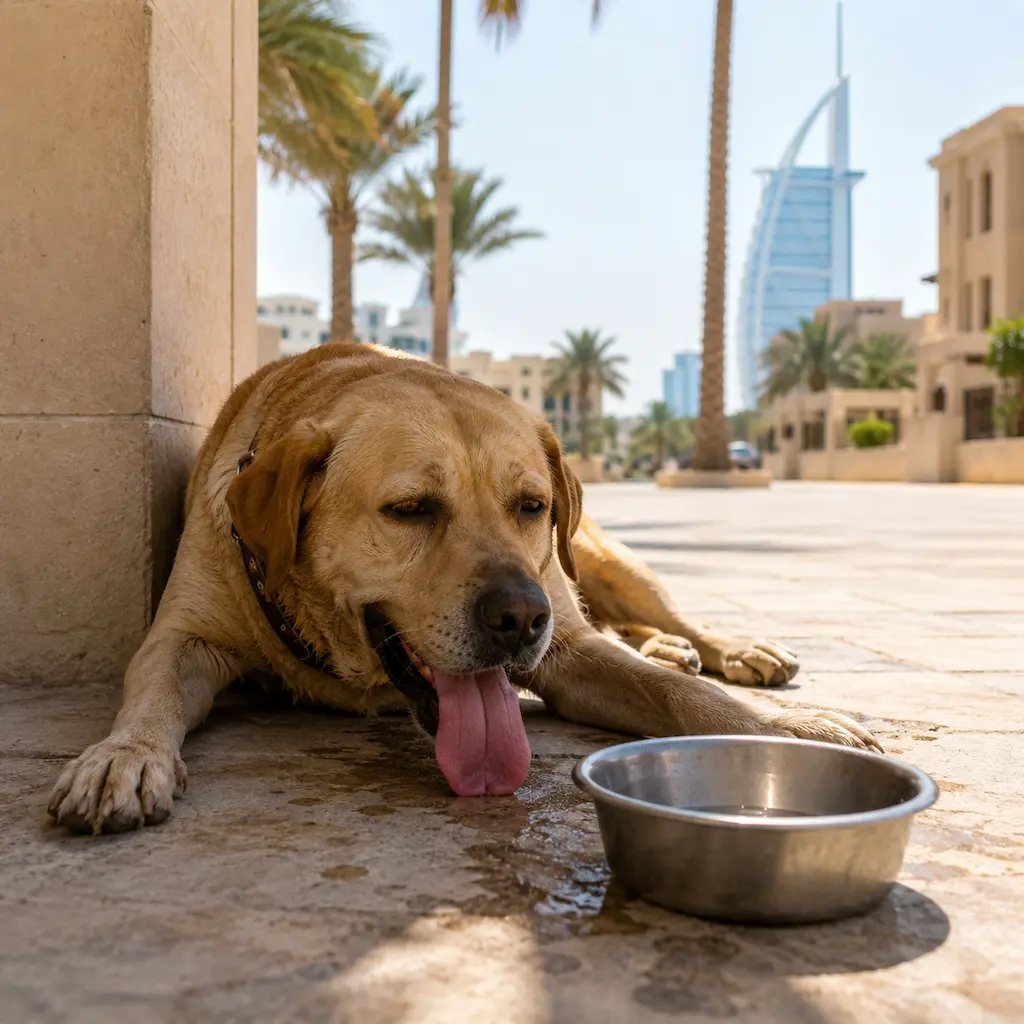
Read that back with Abu Dhabi in mind: high heat, high humidity, and a lot of dogs cooling off in pools and at the beach. That’s close to a textbook recipe for hot spots which is exactly why I see so many of them here in the warmer months.
What exactly are hot spots?
Hot spots are localized skin infections that flare up suddenly and spread fast. They usually look like raw, oozing, or crusted lesions with hair loss around them, and dogs make it worse by scratching, biting, and licking the area.
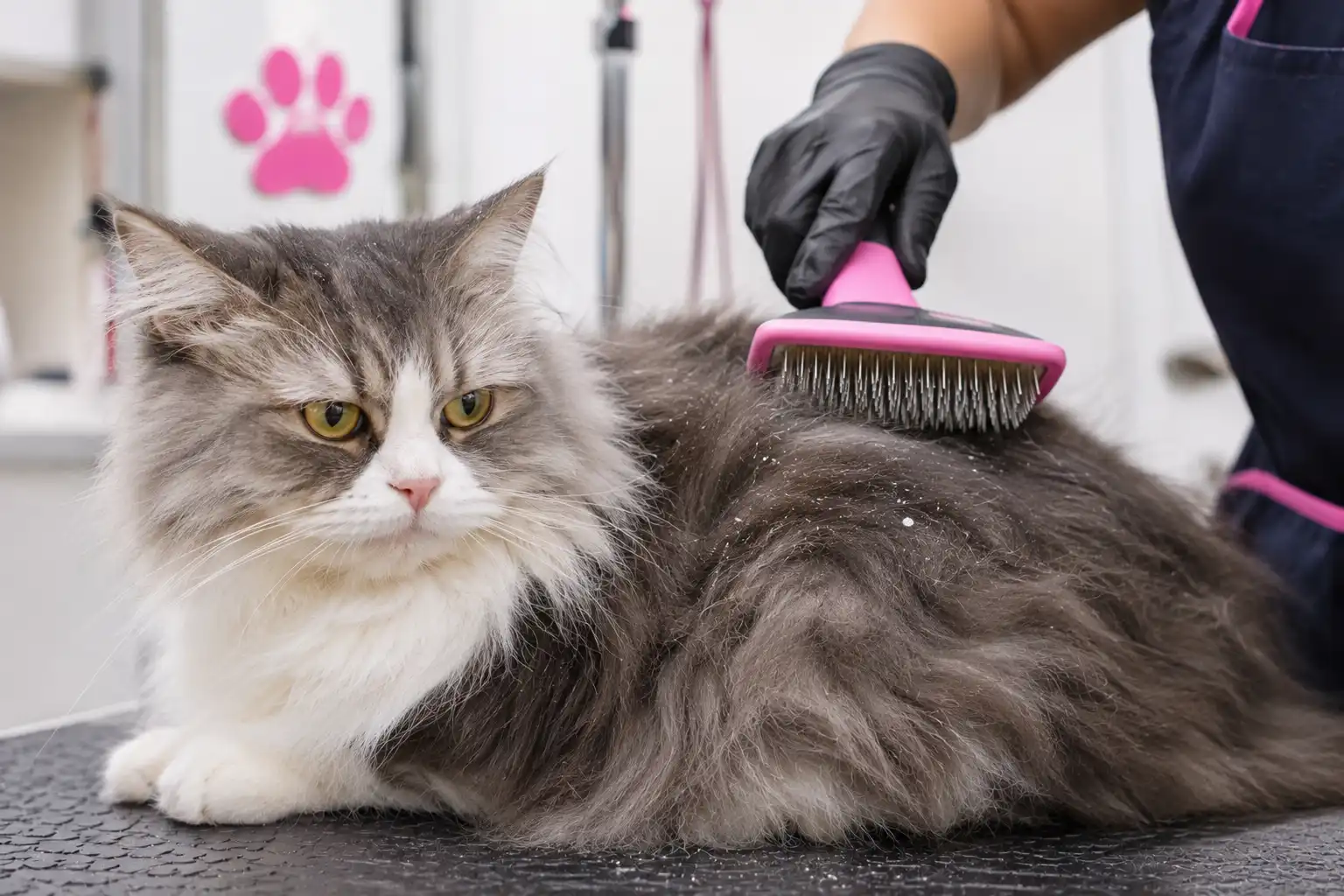
They’re painful, and they escalate quickly which is why early intervention matters so much. Keeping the coat clean, dry, and tangle-free is your first line of defence, and it’s one reason dog grooming in Abu Dhabi matters for more than just looks: a well-maintained coat is far less likely to develop the trapped-moisture conditions hot spots thrive in.
Common causes of hot spots
Several things can set one off:
- Allergies food, environmental, or (most commonly) flea-bite allergies
- Trapped moisture after swimming or bathing
- Poor grooming or matted fur that irritates the skin and blocks airflow
- Bug bites or minor injuries that trigger constant licking
- Stress or boredom that drives excessive licking and chewing
Natural remedies to soothe a mild hot spot at home
If the hot spot is small and hasn’t spread, you can often bring relief at home. (If it’s large, oozing, or painful — skip to the vet section.)
1. Clean the area gently
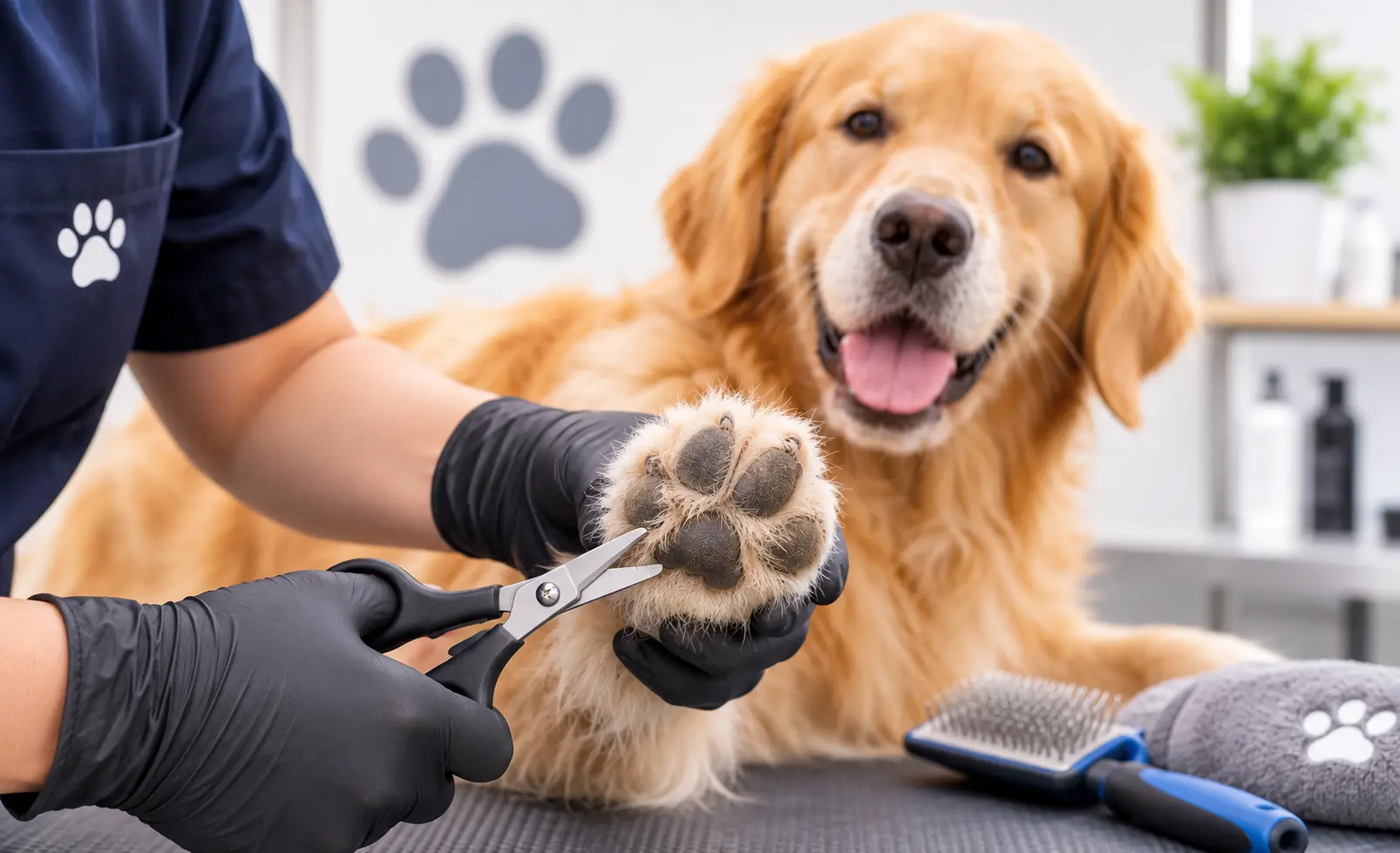
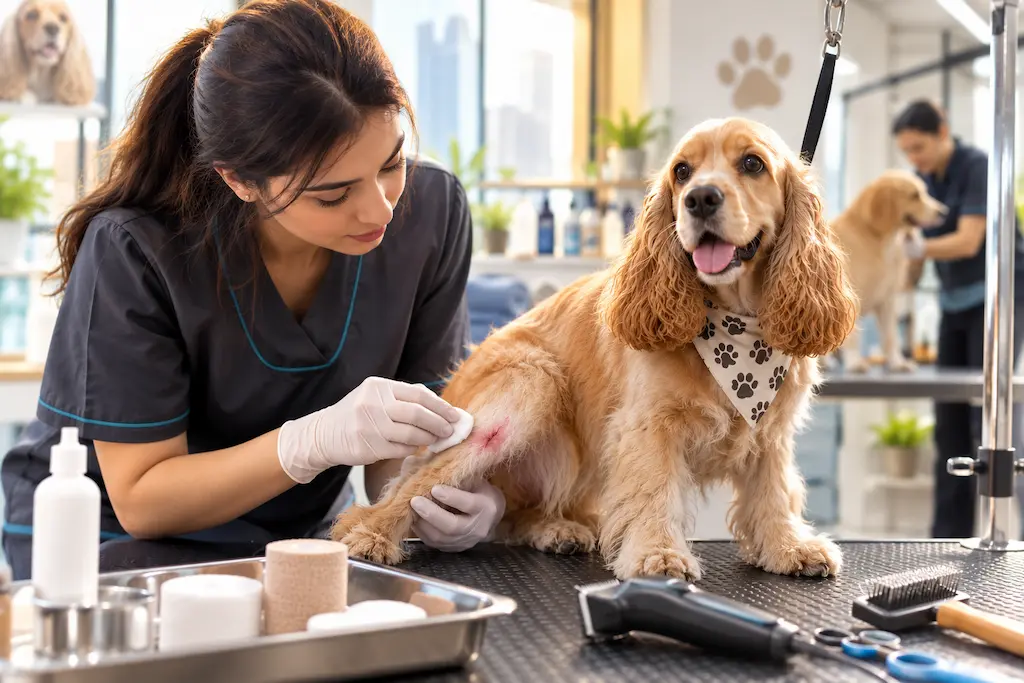
Trim the fur around the spot so the skin can breathe, using clean scissors or clippers carefully. Then clean with a mild antiseptic like diluted chlorhexidine. Avoid harsh soaps they irritate already-inflamed skin.
2. Apply a natural soothing solution
| Remedy | Why it helps | How to use |
|---|---|---|
| Aloe vera gel (pure) | Cooling, calms redness and itch | Thin layer on the spot |
| Coconut oil | Natural antibacterial/antifungal properties | Thin layer to moisturize |
| Chamomile tea compress | Reduces irritation | Brew, cool, apply with a soft cloth |
3. Diluted apple cider vinegar spray
ACV has mild antibacterial properties. Mix equal parts vinegar and water and lightly mist the area never on raw, open skin, as it will sting.
4. Oatmeal bath
Oatmeal is a natural anti-inflammatory. Grind plain oatmeal to a fine powder, add to lukewarm water, and let your dog soak for 10–15 minutes to calm the itch.
5. Stop the licking
Constant licking delays healing. A recovery cone or soft collar protects the spot; toys and safe chews help distract. Good coat habits help prevent recurrence too regular brushing and bathing keep skin healthy, which is the whole point of a solid dog grooming routine.
When to see a vet
Natural care works for mild cases. See a vet promptly if:
- The hot spot spreads rapidly or looks severely infected
- Your dog is in obvious pain
- There’s significant swelling, pus, or a foul odor
- Home care doesn’t improve things within a few days
Your vet may prescribe antibiotics, medicated creams, or oral medication to clear the infection. There’s no shame in going straight to them hot spots move fast.
How to prevent hot spots
Prevention beats treatment every time. My checklist for owners:
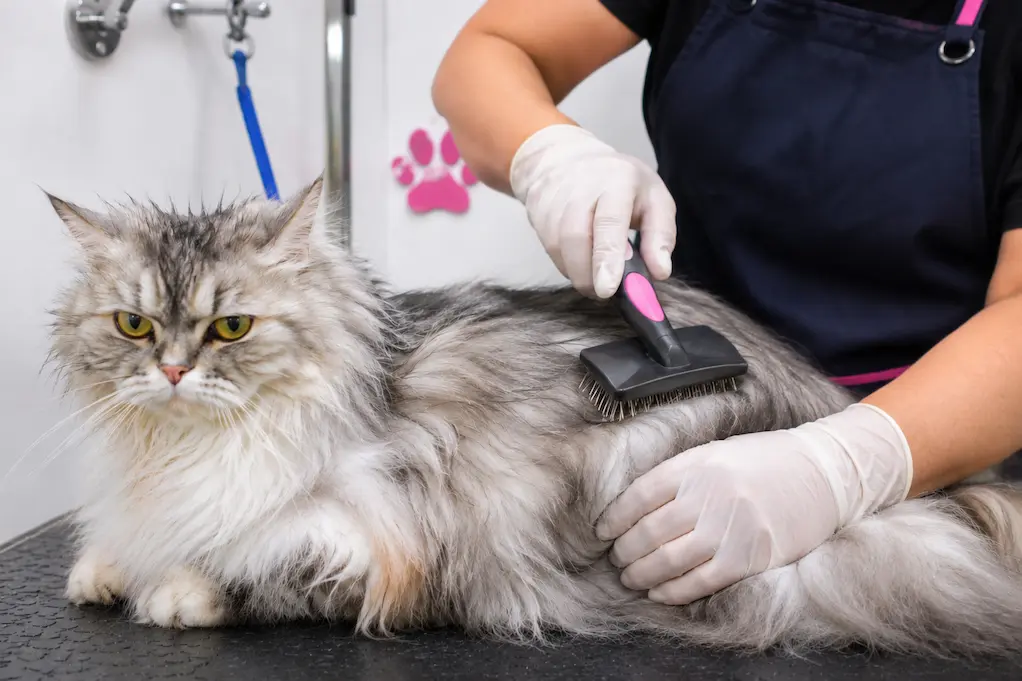
- Groom regularly: brushing prevents mats and lets air reach the skin.
- Keep the coat dry: towel your dog thoroughly after every swim or bath. This is the big one in our climate.
- Stay on top of flea prevention: flea allergy is the most common trigger.
- Feed a balanced diet: good nutrition supports skin and coat resilience.
- Beat boredom: walks, play, and enrichment reduce stress-licking.
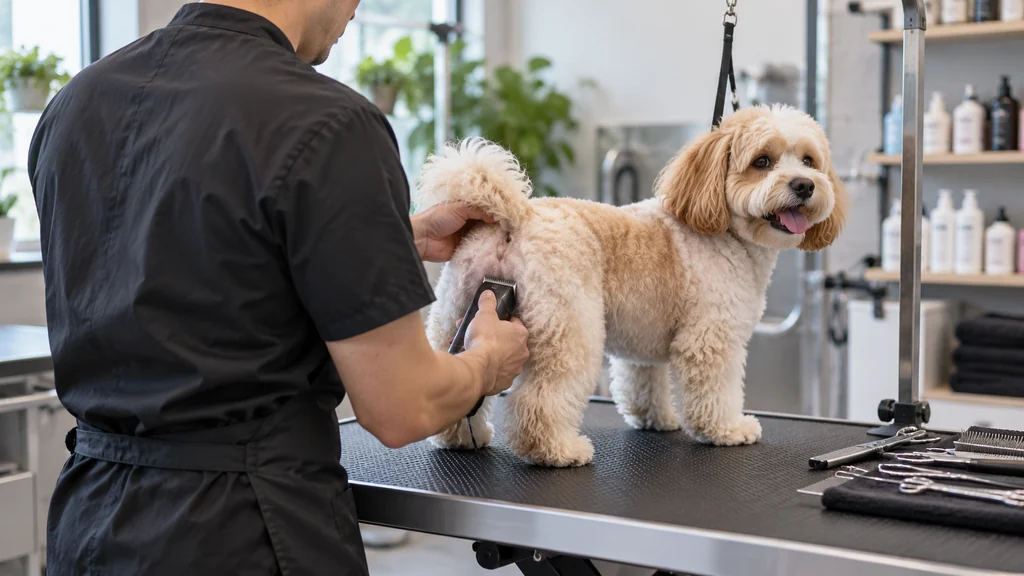
If home grooming is a struggle, our pet grooming Abu Dhabi team keeps coats healthy and catches skin issues early often before a hot spot ever forms.
Natural care vs. veterinary treatment
| Natural home care | Veterinary treatment | |
|---|---|---|
| Best for | Mild, early, small spots | Severe, spreading, or recurring spots |
| Approach | Gentle, soothing, chemical-free | Antibiotics, medicated topicals, root-cause diagnosis |
| Risk if misused | Delays real treatment if the spot is serious | — |
Honestly? The best results usually come from both: natural remedies for comfort while your vet tackles the underlying cause.
Frequently asked questions
What is a hot spot on a dog?
A hot spot (acute moist dermatitis) is a red, moist, irritated patch of skin that flares up suddenly and spreads fast, usually made worse by the dog licking or scratching it.
Can I treat my dog’s hot spot at home?
Mild, early hot spots often respond to gentle cleaning and soothing remedies like aloe vera or an oatmeal bath. Larger, oozing, or painful spots need a vet.
Why does my dog keep getting hot spots?
Recurring hot spots usually point to an underlying cause often allergies, fleas, trapped moisture, or matted fur. In Abu Dhabi’s heat and humidity, moisture is a especially common trigger. Identifying the root cause is key to stopping them.
Do hot spots need to be shaved?
Trimming the fur around the spot helps the skin breathe and heal. A groomer or vet can do this safely without irritating the area further.
How can I stop hot spots coming back?
Regular grooming, thorough drying after swims and baths, consistent flea prevention, and a good diet. If you can’t keep up with grooming at home, professional dog grooming in Abu Dhabi makes a real difference.
Conclusion:
Hot spots show up fast and hurt, but with early care and a few natural remedies, most mild cases settle down quickly at home. Gentle cleaning, soothing solutions like aloe or coconut oil, and above all good, consistent grooming go a long way toward keeping your dog comfortable.
Just keep a close eye on things. If a spot worsens or won’t heal, see your vet. And if keeping that coat clean, dry, and mat-free feels like a losing battle in this heat, that’s exactly what we’re here for.