



You’re halfway to the kitchen for paper towels. Behind you, your dog throws up on the hallway floor a puddle of half-digested kibble and something that looks suspiciously like a chewed sock. You’re gone for maybe fifteen seconds. When you come back, the floor is spotless, and your dog is looking up at you, tail wagging, extremely proud of themselves.
If you’ve ever wondered why do dogs eat their own vomit, you’re in good company. It’s one of those moments that makes you want to unsee the last ten seconds of your life. But your dog isn’t being disgusting on purpose. They’re following an instinct that’s older than domestication itself and once you understand what’s driving it, it becomes a far easier habit to break.
It’s a question that comes up constantly on the grooming table owners booking pet grooming in Abu Dhabi ask about it somewhere between the bath and the blow-dry, usually in a slightly embarrassed whisper. So let’s clear it up properly.
This guide covers why your dog vomits in the first place, why they eat it afterward, exactly what to do in the moment, and how to stop the habit for good. Let’s start with the first piece of the puzzle.
Why Dogs Vomit: Understanding the Triggers
Vomiting in dogs runs the full range from something as minor as inhaling dinner in nine seconds flat to something as serious as a bacterial infection or an intestinal blockage.
Sometimes the cause is obvious. Your dog raided the bin, snatched a bite of shawarma off the pavement, grazed on grass, or you switched food brands too quickly. In these cases, the vomiting is usually a one-off and clears up on its own.
A scenario most owners will recognize: a family switches their Labrador from one kibble to another overnight because the old brand was out of stock. Three days of soft stools and one morning vomit later, they’re panicking about parasites. The actual fix was slower mixing 25% new food with 75% old, then shifting the ratio every two days over a week. The vomiting stopped without a single vet visit.
But vomiting can also flag something deeper. Infections, pancreatitis, kidney or liver disease, intestinal parasites, and toxins all trigger dog vomiting.
Common Causes at a Glance
| Cause | Usually looks like | Concern level |
|---|---|---|
| Eating too fast | Vomit right after meals, mostly whole kibble | Low manageable at home |
| Sudden diet change | Soft stools plus occasional vomit for a few days | Low |
| Scavenging (bin, street food, sand) | One episode, dog otherwise bright and playful | Low to moderate |
| Empty stomach (bilious vomiting) | Yellow foam, often early morning or late night | Low but talk to your vet |
| Parasites | Recurring vomiting, poor coat, weight loss | Moderate needs testing |
| Infection or pancreatitis | Vomiting plus lethargy, fever, diarrhea, hunched posture | High see a vet |
| Toxins (chocolate, xylitol, grapes, cleaning products) | Sudden violent vomiting, drooling, tremors | Emergency |
| Blockage or bloat | Repeated retching with nothing coming up, swollen belly | Emergency |
Vomiting vs Regurgitation: Know the Difference
This distinction matters more than most owners realize, because it changes what your vet investigates first.
| Vomiting | Regurgitation | |
|---|---|---|
| Effort | Active heaving, retching, visible abdominal contractions | Passive food simply falls out, often without warning |
| Timing | Any time after eating | Usually shortly after eating |
| Content | Partly digested, may include yellow bile | Undigested food, often tube-shaped, no bile |
| Warning signs | Drooling, lip-licking, restlessness beforehand | None dog often looks surprised |
| Points to | Stomach, intestines, or a systemic illness | Esophagus or upper digestive tract |
If you can film it on your phone before cleaning up, do it. Ten seconds of video tells your vet more than five minutes of description, and it’s the single most useful thing you can bring to an appointment.
Why Dogs Eat Their Vomit: Instinct or Habit?
Now for the part that makes owners squirm. The answer is a mix of hardwired instinct, learned behavior, and honestly nose that works very differently from yours.
1. It’s maternal instinct, inherited:
In the wild, mother canines regurgitate partly digested food to wean pups off milk. That means a puppy’s very first solid meal was vomit. Your dog eats kibble from a ceramic bowl in an air-conditioned villa now, but the wiring didn’t go anywhere.
2. It still smells like food:
When a dog vomits shortly after eating, what hits the floor is largely undigested dinner. A dog’s sense of smell is estimated to be tens of thousands of times more sensitive than ours and it registers “meal” long before it registers “gross.”
3. It’s self-rewarding:
This is the one owners underestimate. If your dog eats vomit once and gets a mouthful of food out of it, the behavior has paid off. Behaviors that pay off repeat.
4. Boredom and habit:
An under-stimulated dog investigates everything with their mouth. If nobody intervened the first time, there’s no reason for them to think twice about the second.
5. Anxiety-driven cleanup:
Some dogs particularly those who’ve been scolded for accidents indoors learn to “hide the evidence.” Punishment doesn’t stop the vomiting; it just teaches the dog to eat it faster and out of sight.
Common Mistakes to Avoid
- Shouting at or punishing your dog after the fact they won’t connect it to the vomiting, only to you
- Rubbing their nose in it (this does nothing except damage trust)
- Assuming it’s “just” a hairball-type thing and never mentioning it to your vet
- Inducing vomiting at home with salt or hydrogen peroxide never do this without direct veterinary instruction
- Cleaning with ammonia-based products, which smell like urine to dogs and can attract them back to the spot
What To Do When You Catch Your Dog Eating Vomit
Stay calm. Then work through these five steps:
- Interrupt neutrally: Use a cheerful recall word or a “leave it” cue. No shouting an alarmed dog often swallows faster.
- Move your dog out of the room: Another room, the balcony, a crate anywhere with a closed door between them and the mess.
- Look before you clean: Note the color, the volume, and whether anything unusual is in there: plastic, fabric, bone fragments, blood. Take a photo.
- Clean thoroughly with an enzymatic, pet-safe cleaner: Enzymes break down the residue and the odor, so your dog isn’t drawn back to the same patch of floor tomorrow.
- Watch for two hours: Are they bright, alert, and drinking normally? Or quiet, drooling, and hiding?
Then follow the standard settling protocol (for otherwise healthy adult dogs check with your vet for puppies, seniors, and dogs with existing conditions):
- Withhold food for 6–12 hours to let the stomach rest
- Offer small amounts of water frequently rather than a full bowl at once
- Reintroduce with a bland meal plain boiled chicken and white rice
- Return to normal food gradually over 2–3 days
How to Break the Habit in Dogs
Practice Immediate Cleanup
The single most effective intervention, and the least glamorous. Access is what maintains the habit remove access and the behavior has nothing to feed on.
Keep a vomit kit somewhere central: enzymatic cleaner, paper towels, disposable gloves, and a bin bag. Owners who have to hunt for supplies lose the fifteen seconds that decide the outcome.
Train the “Leave It” Command
Worth its weight in gold not just for vomit, but for chicken bones on the pavement and unidentified things at the park.
- Hold a low-value treat in a closed fist. Let your dog sniff, lick, and paw at it.
- The moment they back off, say “yes!” and reward from your other hand with a better treat.
- Repeat until the back-off is instant, then add the verbal cue “leave it” just before presenting your fist.
- Progress to an open palm, then to the treat on the floor, then to walking past it on lead.
- Practice in new locations a cue that works in your kitchen doesn’t automatically work on the Corniche.
Five minutes a day beats one long session a week. Most dogs have a reliable “leave it” within three to four weeks of consistent practice.
Supervise Meal Times
If your dog vomits because they eat like they’re being timed, this section is your fix:
- Switch to a slow feeder bowl or a snuffle mat
- Split the daily ration into three smaller meals instead of one or two large ones
- Feed competing dogs in separate rooms speed-eating is often about rivalry
- Wait 60 minutes after meals before vigorous exercise (and 30 minutes after exercise before feeding)
- Raise the bowl slightly for tall or senior dogs with neck stiffness
Address Underlying Stress
Stress shows up in the gut before it shows up in behavior. A dog who’s under-exercised, left alone for long stretches, or living through a house move will have a more reactive digestive system.
- Two proper walks a day, in the cooler hours during summer
- Puzzle feeders, scent games, and chew time for mental tiredness
- A predictable daily rhythm dogs settle around routine
- A quiet, cool retreat space away from foot traffic
- Ask your vet about calming supplements before buying anything off a shelf
Consult a Veterinarian
If the vomiting itself is recurring, training is treating the symptom rather than the cause. Bring it up if you’re seeing episodes more than once or twice a month.
Ask your vet directly about:
- A fecal test for parasites (worth doing annually regardless)
- Food sensitivity or a trial elimination diet
- Bilious vomiting syndrome if the vomit is yellow foam on an empty stomach
- Digestive enzyme or gut microbiome support
- Bloodwork for kidney, liver, and pancreatic function in dogs over seven
How to Tell If Your Dog Has Eaten Vomit
You won’t always be in the room. These are the giveaways:
- Sudden foul breath noticeably worse and more sour than their usual dog breath
- Stained or crusty fur around the muzzle, chin, or chest
- A lingering smell in a room where you can’t find any mess
- Loose stools or audible gut gurgling a few hours later, with no other explanation
- Avoidant body language a dog who suddenly won’t make eye contact or slinks off when you enter
- Excessive paw or lip licking, sometimes a response to stomach acid
- Damp patches on carpet or rugs with no visible residue
If two or more of these show up together, treat it as a probable episode and start monitoring even if you never found the evidence.
Does Grooming Help Break the Habit?
It’s an unexpected connection, but a real one and any groomer who handles dogs daily will confirm it.
Scent is the trigger:
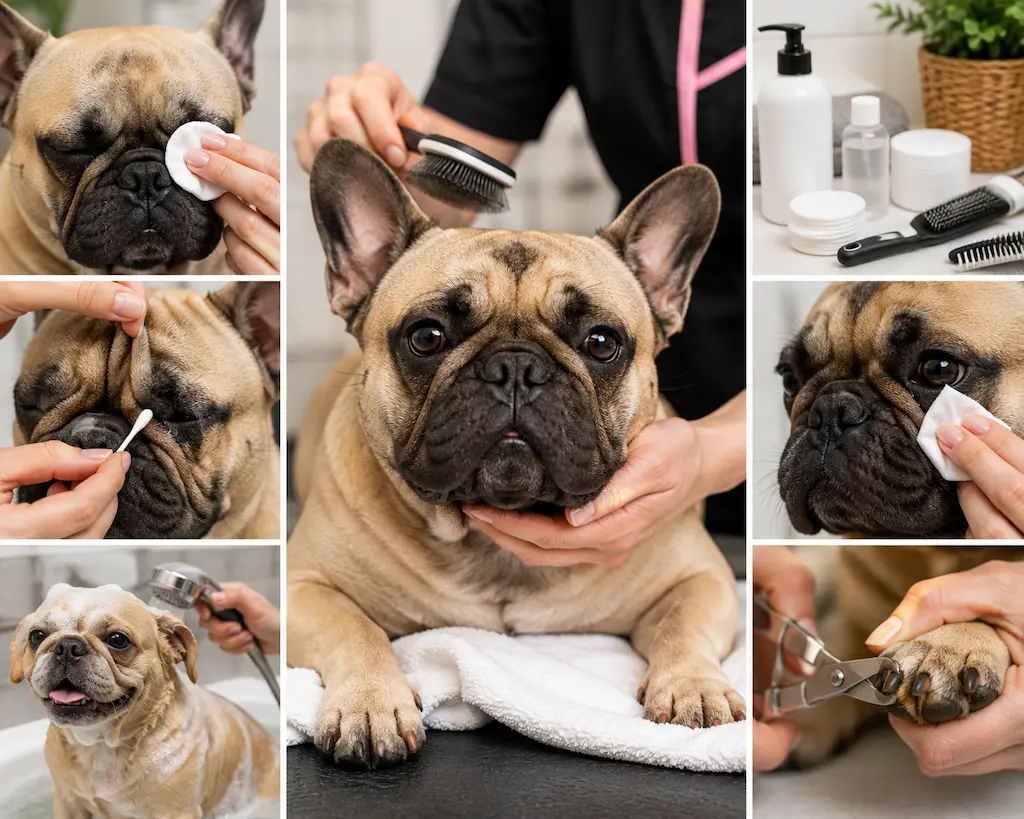
When vomit residue dries into chest fur or a beard, your dog carries the smell around with them all day. Long-coated breeds and flat-faced breeds with facial folds are the worst affected. Self-licking to remove it can turn into a compulsive grooming habit of its own.
Grooming doubles as a health check:
A groomer running hands over every inch of a dog’s body picks up things owners miss: residue in the ruff, sudden weight loss, dental disease driving nausea, or a distended abdomen. Several dogs each year get referred to a vet on the strength of something spotted on a grooming table.
Clean dogs are calmer dogs:
Matted coats are physically uncomfortable, and discomfort feeds the stress that feeds the digestive upset. Regular handling also builds the tolerance that makes it easier for you to check your dog’s mouth and coat at home.
For owners of long-coated or double-coated breeds in the UAE, professional dog grooming in Abu Dhabi every 4–6 weeks keeps the coat manageable through heat and humidity and gives you a second pair of expert eyes on your dog’s condition.
Frequently Asked Questions
Is it bad if my dog eats his own vomit?
Usually not dangerous as a one-off, especially if the vomit was mainly undigested food. It becomes a genuine concern when the vomiting was caused by an infection, spoiled food, or a toxin in which case your dog is re-swallowing the exact thing that made them ill.
Why does my dog eat vomit but not other dogs’ vomit?
Most dogs will eat either, but their own carries their familiar scent profile, which makes it more appealing. Eating another dog’s vomit carries a higher risk of transmitting parasites and infections, so it’s worth interrupting quickly.
Should I let my dog eat their vomit if it’s just food?
No. Even when the contents look harmless, allowing it reinforces the behavior and removes your ability to monitor what’s coming up. Clean it away and offer a small bland meal a few hours later instead.
How long after vomiting can a dog eat again?
For a healthy adult dog, withhold food for 6–12 hours, then offer a small bland meal of boiled chicken and white rice. Puppies, seniors, and dogs with medical conditions shouldn’t be fasted without veterinary advice.
What’s the difference between vomiting and regurgitation in dogs?
Vomiting is active heaving, abdominal effort, often partly digested contents with bile. Regurgitation is passive, happens shortly after eating, and brings up undigested food with no warning. Vomiting points to the stomach or a systemic issue; regurgitation points to the esophagus.