

You may notice it without even looking at the calendar. Suddenly there is more fur on the sofa, your dog is scratching more often, or their coat feels drier than it did a few weeks ago.
Seasonal changes can influence a dog’s coat, skin, shedding pattern, paws, and overall grooming requirements. However, the effects vary by breed, coat type, lifestyle, and environment.
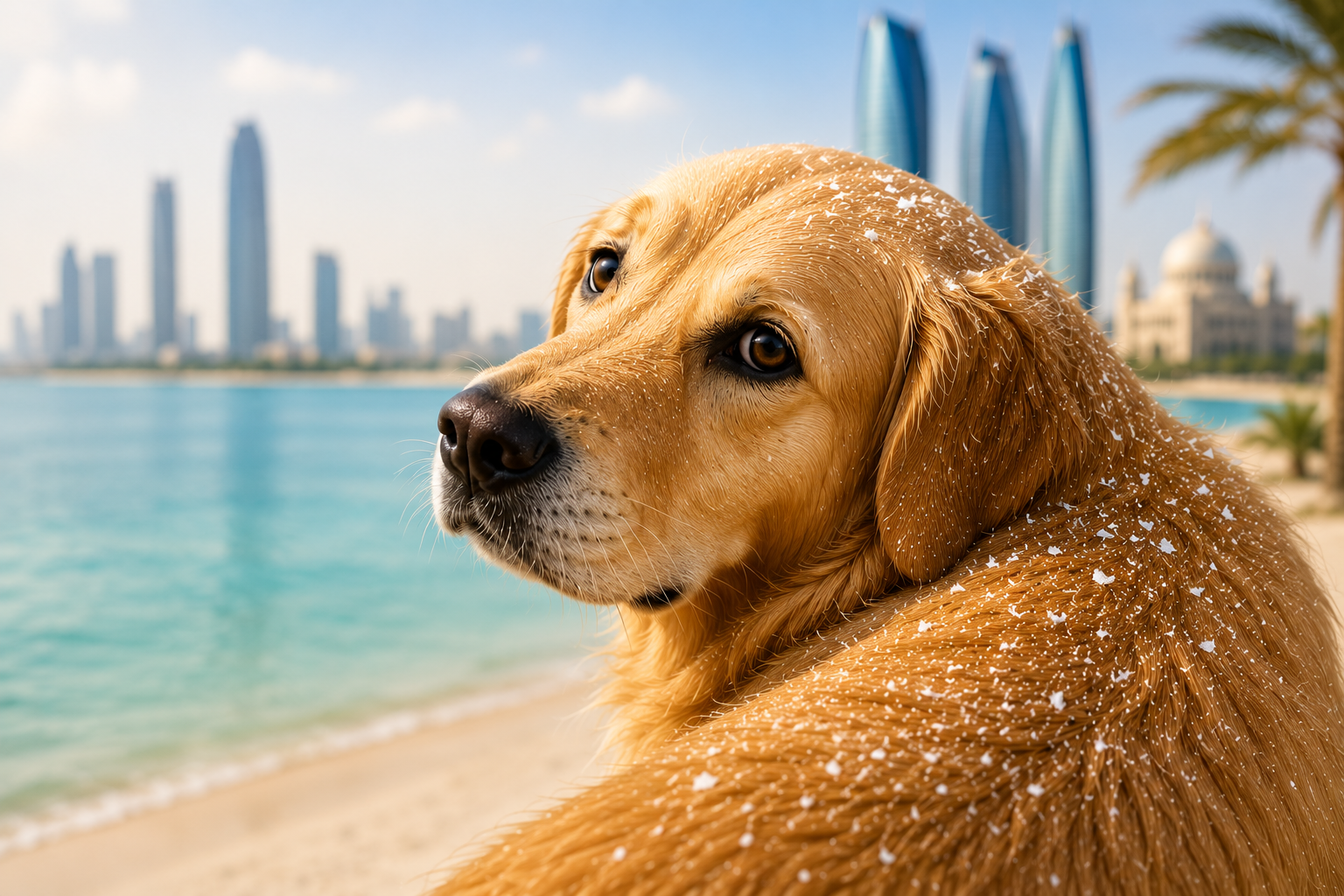
For dogs living in Abu Dhabi, grooming also needs to account for intense summer heat, dust, sand, humidity, air-conditioned indoor spaces, and cooler winter months. Adapting your routine throughout the year can help keep your dog clean, comfortable, and easier to manage.
If you already use professional pet grooming in Abu Dhabi, understanding these seasonal changes can also help you schedule grooming before shedding, matting, dryness, or irritation becomes difficult to manage.
How Do Seasons Affect a Dog’s Coat?
Not every dog follows exactly the same shedding cycle.
The American Kennel Club notes that some dogs shed throughout the year, while seasonal shedders often lose more coat during spring and autumn. Double-coated breeds can experience particularly noticeable shedding as their coats respond to changing conditions.
In Abu Dhabi, dogs that spend most of their time indoors under air conditioning and artificial lighting may not follow the same sharply defined seasonal pattern as dogs living mostly outdoors.
That is why grooming should follow your dog’s actual coat condition rather than the calendar alone.
Spring: Manage Shedding and Skin Sensitivities
For many shedding breeds, spring can mean more loose fur as heavier coat is released.
You may notice:
- More hair around the home
- Loose undercoat
- Increased tangling
- Dull-looking coat
- More frequent scratching
What to Do
Increase brushing during heavier shedding periods. A suitable de-shedding brush or undercoat tool can help remove loose hair before it becomes trapped in the coat.
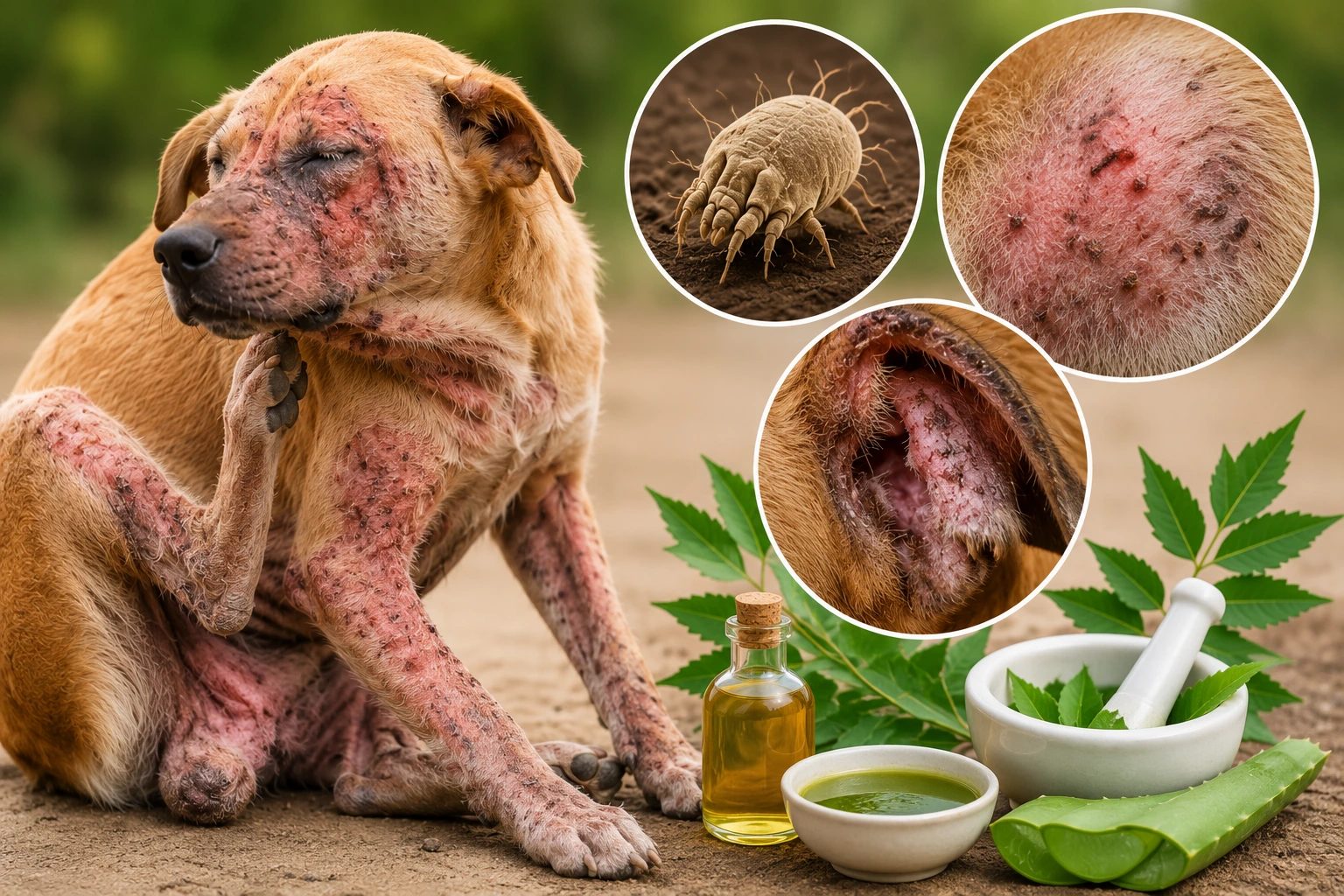
Regular brushing also gives you an opportunity to check the skin for redness, flakes, parasites, or unusual changes. Spring can also coincide with environmental allergens such as pollen and dust. If your dog develops persistent itching, redness, paw licking, bald patches, or irritated skin, do not assume grooming alone will solve it.
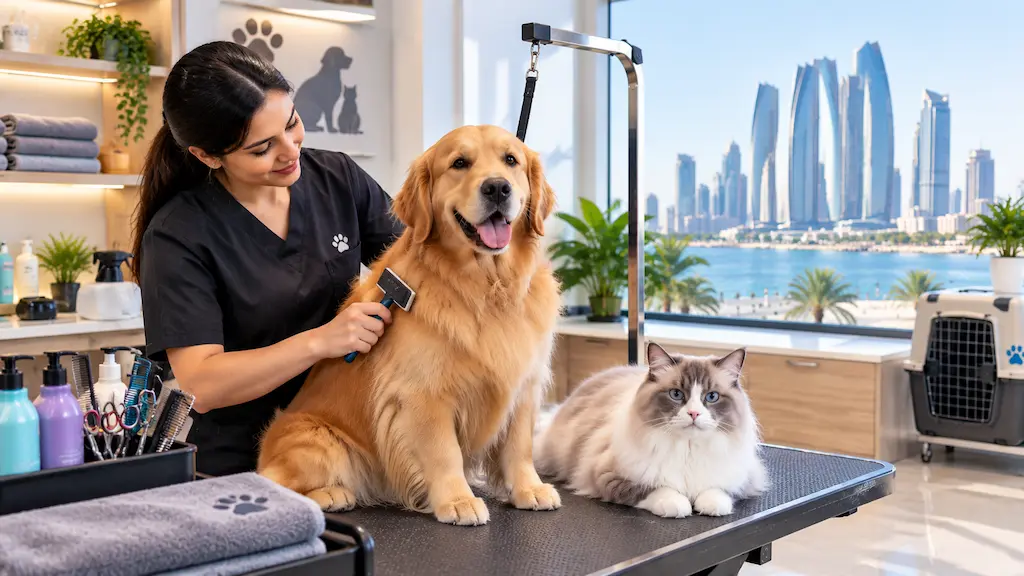
A groomer can notice visible skin changes, but allergies should be assessed by a veterinarian. Professional dog grooming in Abu Dhabi can help with brushing, de-shedding, bathing, coat maintenance, nail care, and other routine grooming needs.
Summer: Focus on Heat, Dust and Coat Maintenance
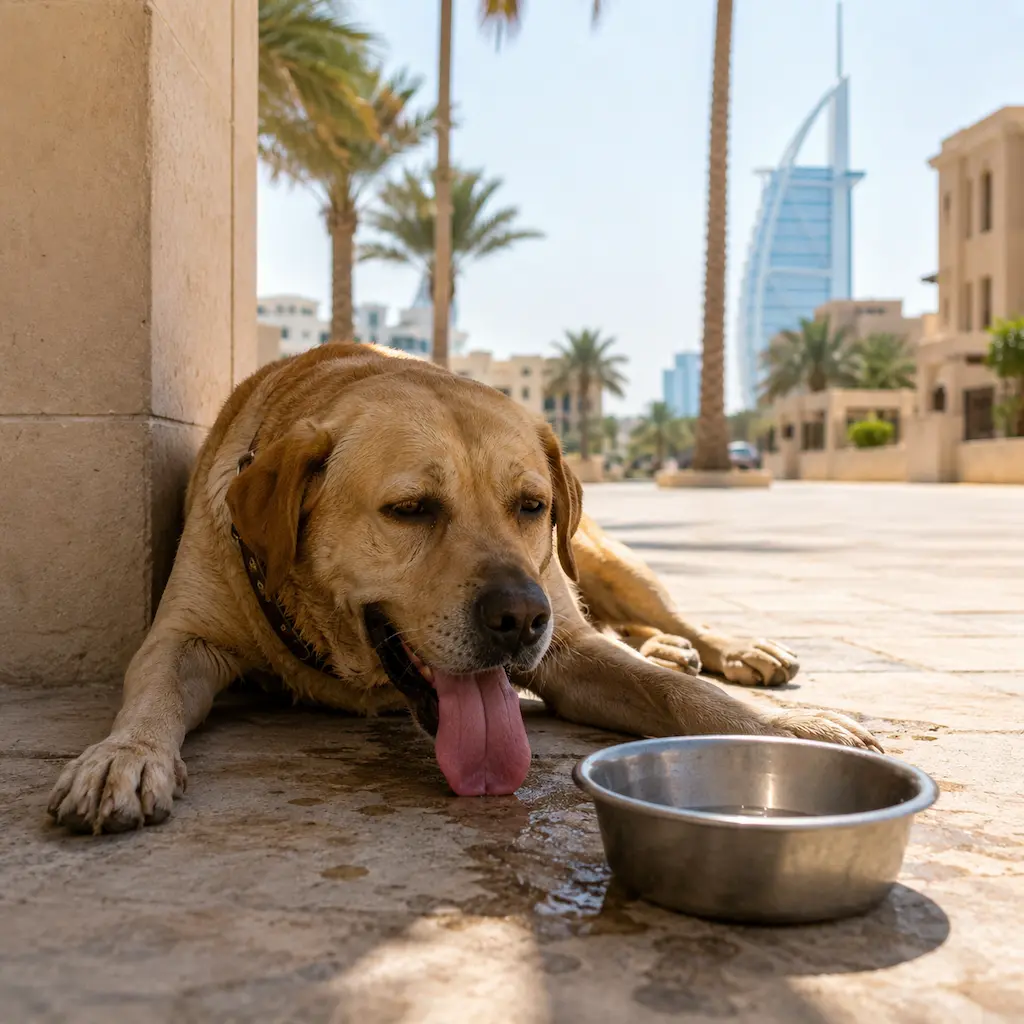
Summer creates some of the biggest grooming challenges for dogs in Abu Dhabi. High temperatures, humidity, dust, sand, and hot outdoor surfaces can affect coat cleanliness, paws, and general comfort.
Summer Grooming Priorities
- Brush regularly to remove loose fur.
- Check paws after outdoor walks.
- Remove sand and debris from the coat.
- Keep nails properly maintained.
- Use dog-specific shampoo when bathing.
- Dry thick coats properly after bathing.
- Keep your dog hydrated.
- Schedule outdoor activity during cooler times of day.
Should You Shave Your Dog in Summer?
Not automatically. Owners sometimes assume that removing as much fur as possible will make a dog cooler. However, double-coated breeds such as Huskies, Golden Retrievers, German Shepherds, and Pomeranians generally should not be shaved simply because the weather is hot. Their coat has protective functions, including shielding the skin.
Instead, focus on removing loose undercoat, preventing matting, and maintaining a clean, manageable coat.
Dogs with exposed, lightly pigmented, or thinly covered skin may also be more vulnerable to sun exposure. Ask your veterinarian about suitable sun protection rather than applying human sunscreen.
Autumn: Prepare for Increased Shedding
Many seasonal shedders experience another period of heavier hair loss as the coat changes. This is a good time to increase brushing before loose undercoat turns into tangles or mats.
A useful routine may include:
- Brush thoroughly several times per week as needed.
- Check areas behind the ears and legs for tangles.
- Monitor the undercoat.
- Bathe when necessary using dog-safe products.
- Dry the coat completely.
- Schedule professional de-shedding if home brushing becomes difficult.
Remember that grooming frequency depends more on coat type than season alone. Long-haired, curly, and double-coated dogs may require considerably more maintenance than short-coated breeds.
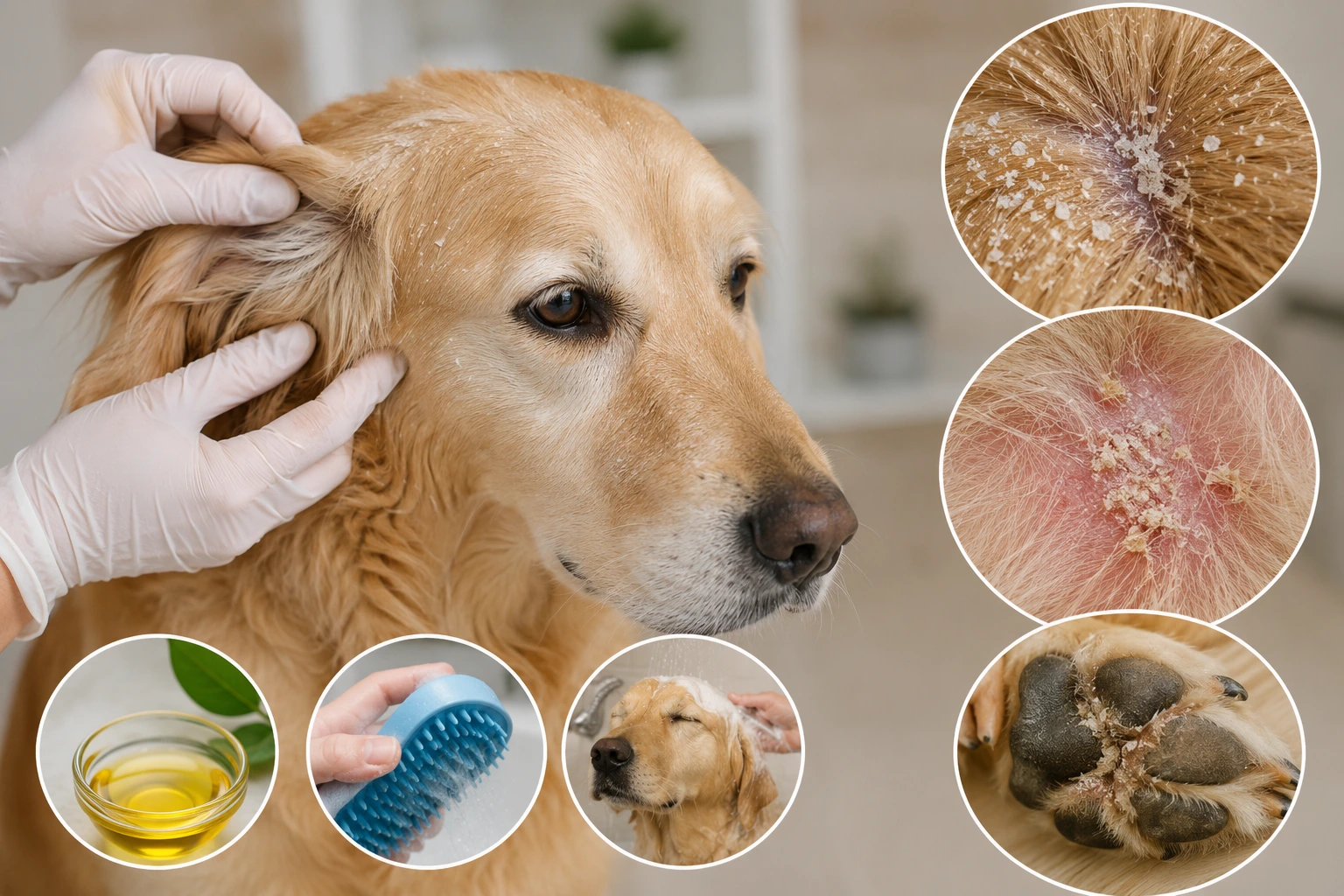
Winter: Watch for Dry Skin and Coat Changes
Abu Dhabi winters are much milder than those experienced in colder countries, but lower temperatures, dry conditions, and prolonged time in air-conditioned environments can still affect some dogs’ skin.
You may notice:
- Flaking
- Dull coat
- Mild dryness
- Increased scratching
- Static or tangled fur
Regular brushing helps remove loose hair and spread the coat’s natural oils. Avoid automatically increasing baths because the weather is cooler. Excessive bathing or harsh products can aggravate dryness in some dogs.
If your dog’s coat becomes persistently flaky, greasy, itchy, smelly, or irritated, speak with your veterinarian rather than repeatedly changing shampoos.
How Should Grooming Frequency Change With the Seasons?
There is no universal schedule.
| Situation | Grooming Adjustment |
|---|---|
| Heavy seasonal shedding | Brush more frequently |
| Long or easily tangled coat | Check and brush frequently |
| Dusty outdoor activity | Check and clean coat and paws |
| Dry or irritated skin | Reduce unnecessary bathing and consult a vet if persistent |
| Heavy undercoat | Consider professional de-shedding |
| Minimal shedding | Maintain normal coat-specific routine |
A Chihuahua and a Husky should not follow the same grooming schedule simply because they live in the same climate. Breed, coat density, age, lifestyle, skin condition, and activity level all matter.
How Professional Grooming Helps With Seasonal Coat Care
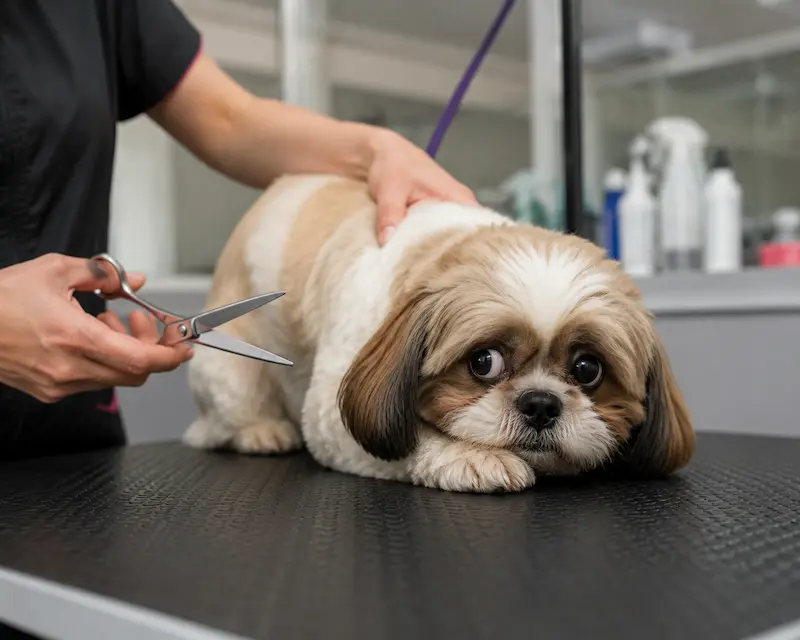
Professional grooming can make seasonal coat maintenance easier, especially for long-haired, double-coated, heavily shedding, or easily matted dogs.
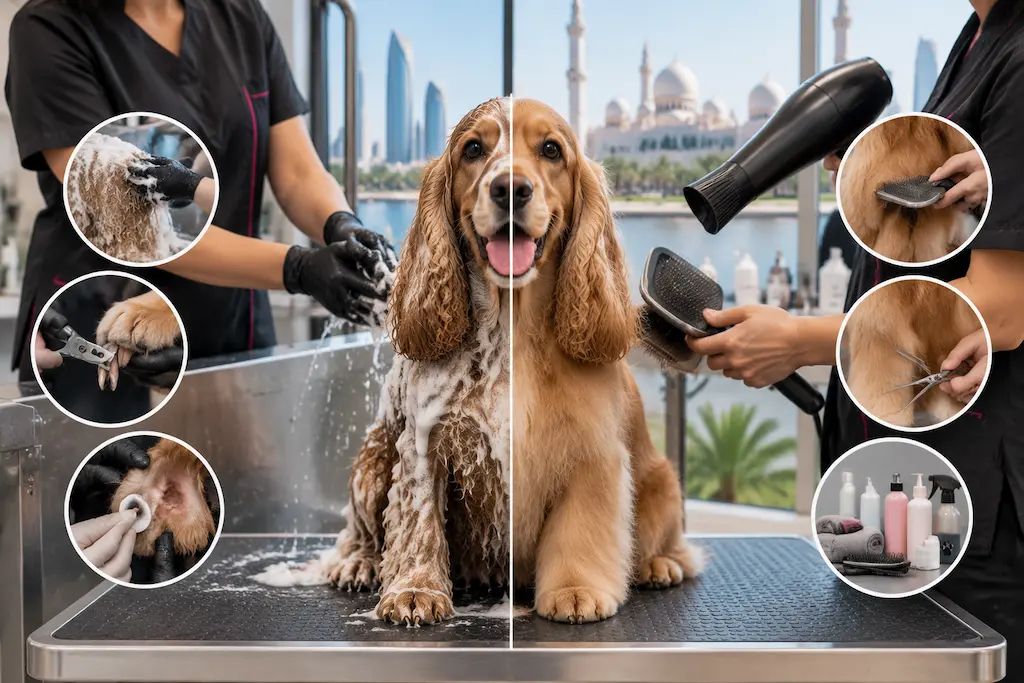
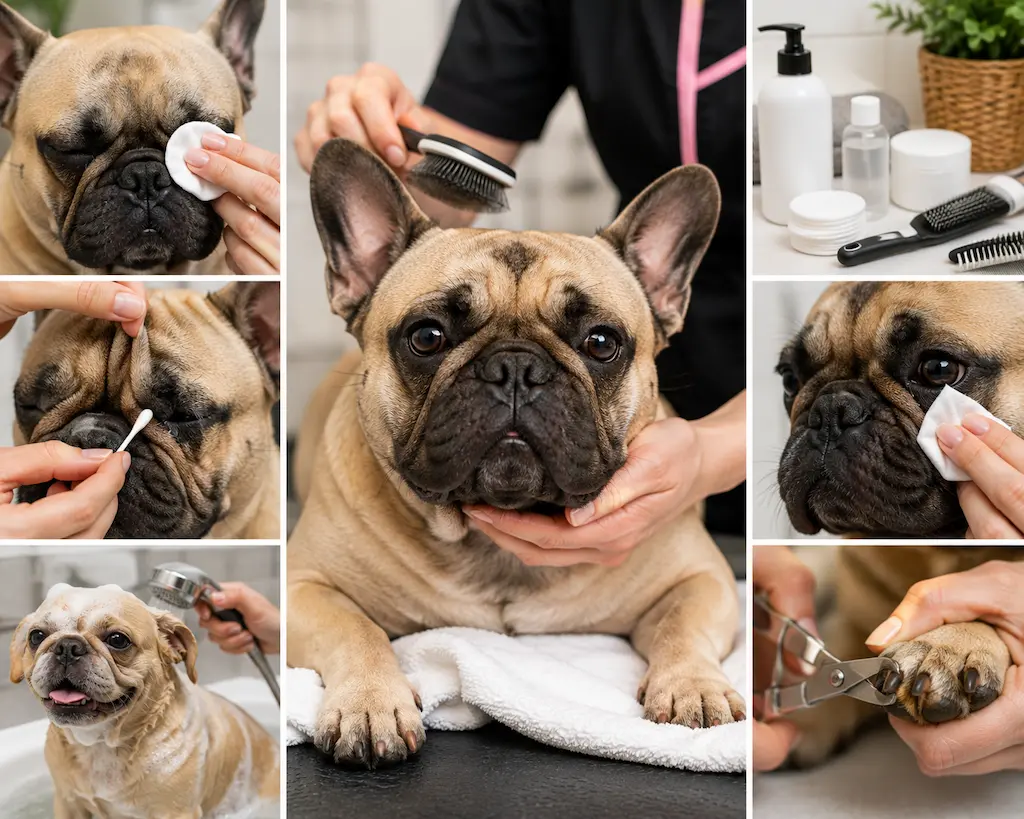
A professional groomer can help with:
- De-shedding
- Brushing
- Coat trimming where appropriate
- Bathing and drying
- Nail care
- Ear-area cleaning
- Removing difficult tangles
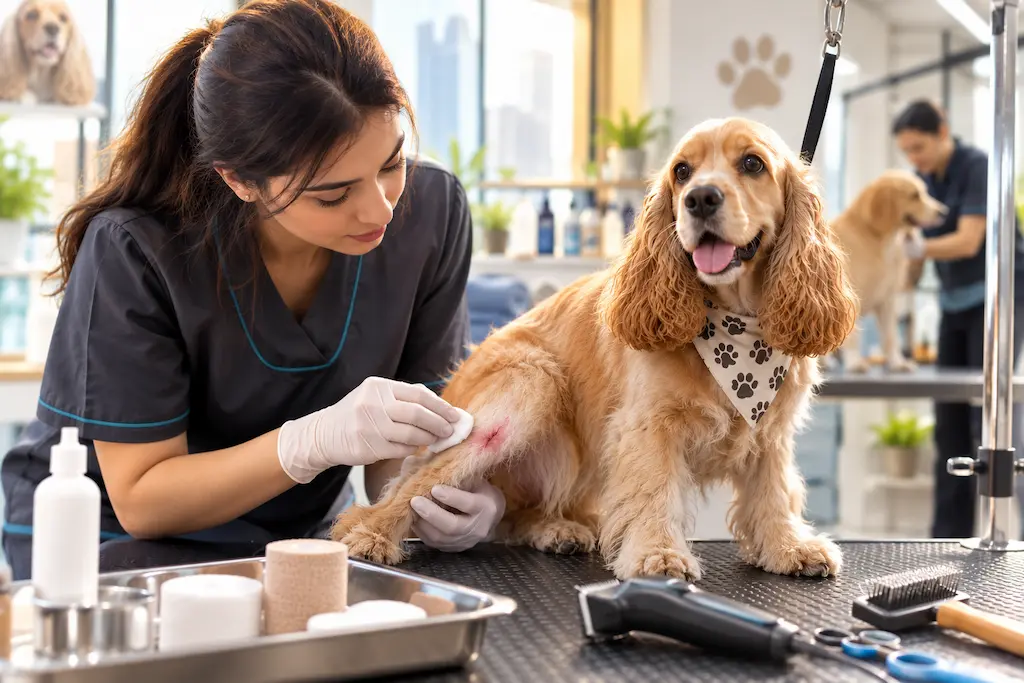
They may also notice visible changes in the skin or coat and recommend that you speak with a veterinarian when something appears unusual.
However, groomers should not be relied upon to diagnose or treat allergies, infections, sunburn, or other medical skin conditions.
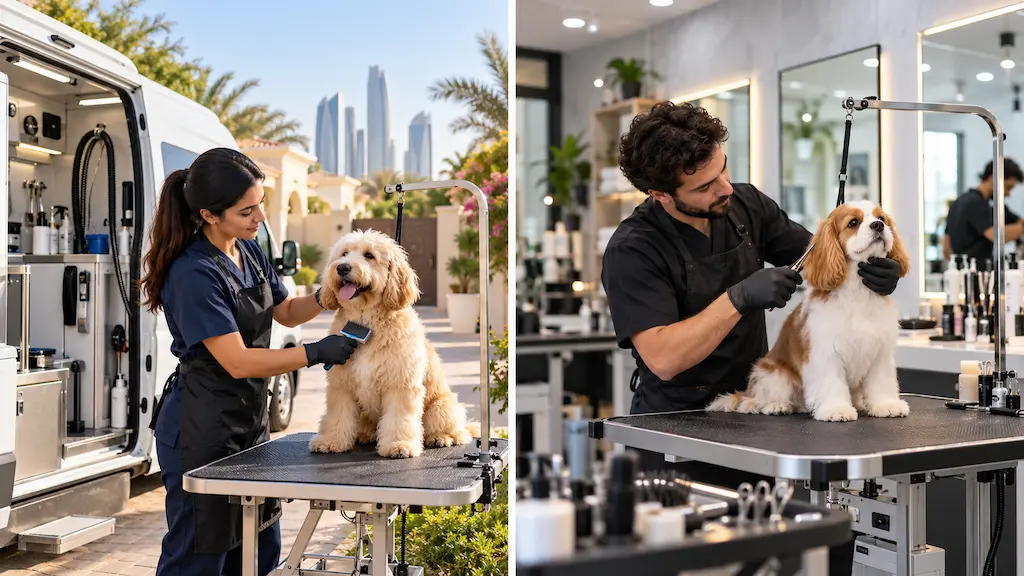
For busy owners, mobile pet grooming in Abu Dhabi can also make seasonal maintenance easier without requiring repeated salon trips.
Seasonal Dog Grooming at Home
Professional appointments work best when supported by consistent home care.
Keep These Basics in Your Routine
Choose the right brush: Match the tool to your dog’s coat rather than buying a generic brush.
Brush consistently: Increase frequency when shedding becomes heavier.
Avoid over-bathing: Bathe according to your dog’s coat, activity level, and needs rather than following an arbitrary calendar.
Use dog-specific products: Human shampoos can be unsuitable for canine skin.
Check the skin: Look for redness, flakes, lumps, sores, parasites, or unusual hair loss.
Monitor paws: This is particularly important after walks during Abu Dhabi’s hotter months.
If you are unsure whether your dog’s coat is telling you it is time for professional attention, review these signs your pet needs a grooming session.
Common Seasonal Grooming Mistakes to Avoid
Some well-intentioned grooming habits can create additional problems.
Avoid:
- Shaving double-coated breeds simply for summer
- Bathing excessively because of shedding
- Using human shampoo or skincare products
- Pulling aggressively at mats
- Ignoring paw care during hot weather
- Assuming persistent scratching is only seasonal
- Using new supplements or skin treatments without professional guidance
The goal of seasonal grooming is not to completely change your routine every few months. It is to adjust the routine when your dog’s coat, skin, activity level, and environment change.
Frequently Asked Questions
Do dogs shed more when seasons change?
Many dogs do, particularly breeds with double coats. Spring and autumn are common heavier shedding periods, although some dogs shed throughout the year.
How often should I brush my dog during shedding season?
It depends on coat type and the amount of shedding. Heavy shedders may need brushing several times per week or even daily during peak periods.
Should I shave my dog during Abu Dhabi summer?
Not necessarily. Double-coated dogs generally should not be shaved purely because of hot weather. Regular brushing and de-shedding are usually more appropriate.
Does my dog need more baths in summer?
Not automatically. Dogs may become dirtier because of outdoor activity, dust, or sand, but excessive bathing can contribute to dry or irritated skin. Bathe according to your dog’s individual needs.
Can grooming help with seasonal allergies?
Grooming can remove some dirt, pollen, and debris from the coat, but it does not diagnose or treat allergies. Persistent itching, redness, licking, or hair loss should be discussed with a veterinarian.
Is mobile grooming suitable during Abu Dhabi’s summer?
Yes, it can be convenient because it reduces the need to transport your dog for grooming. Always choose a provider with a clean, properly equipped, air-conditioned grooming environment.