


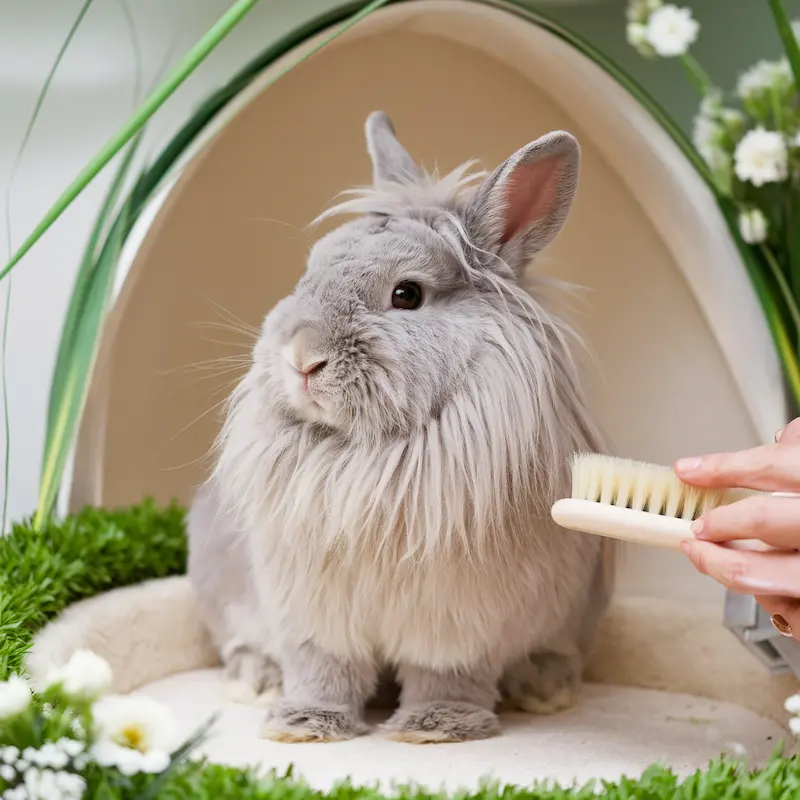

A rabbit’s coat does more than shape its appearance; it plays a direct role in the animal’s digestive and skin health, in ways many owners don’t fully realize until a problem develops. We recently examined a young Lionhead rabbit brought in after weeks of reduced appetite and unusual restlessness. A closer look revealed early-stage wool block, caused by loose fur the rabbit had ingested during self-grooming fur that regular brushing would have removed long before it became a digestive concern. Cases like this are more common than most owners expect, and they underline why grooming deserves to be treated as a health measure, not a cosmetic one.
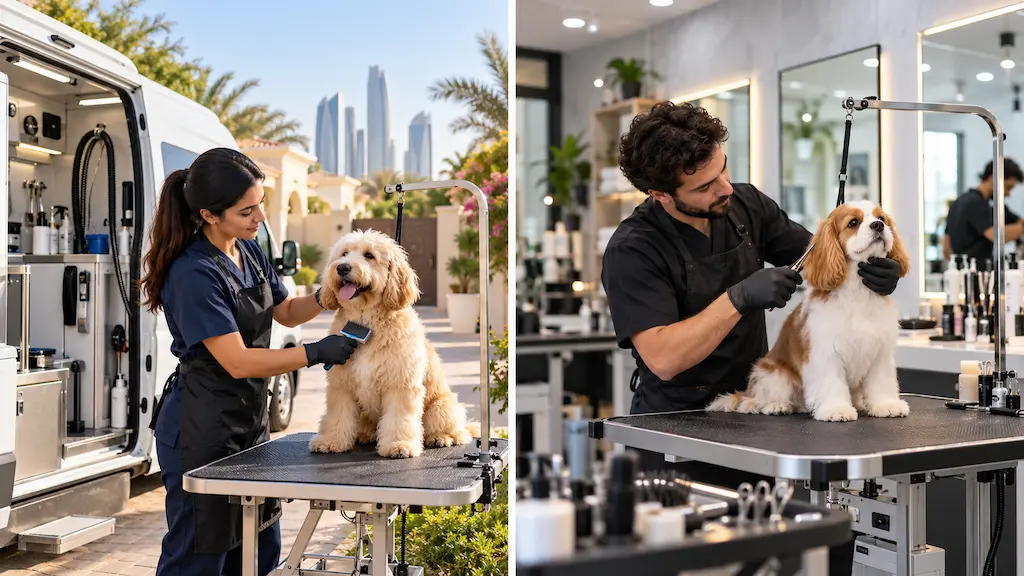
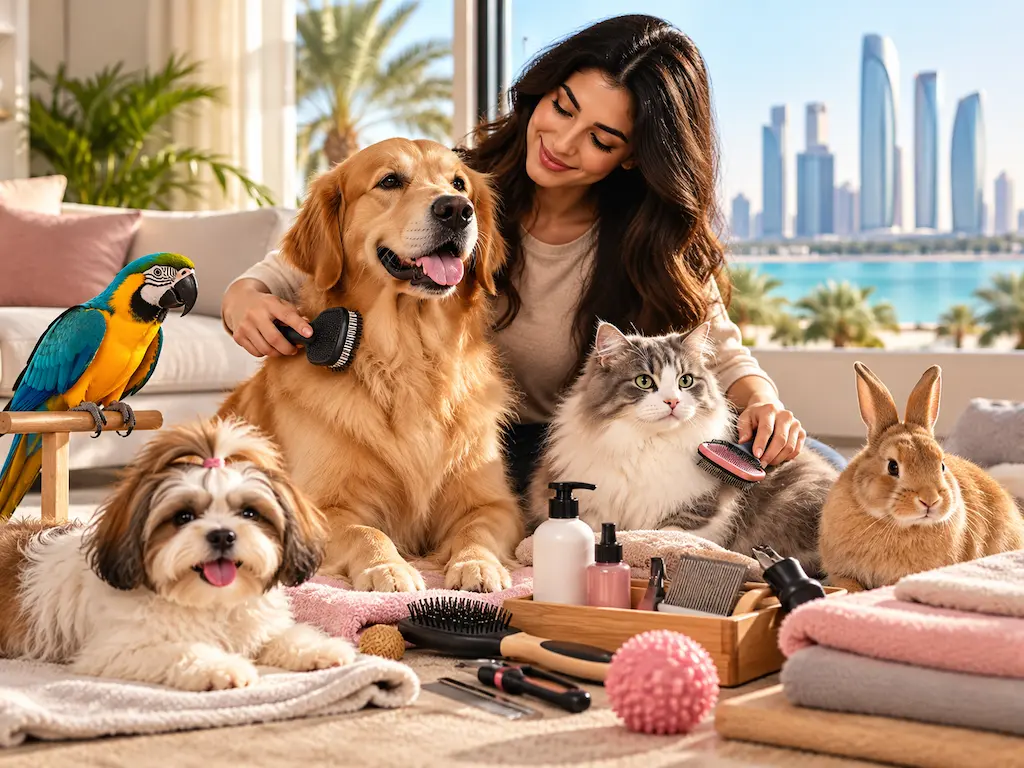
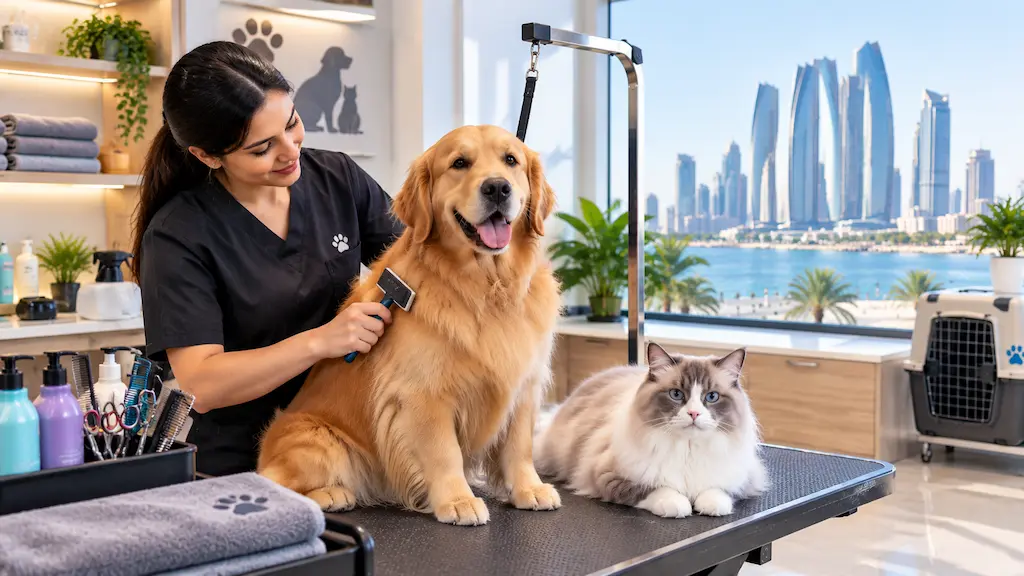
While many pet owners think of pet grooming in Abu Dhabi as a service mainly for dogs and cats, rabbits benefit just as much from professional grooming tailored to their unique coat and skin needs. Rabbits are gentle, low-maintenance companions in many respects, but their coats require a level of upkeep that differs significantly from cats or dogs. Having worked with rabbits of nearly every breed and coat type, our groomers see firsthand how consistent grooming helps prevent avoidable health issues, including wool block, flystrike, matted fur, and sore hocks. This guide explains why rabbit grooming matters, the warning signs every owner should know, and how to build a grooming routine that supports your rabbit’s long-term health.
Why Grooming Carries More Weight for Rabbits Than Most Owners Assume
Rabbits have a dense, delicate coat that requires regular maintenance, and unlike cats or dogs, they cannot vomit. This single physiological difference is significant: if a rabbit ingests too much loose fur while self-grooming, that fur cannot be expelled and can instead accumulate into a dangerous blockage known as wool block. Regular grooming reduces the volume of loose fur available to be ingested in the first place, directly lowering this risk.
Grooming sessions also double as a hands-on health check. Running your hands through a rabbit’s coat regularly gives you the opportunity to catch early indicators such as bald patches, skin flaking, embedded parasites, hidden wounds, or unusual lumps, all of which are far easier to treat when caught early rather than after they’ve progressed.
Skin and Fur Issues Rabbit Owners Should Recognize
Matted fur is most common in long-haired breeds such as Angoras and Lionheads. Left untreated, mats pull on the skin and can lead to pain, restricted movement, and in severe cases, infection. Regular brushing is the most effective preventive measure.
Flystrike is one of the more serious risks rabbit owners should understand. It occurs when flies lay eggs in soiled fur or open wounds, and the resulting maggots begin feeding on the rabbit’s flesh, most often around the hindquarters. Keeping this area clean through routine grooming substantially reduces the likelihood of this condition developing.
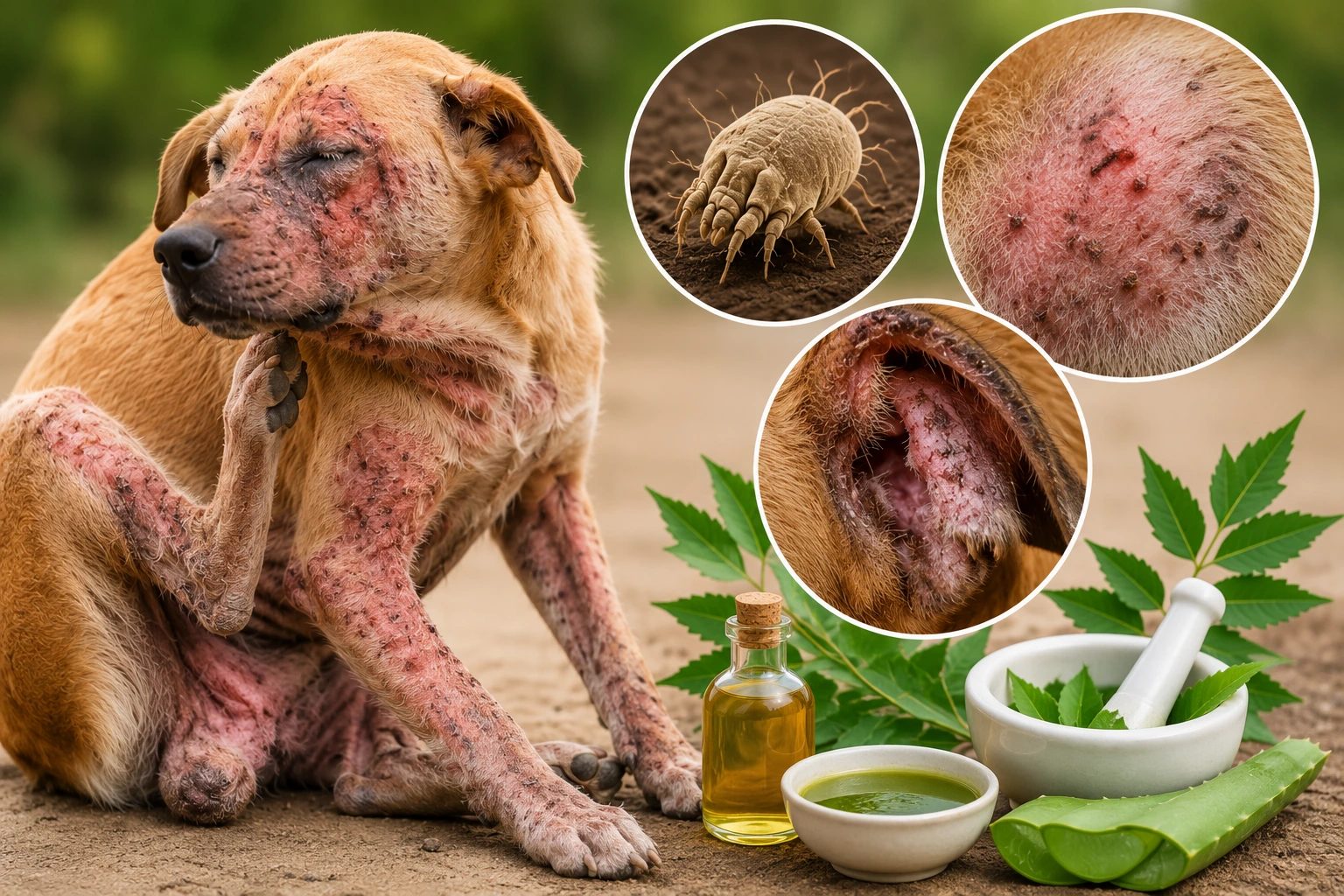
Fur mites, sometimes referred to as “walking dandruff,” cause flaking skin and persistent itching. Because these are easy to miss without close inspection, regular grooming sessions give owners a reliable opportunity to catch early signs before the infestation worsens.
Sore hocks develop when rabbits are kept on rough or unsuitable flooring, resulting in painful open sores on the feet. Grooming sessions are a natural point to examine the feet and confirm the rabbit’s living environment remains appropriately soft and clean.
Seasonal shedding brings its own challenges. During molting periods, the volume of loose fur increases substantially, raising both the risk of ingestion and matting. A consistent grooming routine during these periods keeps shedding manageable and reduces associated risks.
Where Professional Grooming Adds Real Value
Home grooming forms the foundation of good coat care, but professional grooming brings a level of technique and equipment that’s difficult to replicate at home. Trained groomers understand how to handle rabbits calmly, recognize early signs of stress during a session, and select the correct tools for a given breed and coat type.
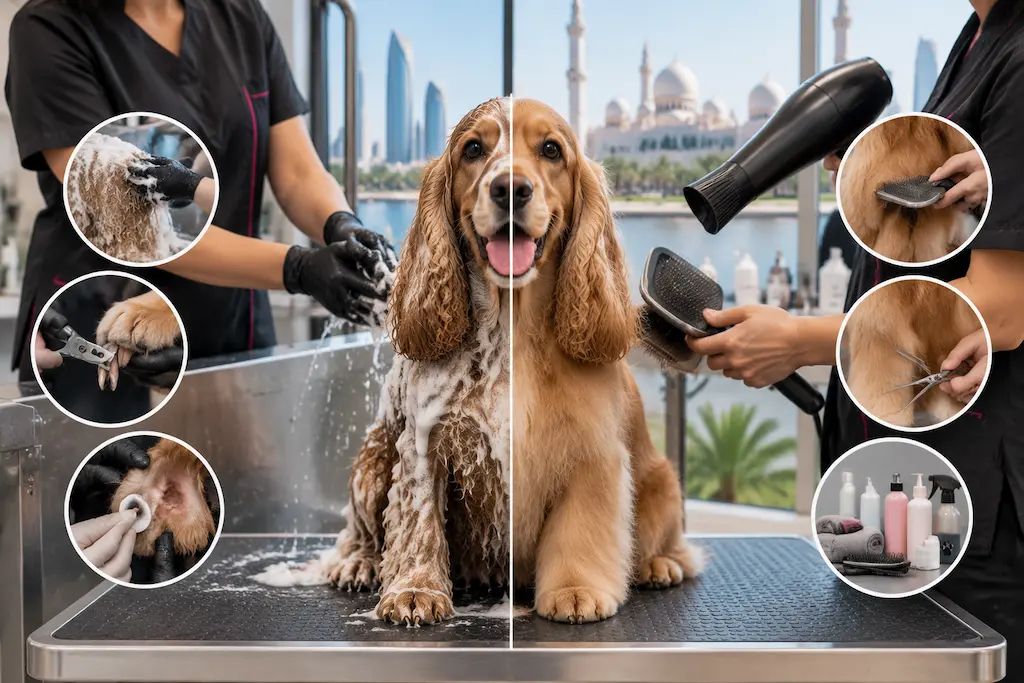
Professional sessions typically extend beyond basic brushing to include nail trimming, ear cleaning, sanitary trims, mat removal, and a general skin condition assessment, services that become especially valuable for long-haired breeds or rabbits with existing coat issues. If you’re weighing the benefits of bringing grooming into a broader home-care routine, our overview of mobile pet grooming in Abu Dhabi explains how at-home sessions can reduce stress for smaller, more sensitive animals like rabbits, compared to a traditional salon visit.
Building a Grooming Routine That Actually Works
Grooming is best introduced early in a rabbit’s life, so the animal grows accustomed to handling before coat issues become a factor. Sessions should stay short, calm, and consistent, using gentle strokes and a quiet environment, with a small treat afterward to reinforce a positive association.
Frequency depends largely on coat type:
- Short-haired rabbits: approximately once a week
- Long-haired rabbits: daily or every other day, particularly during shedding season
When to Bring In a Professional
If you’re noticing early signs of matting, unusual skin changes, or simply want the reassurance of a thorough, professional-grade check, the Groom Room provides experienced, breed-specific rabbit grooming across Abu Dhabi and Al Ain. Our team is trained specifically in handling small, sensitive animals, ensuring rabbits receive care that’s both thorough and genuinely comfortable for them, whether that’s a routine brush, a nail trim, or more specialized attention for coat or skin concerns.
Frequently Asked Questions
How often do rabbits actually need grooming?
Short-haired breeds typically need brushing about once a week, while long-haired breeds require daily or every-other-day attention, especially during seasonal molting when shedding increases significantly.
Can rabbits get sick from ingesting their own fur?
Yes, since rabbits can’t vomit, excess ingested fur can accumulate in the digestive tract and cause a dangerous blockage known as wool block. Regular grooming is one of the most effective ways to prevent this.
Is professional grooming necessary, or is home brushing enough?
Home brushing is essential and forms the foundation of good coat care, but professional grooming adds trained handling, breed-specific technique, and services like sanitary trims and skin assessments that are harder to replicate at home.
What’s the most serious skin condition to watch for in rabbits?
Flystrike is one of the most serious risks, occurring when flies lay eggs in soiled fur or wounds. Keeping the hindquarters clean through regular grooming substantially lowers this risk.
At what age should I start grooming my rabbit?
Grooming should begin early in a rabbit’s life, ideally as soon as they’re settled into their home, so they grow accustomed to handling before coat issues have a chance to develop.
Conclusion
Rabbit grooming isn’t a cosmetic extra, it’s a direct line of defense against some of the most common and preventable health issues rabbits face, from wool block to flystrike to matting. A consistent routine, paired with the occasional professional session, gives owners the best chance of catching problems early and keeping their rabbit genuinely comfortable, not just well-presented. For owners who want that extra layer of expertise, particularly with long-haired or more sensitive breeds, the Groom Room offers the trained, gentle handling that makes a real difference in a rabbit’s overall wellbeing.