









Not every eye problem becomes obvious the moment a cat starts feeling uncomfortable. During grooming appointments, we’ve occasionally had cats that seemed calm until it was time to clean around their face. They would keep one eye tightly closed, pull away when the area was touched, or tear excessively from one side. At first glance, many owners assumed it was a little dust or dried discharge. However, these are the moments when experienced groomers know it’s time to stop cosmetic grooming and recommend a veterinary examination instead.
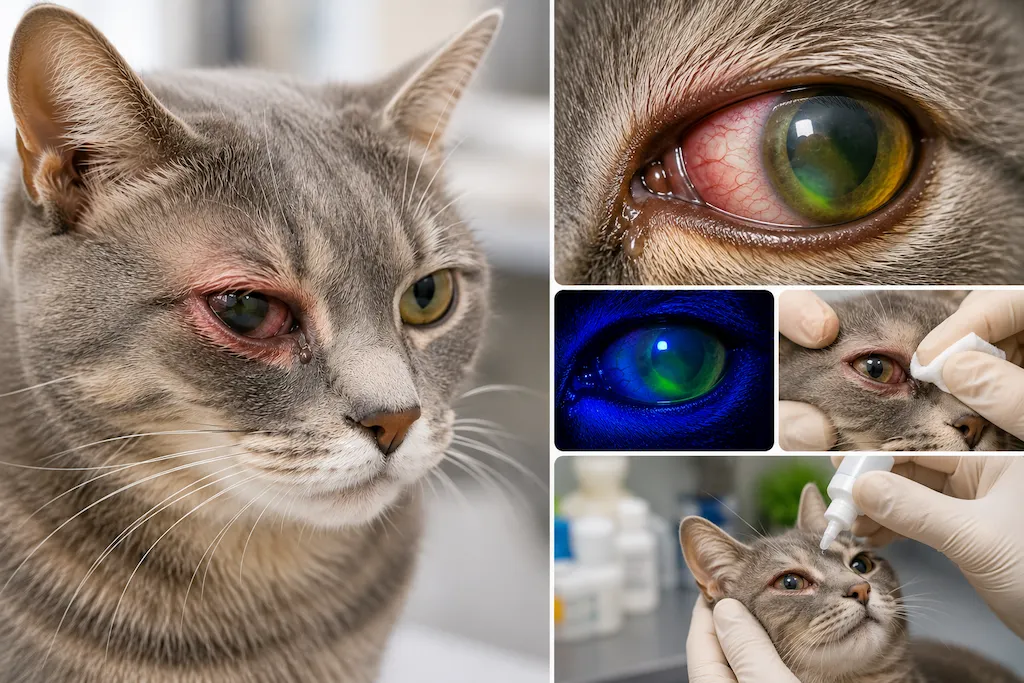
One recent grooming assessment followed that exact pattern. While gently cleaning the fur around a cat’s eye, we noticed persistent squinting and excessive tearing that hadn’t improved after the discharge was removed. Because the eye itself looked unusually sensitive, we advised the owner to visit their veterinarian before continuing any facial grooming. The diagnosis was a small corneal ulcer. Thankfully, it was caught early, treated with prescription eye medication, and the cat made a full recovery over the following weeks.
Experiences like this reinforce an important lesson: grooming isn’t about diagnosing medical conditions, but it often helps identify early warning signs that owners may not notice at home. That’s one reason regular pet grooming in Abu Dhabi is valuable, it gives professionals an opportunity to spot changes in your cat’s eyes, skin, ears, and coat before they become more serious.
In this guide, we’ll explain what cat eye ulcers are, the symptoms you should never ignore, how they’re treated, and what you can do to support a safe recovery.
What Is a Cat Eye Ulcer?
A cat eye ulcer is an injury to the cornea, the clear, dome-shaped surface covering the front of the eye. Although the scratch may be tiny, the cornea contains many nerve endings, making even a small ulcer extremely painful.
Eye ulcers can affect cats of any age or breed. Some involve only the outer layer of the cornea and heal relatively quickly with treatment, while deeper ulcers may take longer to recover and sometimes require advanced veterinary care.
Unlike a simple buildup of discharge, a corneal ulcer damages the eye itself. That’s why attempting to clean the eye repeatedly at home won’t solve the underlying problem and may even make the irritation worse.
Symptoms of a Cat Eye Ulcer
One of the challenges with eye ulcers is that the early signs can resemble mild eye irritation. During grooming, we pay close attention to facial expressions and eye comfort because cats often try to hide pain.
Common symptoms include:
- Keeping one eye partially or completely closed
- Excessive tearing or watery eyes
- Redness around the eye
- Cloudy or bluish appearance on the cornea
- Frequent blinking or squinting
- Pawing or rubbing at the affected eye
- Sensitivity to bright light
- Thick eye discharge in some cases
Some owners mistake these signs for ordinary eye gunk. While discharge can occur with several eye conditions, persistent squinting or a cloudy eye should never be dismissed as routine debris.
If you’ve also noticed unusual changes in your cat’s iris or eye colour, read our guide on Your Cat’s Eyes Are Changing Colour, as colour changes can sometimes indicate deeper eye conditions that require veterinary attention.
What Causes Cat Eye Ulcers?
Cat eye ulcers develop when the surface of the cornea is damaged. Sometimes the cause is obvious, such as a scratch during play, while in other cases the injury is linked to an underlying medical condition that weakens the eye.
Common causes include:
- Scratches from another cat during play or fighting
- Injuries from tree branches, plants, or household objects
- Dust, sand, or other foreign material trapped in the eye
- Chronic dry eye that reduces the eye’s natural protection
- Viral infections, particularly feline herpesvirus (FHV-1)
- Eyelid or eyelash abnormalities that rub against the cornea
- Chemical irritation from unsuitable cleaning products
In our grooming experience, facial grooming should never continue if a cat shows obvious eye pain. Cleaning around an irritated eye may remove surface debris, but it cannot treat a damaged cornea. Instead, we recommend stopping the grooming session and referring the owner to their veterinarian before any further handling.
It’s also important not to confuse a corneal ulcer with normal eye discharge. While dried discharge can usually be cleaned away safely, an ulcer affects the eye itself and needs medical treatment. If your cat regularly develops discharge but doesn’t show signs of pain, our guide to Cat Eye Gunk explains how to clean around the eyes safely and when discharge may indicate a more serious problem.
How Are Cat Eye Ulcers Treated?
Treatment depends on how deep the ulcer is and what caused it. A veterinarian will usually examine the eye using a special fluorescent dye that highlights damage on the cornea. This painless test helps determine the size and severity of the ulcer.
Treatment may include:
- Prescription antibiotic eye drops or ointments to prevent infection
- Pain relief medication to improve comfort
- Antiviral medication if feline herpesvirus is involved
- Lubricating eye drops to support healing
- An Elizabethan collar (cone) to stop rubbing or scratching
- Follow-up examinations to ensure the ulcer is healing properly
Most superficial ulcers begin improving within a few days and often heal completely in one to two weeks with prompt treatment. Deeper ulcers or infected ulcers may require longer treatment and, in severe cases, referral to a veterinary ophthalmologist for surgical repair.
Owners should never use leftover eye medication or human eye drops without veterinary advice. Different eye conditions require different treatments, and using the wrong product can delay healing or worsen the injury.
Recovery and Home Care After a Cat Eye Ulcer
Most cats recover well when treatment begins early and medications are given exactly as prescribed. The biggest challenge during recovery is preventing your cat from rubbing or scratching the affected eye, as even a healing ulcer can reopen if the cornea is injured again.
To support a smooth recovery:
- Give all medications at the times recommended by your veterinarian.
- Prevent rubbing by using an Elizabethan collar if advised.
- Keep your cat indoors until the eye has healed.
- Avoid dusty or smoky environments that may irritate the eye.
- Never stop treatment early, even if the eye looks normal.
- Attend every follow-up appointment to confirm the ulcer has fully healed.
During recovery, it’s also best to postpone grooming around the face unless your veterinarian says it’s safe. Even gentle wiping can cause discomfort if the cornea is still healing.
Can Cat Eye Ulcers Be Prevented?
Not every eye ulcer can be avoided, but many risks can be reduced with routine eye care and early attention to small problems before they become serious.
Good preventive habits include:
- Check your cat’s eyes regularly for redness, tearing, or squinting.
- Trim long facial hair that may irritate the eyes.
- Keep your home free from sharp objects at your cat’s eye level.
- Treat eye infections promptly instead of waiting for them to improve on their own.
- Schedule regular veterinary health checks, especially for cats with recurring eye problems.
Professional groomers also play an important role in early detection. While we don’t diagnose eye diseases, routine grooming allows us to notice changes that owners may miss between veterinary visits. Identifying discomfort early often leads to faster treatment and a better outcome.
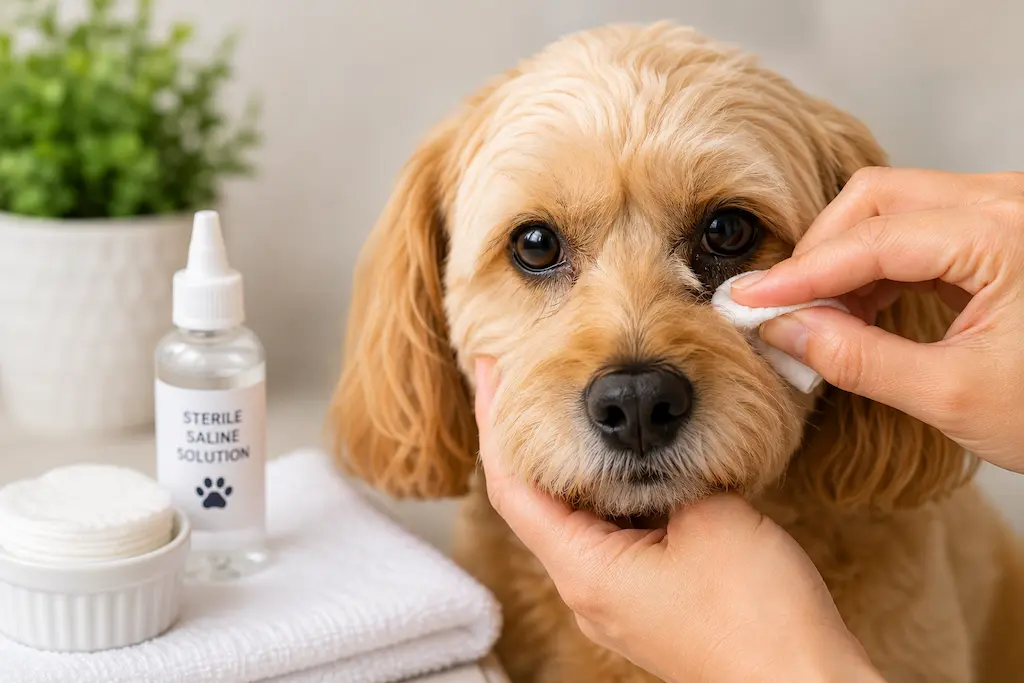
If you have both cats and dogs at home, remember that eye care isn’t the same for every species. Learn how to safely remove dog eye discharge to keep your dog’s eyes clean while recognising when discharge needs veterinary attention.
Frequently Asked Questions
Can a cat eye ulcer heal on its own?
Very small superficial ulcers may begin to heal naturally, but it’s impossible to know the severity without a veterinary examination. Delaying treatment increases the risk of infection, deeper damage, and permanent scarring.
How long does a cat eye ulcer take to heal?
Most superficial corneal ulcers heal within 7–14 days when treated promptly. More severe or infected ulcers can take several weeks and may require advanced treatment or surgery.
Is a cat eye ulcer an emergency?
Yes. A painful, squinting, or cloudy eye should be treated as urgent. Early veterinary care gives the best chance of preserving vision and preventing complications.
Can I clean my cat’s eye if it has an ulcer?
Avoid trying to flush or wipe a painful eye unless your veterinarian has instructed you to do so. Excessive handling may cause discomfort, and home remedies cannot treat a corneal ulcer.
Can eye ulcers come back?
They can, especially if the underlying cause such as feline herpesvirus, eyelid abnormalities, or repeated eye trauma isn’t addressed. Cats with recurring eye problems should be monitored closely by a veterinarian.
Conclusion
A cat eye ulcer may start as what looks like a minor eye irritation, but it can quickly become a painful condition that threatens your cat’s vision if left untreated. Persistent squinting, excessive tearing, redness, or a cloudy eye should never be ignored or mistaken for routine eye discharge.
From a groomer’s perspective, we’ve learned that careful observation during routine grooming often helps identify these warning signs early. While grooming can’t diagnose or treat an eye ulcer, recognizing that something isn’t right and encouraging prompt veterinary care can make a significant difference in a cat’s recovery.
With early treatment, proper medication, and regular follow-up care, most cats recover well and return to their normal, comfortable lives. When it comes to your cat’s eyes, acting quickly is always the safest approach.