
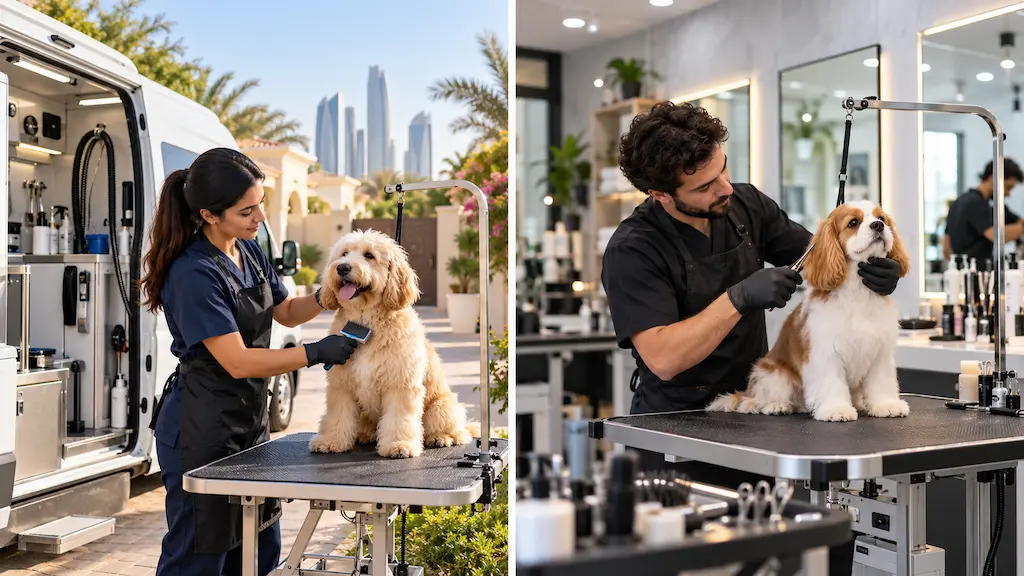

Khalil used to groom his Golden Retriever, Simba, the same way every few months: a quick brush, a bath in the garden hose, and a trim if the fur around his eyes got too long. It seemed like enough, until the day Simba started limping slightly after a walk. The vet’s diagnosis wasn’t an injury at all. It was overgrown nails, quietly changing the way Simba walked for months without anyone noticing.
That one appointment changed how Khalid thought about grooming entirely. It wasn’t just about a tidy coat for photos, it was maintenance, the same way a car needs more than a wash to run well. Brushing, bathing, trimming, nails, and dental care all work together, and skipping even one can go unnoticed until it becomes a real problem.
That’s the idea behind this guide: not just adorable-looking dogs, but healthy ones. Whether you’re scheduling a visit to a professional groomer or maintaining an at-home routine, understanding the 7 steps to grooming a dog will help ensure your furry friend stays happy, clean, and comfortable.
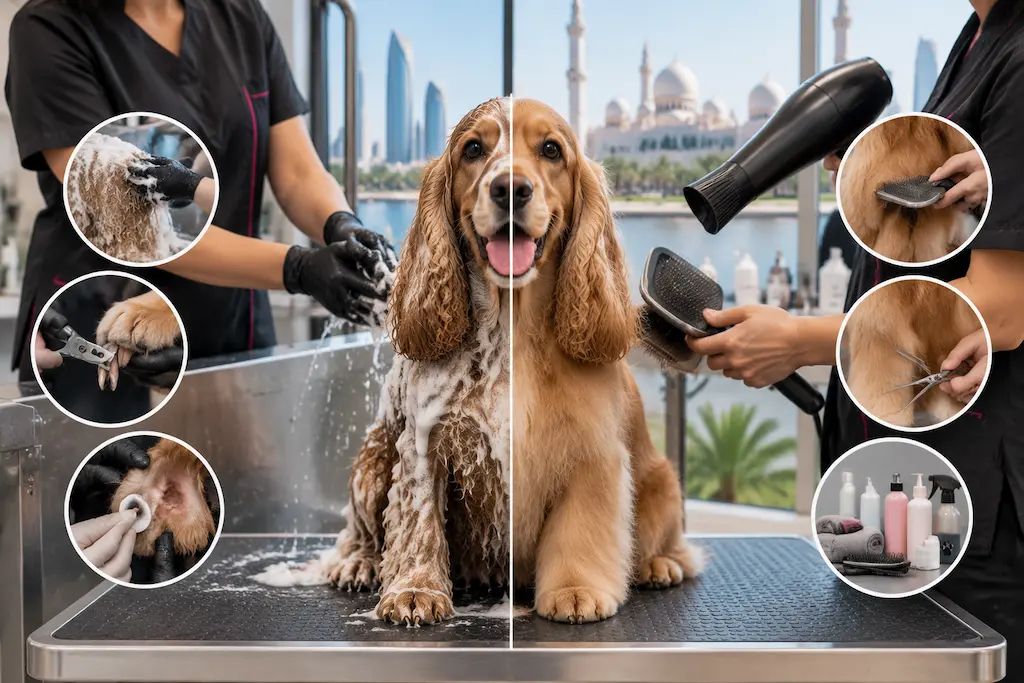
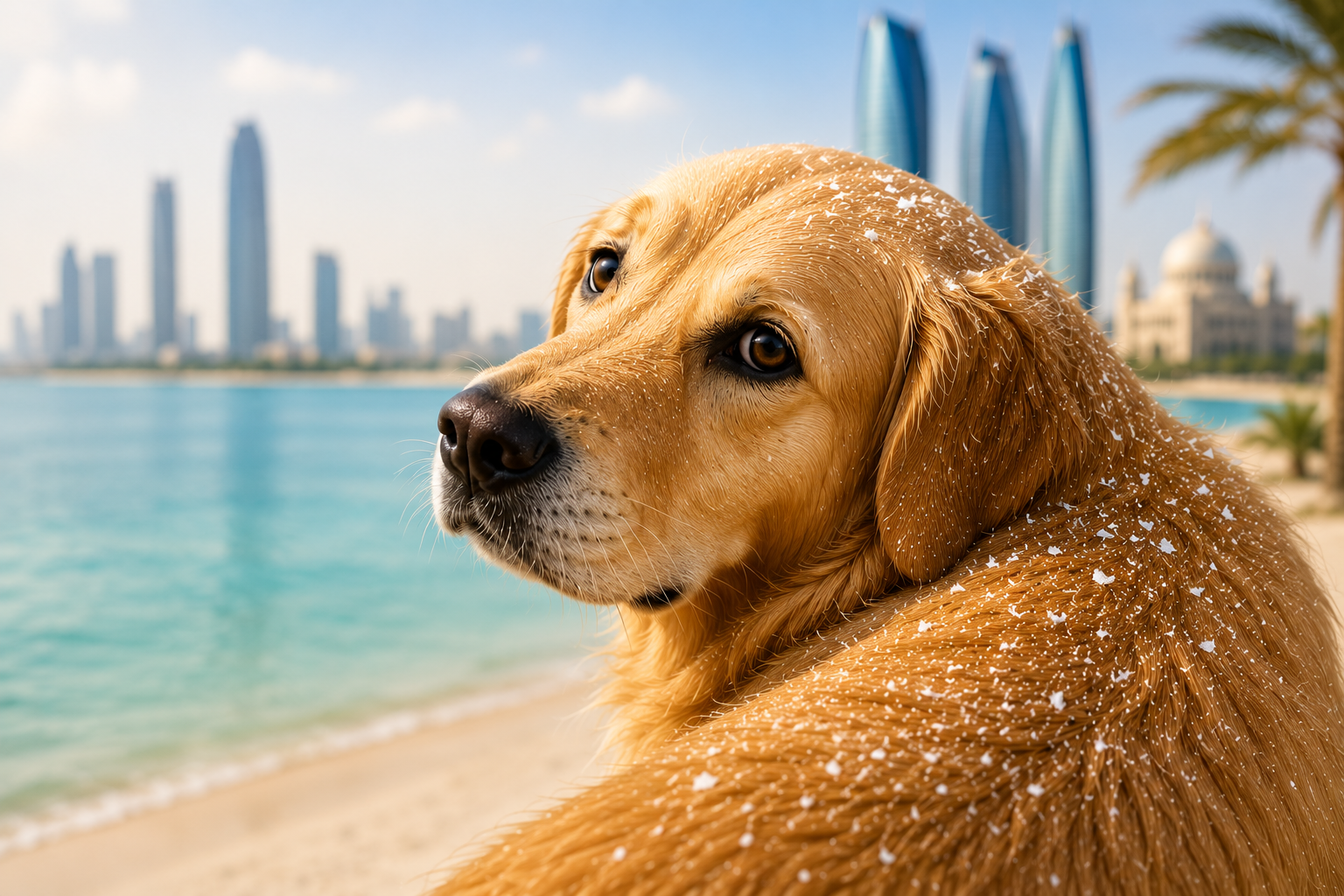
In this guide, we’ll walk you through the 7 essential steps to grooming a dog, along with the preparation, drying, and dental care that complete the routine. And because climate matters, we’ve included tips for grooming in the heat, sand, and humidity of Abu Dhabi, where staying on top of pet grooming in Abu Dhabi matters all year round.
Before You Start: Gather Your Grooming Kit
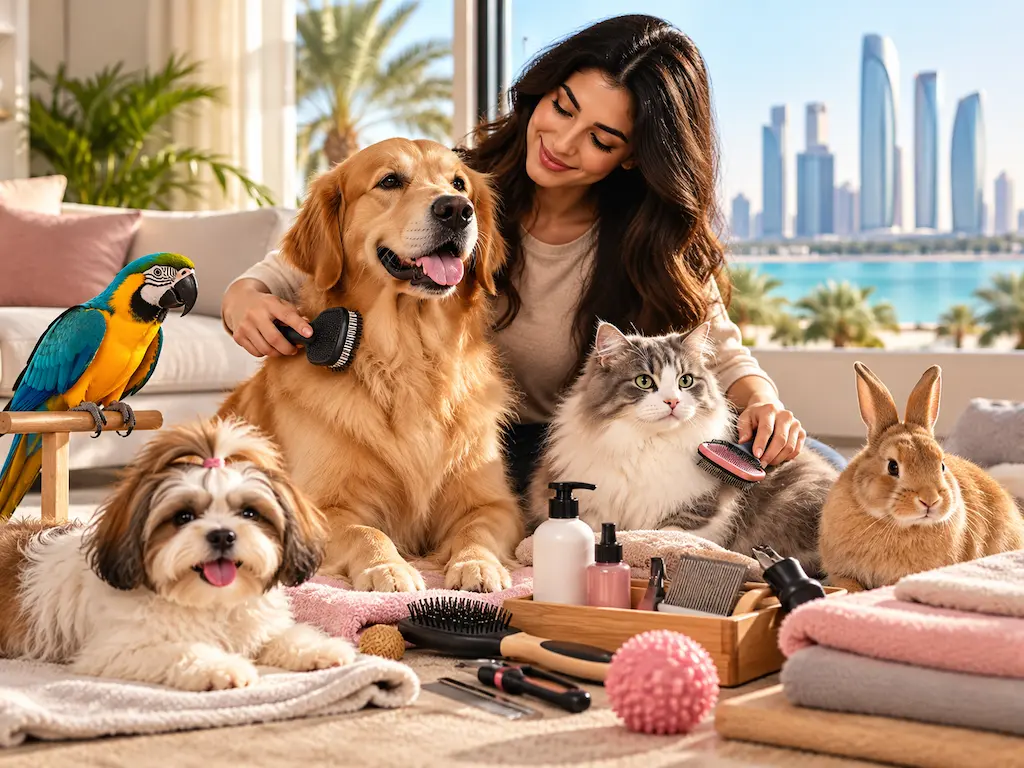
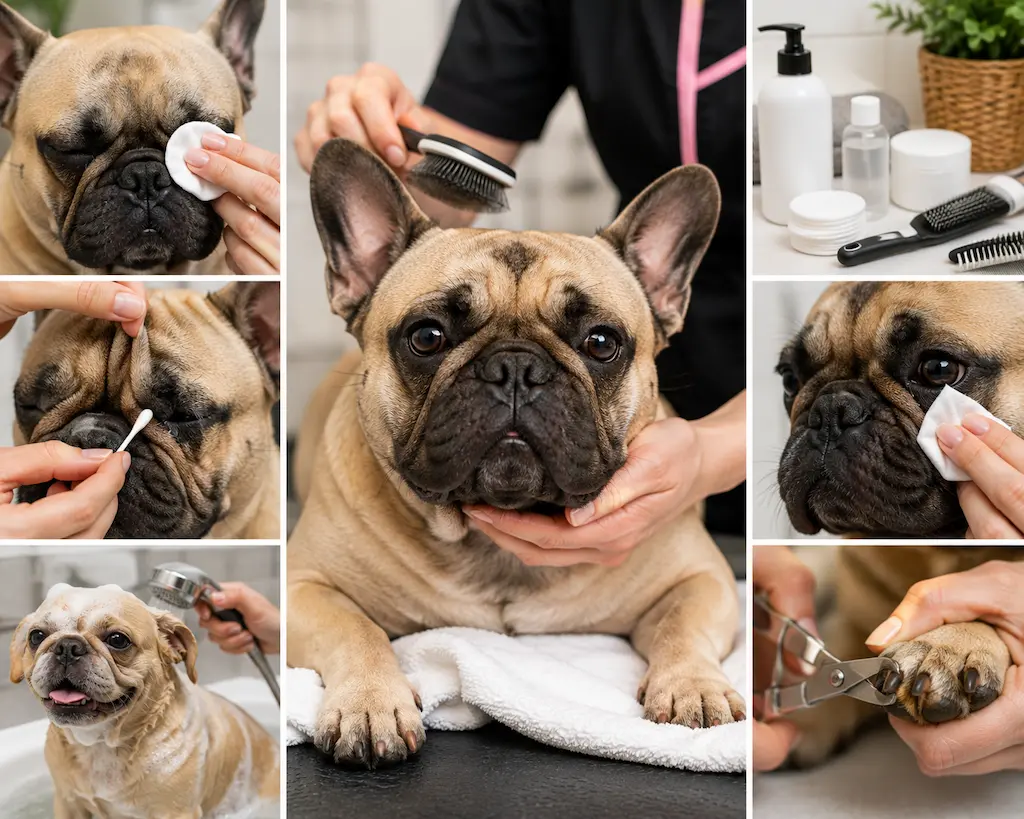
A few minutes of prep makes the whole session calmer and faster. Set everything out before you bring your dog in, so you’re not leaving them mid-groom to hunt for clippers. A basic at-home kit includes:
- A brush or comb suited to your dog’s coat (slicker brush, bristle brush, or de-shedding tool)
- Dog-specific shampoo (never human shampoo)
- A couple of towels and, ideally, a pet dryer on a cool setting
- Dog nail clippers or a grinder, plus styptic powder in case you nick the quick
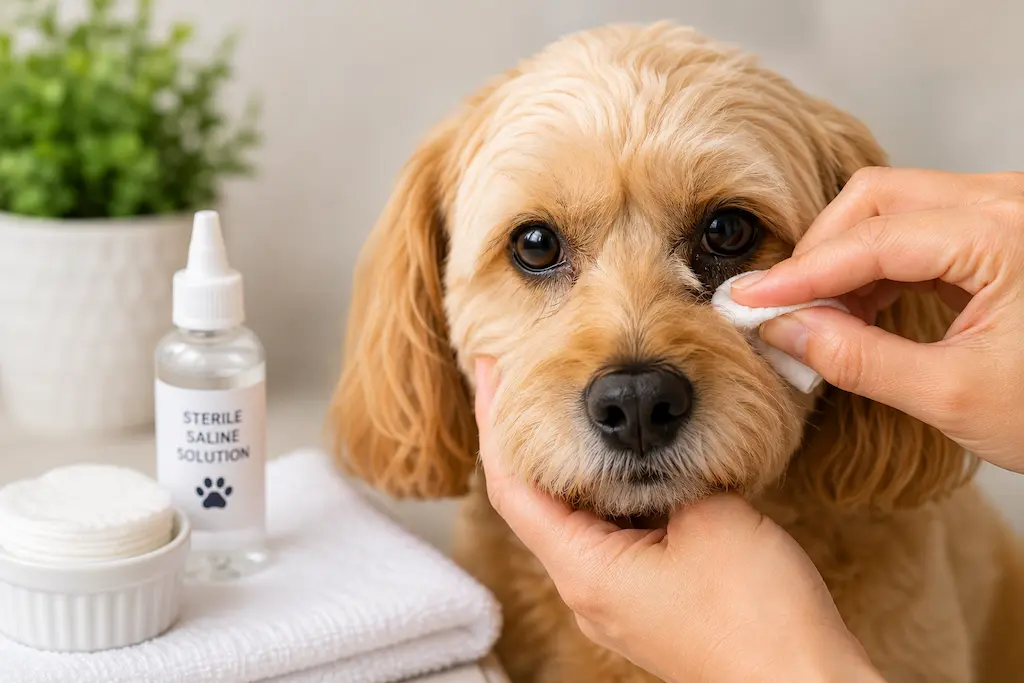
- A vet-approved ear cleaner and cotton pads
- A dog toothbrush and dog toothpaste
- A non-slip mat and plenty of treats
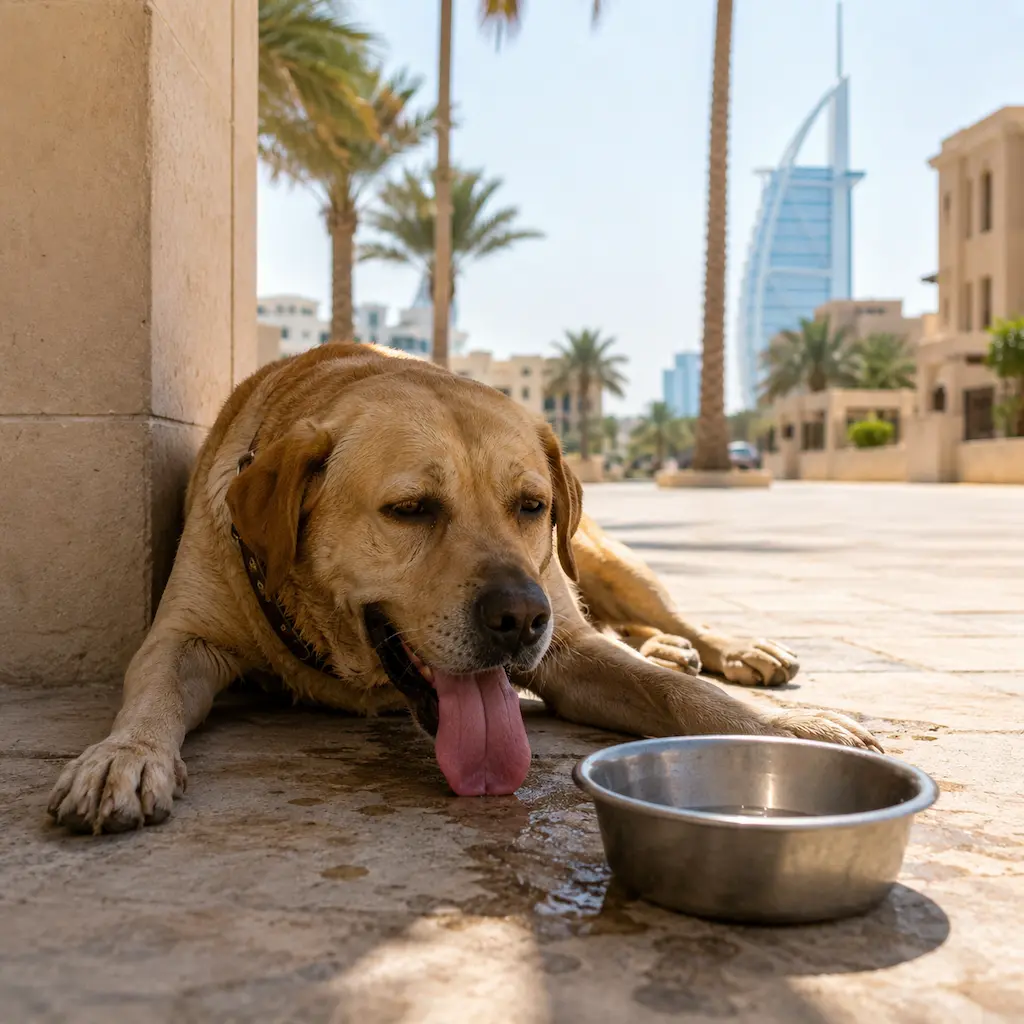
In Abu Dhabi’s climate, keep the session in a cool, air-conditioned space grooming a dog that’s already overheated makes everyone’s job harder.
1. Brush Your Dog’s Coat Regularly
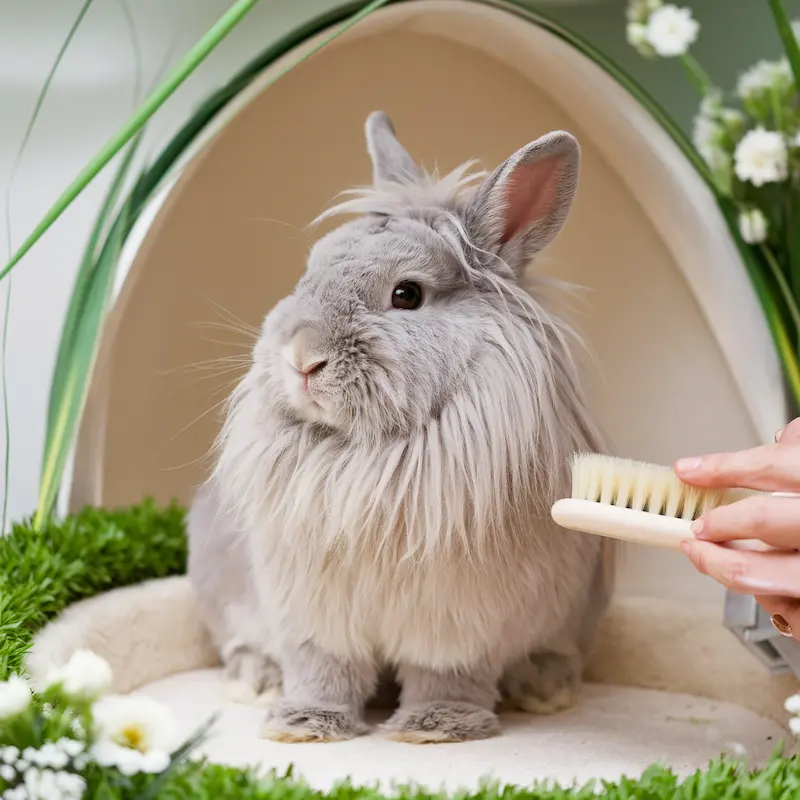
Brushing is the foundation of a healthy coat. It removes tangles, loose fur, and dirt while distributing natural oils that keep the coat shiny and healthy. The frequency depends on your dog’s breed:
- Short-haired breeds like Labradors may only need brushing once every one to two weeks.
- Long-haired breeds like Golden Retrievers and Collies need brushing every day or every other day to prevent mats and tangles.
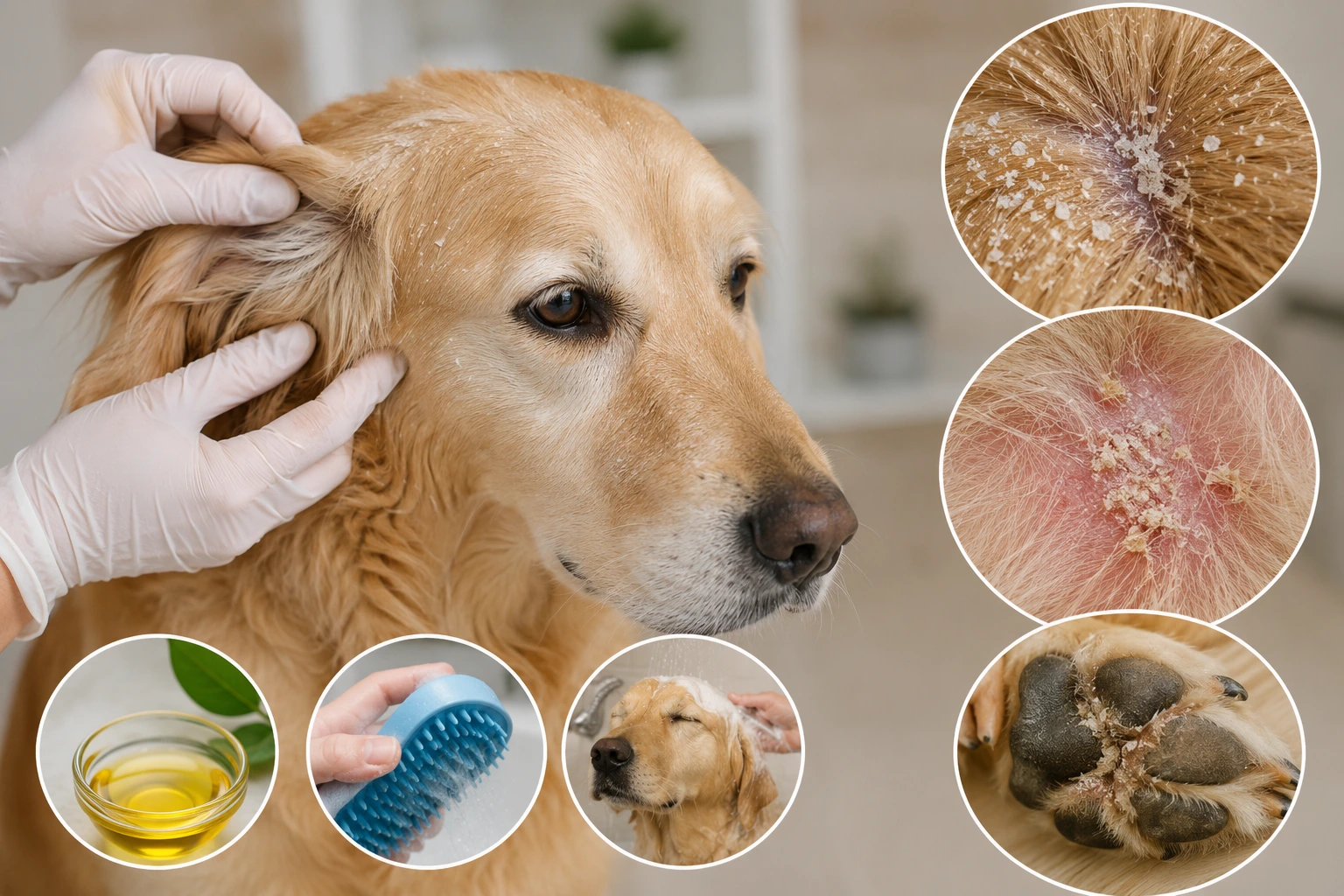
Brushing also gives you a chance to inspect the skin for parasites or irregularities. In the UAE’s heat and humidity, regular brushing is one of the best defences against matting and trapped moisture against the skin both of which can lead to hot spots. If your dog already struggles with flaking, our guide to dog dandruff goes deeper.
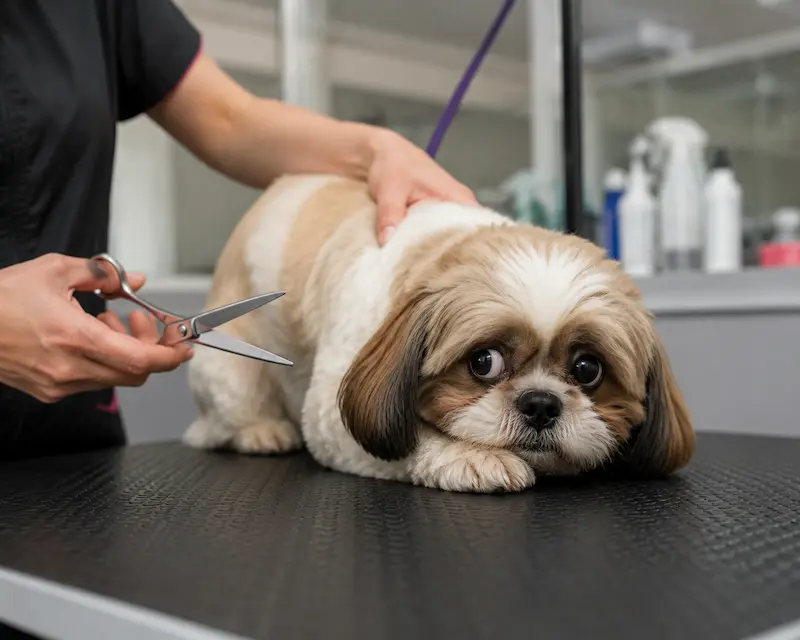
2. Trim the Hair (With Caution)
Hair trimming should be done carefully especially around sensitive areas like the eyes and paws. If you’re comfortable using grooming scissors, trim only the areas that visibly need maintenance, such as:
- Hair around the eyes (to prevent vision obstruction or irritation)
- Hair between paw pads (to avoid slipping, and to stop sand and grit getting trapped)
- Long strands on the belly and hind legs
Never rush, and always reward your dog afterwards. For more complex grooming, it’s best to consult a professional groomer.
3. Safely Trim Your Dog’s Nails
Long nails can cause pain, posture issues, and even injury. A good rule of thumb: if you hear your dog’s nails clicking on the floor, it’s time for a trim.
Use dog-specific nail clippers and be careful not to cut the “quick” the blood vessel inside the nail. On light nails, the quick looks pink; on dark nails, trim small slivers until you see a dark dot in the centre, then stop. If you do nick it, a dab of styptic powder stops the bleeding quickly. If you’re unsure, your groomer or vet can do it for you.
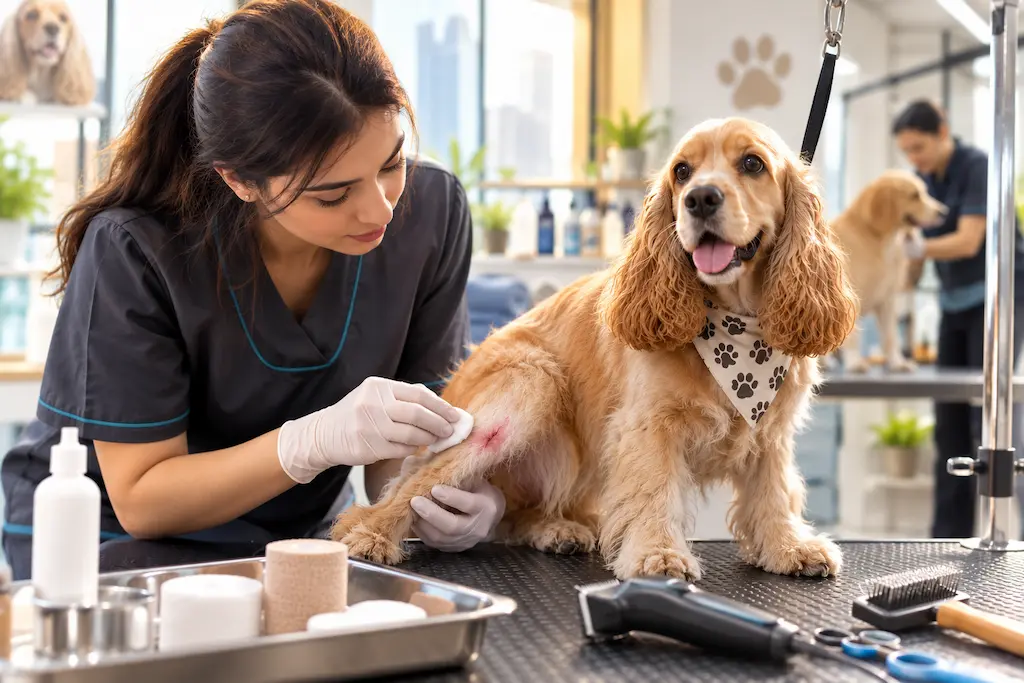
4. Inspect the Skin During Grooming
Grooming sessions are a great opportunity to check your dog’s skin. Look for:
- Lumps, rashes, or redness
- Bald spots or excessive shedding
- Fleas, ticks, or other parasites
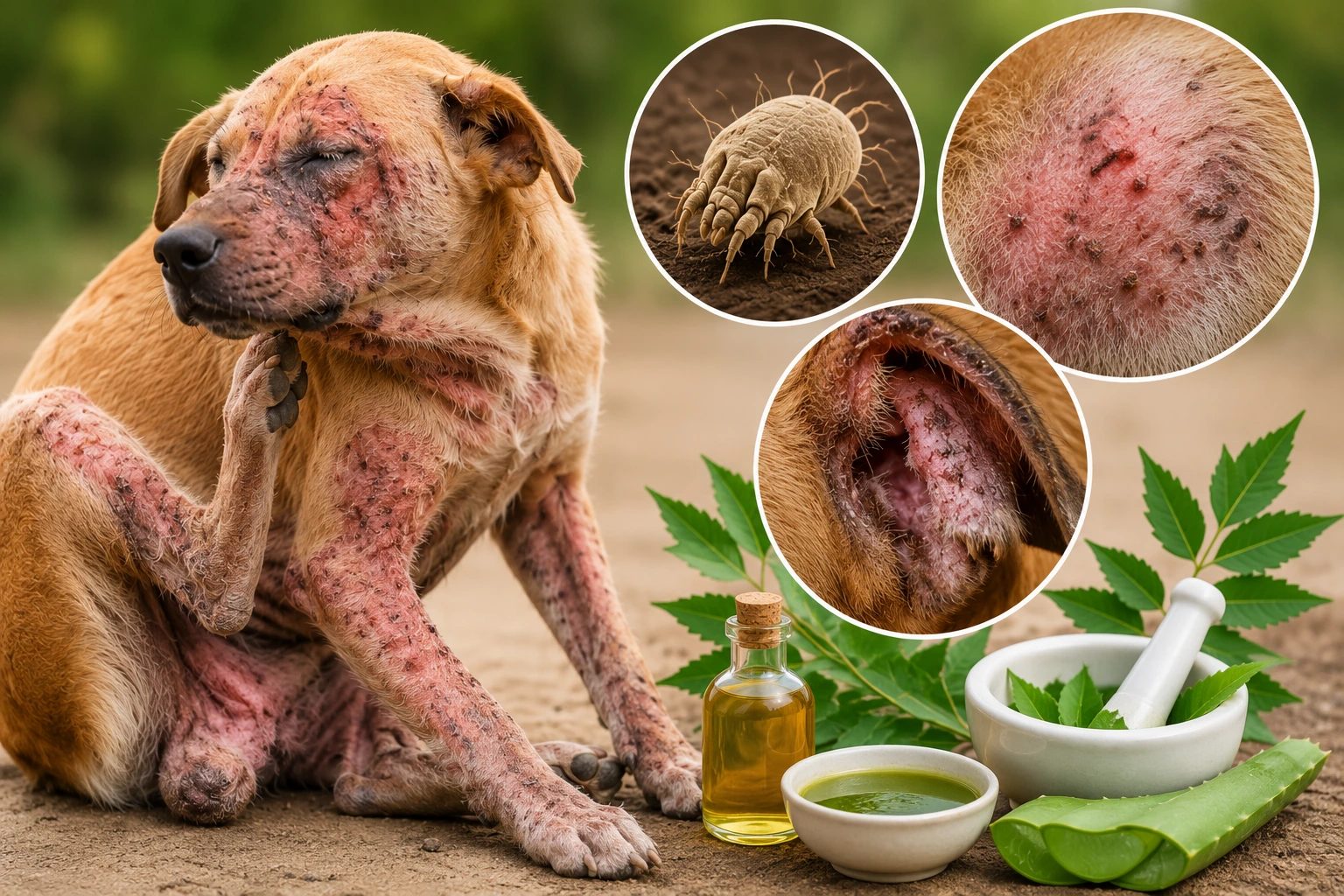
Early detection of skin issues, allergies, or infestations helps keep your dog healthier in the long run. Parasite-prevention treatments like Advocate™, Seresto™, or Credelio PLUS™ can be effective options—consult your vet to choose the right one.
5. Make Grooming Enjoyable for Your Dog
Not all dogs naturally love grooming. But with the right approach, they can learn to tolerate—or even enjoy—it. Here’s how:
- Use treats and praise to create positive associations
- Go slow and start with short sessions
- Use a non-slip mat in the bathtub to help your dog feel secure
Make grooming a bonding experience it builds trust and makes future sessions easier.
6. Check and Clean the Ears
A dog’s ears are prone to infections, especially if they’re floppy or have a lot of hair. Signs of ear trouble include:
- Odor (often sweet-smelling)
- Discharge or excess wax
- Redness or inflammation
- Head shaking or ear scratching
Clean the visible parts of the ears gently using a vet-approved ear cleaner. Don’t insert anything deep into the ear canal. If you notice anything unusual, contact your vet or groomer.
7. Bathe Only When Necessary
Bathing your dog too often can dry out their skin by removing natural oils. Generally, dogs only need a bath every 6–8 weeks, unless they’ve gotten dirty or smelly.
Tips for a successful bath:
- Use soap-free dog shampoo (never human shampoo!)
- Avoid eyes, mouth, and inside the ears
- Rinse thoroughly with warm water
- Let them air-dry or use a blow dryer on a cool setting
Afterward, reward them with a treat or some cuddle time.
Keep Your Dog Looking and Feeling Their Best with Groom Room in Abu Dhabi
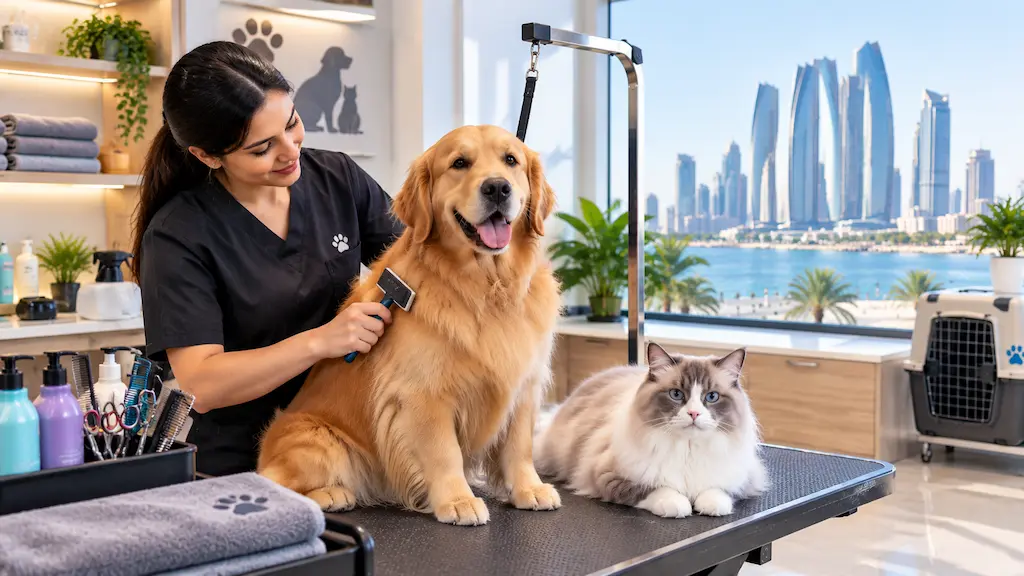
If you’re looking for professional dog grooming services in Abu Dhabi, look no further than Groom Room. Known for their compassionate, breed-specific grooming techniques and attention to detail, Groom Room is a favorite among pet owners who want top-tier care for their furry companions.
From basic grooming packages to specialized services like de-shedding, skin treatments, and puppy pampering, Groom Room offers everything your pet needs to stay clean, healthy, and stylish. Their expert team ensures each pet enjoys a stress-free grooming experience in a safe and hygienic environment.
Frequently Asked Questions
How often should I groom my dog?
It depends on your dog’s breed and coat type. Long-haired dogs may need daily brushing, while short-haired dogs can be groomed every 1–2 weeks. Regular nail, ear, and dental checks are also important.
Can I groom my dog at home?
Yes, basic grooming such as brushing, bathing, ear cleaning, and nail trimming can be done at home. For complex haircuts or severe matting, a professional groomer is recommended.
How often should I bathe my dog?
Most dogs need a bath every 4–8 weeks. Bathing too often can dry out their skin and coat.
What tools do I need for dog grooming at home?
You will need:
- A suitable brush
- Dog shampoo
- Towels
- Nail clippers
- Ear cleaner
- Dog toothbrush and toothpaste
- Treats to keep your dog comfortable
How should I groom my dog in Abu Dhabi’s hot climate?
Groom your dog in a cool indoor area, dry the coat properly after bathing, trim paw hair if needed, and clean off sand and dirt regularly to keep your dog comfortable.