










If your dog has been scratching non-stop, losing patches of fur, or developing crusty, irritated skin, mange could be the culprit. Mange is one of the most uncomfortable skin conditions a dog can experience and one of the most commonly misunderstood. As someone who works closely with pets every day at Pet Grooming in Abu Dhabi, we see mange cases throughout the year, especially in warm climates like the UAE where mites thrive.
Early detection makes all the difference. When you bring your dog in for regular dog grooming in Abu Dhabi, our professional groomers are often the first to spot the early warning signs hair loss patterns, skin texture changes, and unusual odour before the condition becomes severe. Grooming is not just about looks; it is a frontline health check for your dog.
This guide covers everything you need to know about dog mange: the types, how to identify it, safe home treatment options, and when it’s time to see a vet.
What Is Dog Mange?
Mange is a skin disease caused by parasitic mites that burrow into or live on a dog’s skin and coat. These microscopic mites trigger intense itching, inflammation, hair loss, and skin infections if left untreated. Mange is not a sign of a dirty dog even clean, well-cared-for dogs can contract it from contact with infected animals or contaminated environments.
Types of Dog Mange
Understanding which type of mange your dog has is the first step to treating it correctly. There are two main forms:
1. Sarcoptic Mange (Canine Scabies)
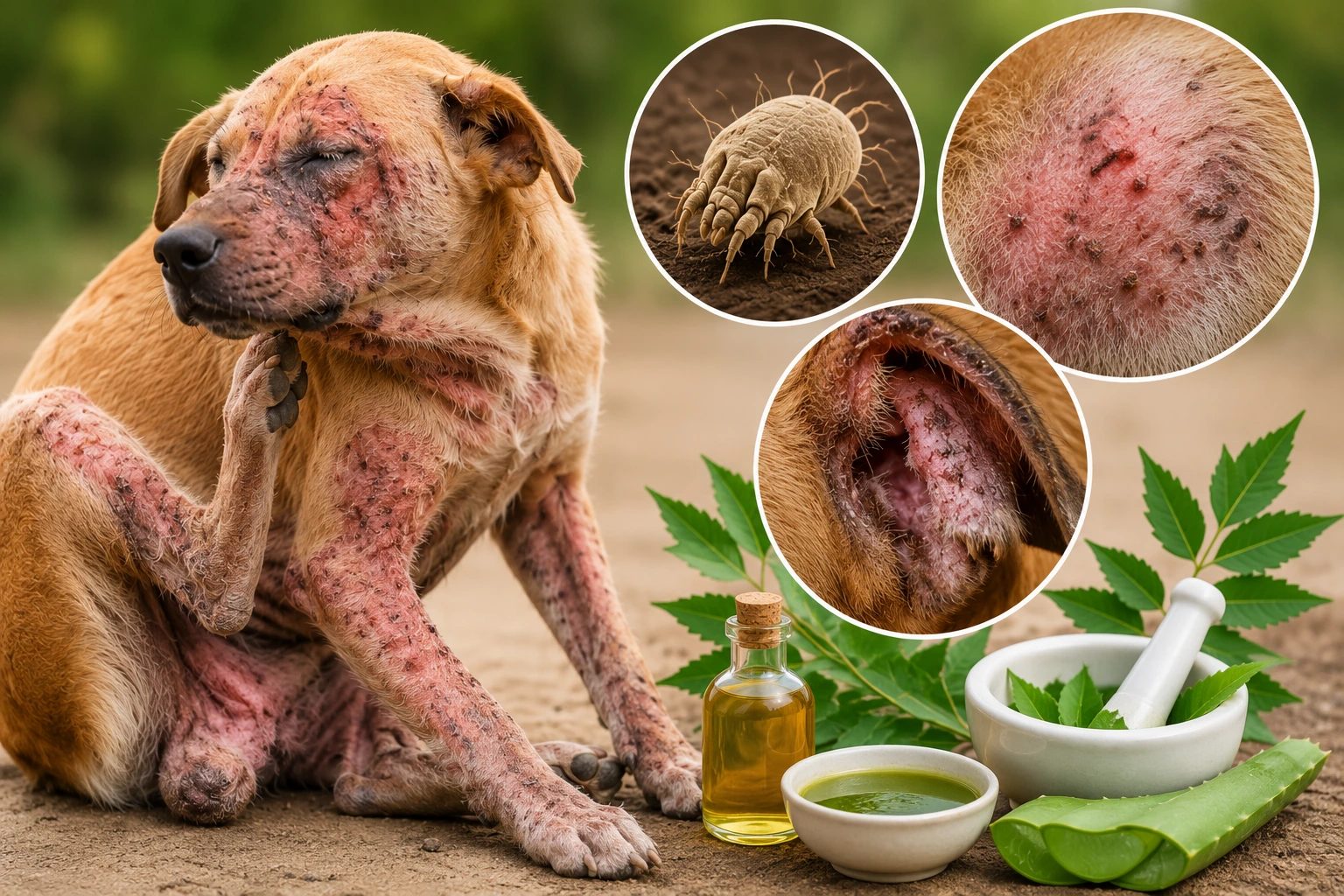
Sarcoptic mange is caused by Sarcoptes scabiei mites and is highly contagious not only between dogs but also to humans and other pets. The mites burrow directly into the skin to lay eggs, causing intense, relentless itching.
Common affected areas: ears, elbows, armpits, groin, and belly.
Key signs:
- Severe scratching and restlessness
- Redness and crusting on the skin
- Hair loss in affected patches
- Thickened, wrinkled skin over time
- A musty or unpleasant skin odour
Sarcoptic mange spreads quickly. If one dog in a household has it, all pets should be treated and the environment thoroughly cleaned.
2. Demodectic Mange (Red Mange)
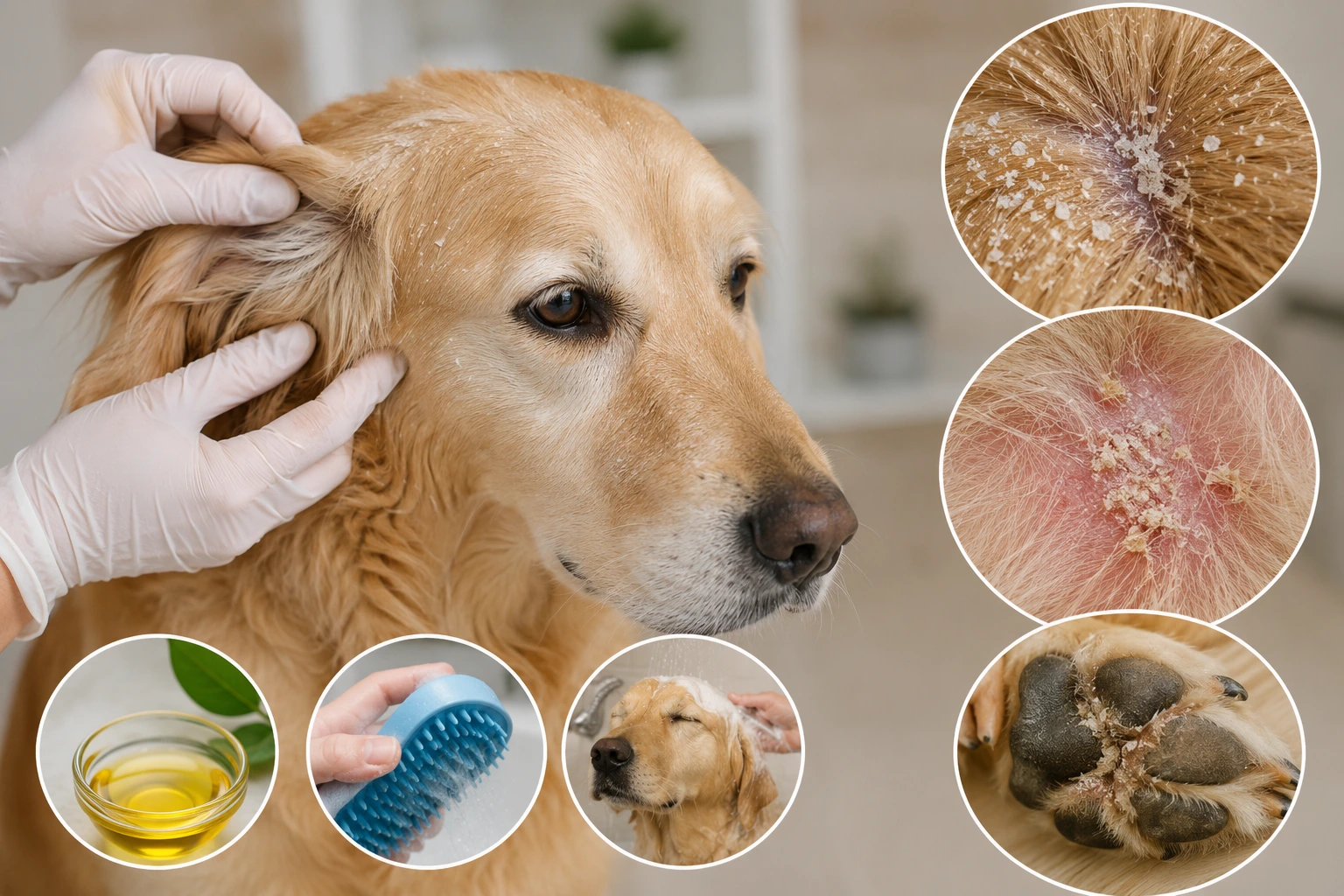
Demodectic mange is caused by Demodex canis mites, which are actually a normal part of a dog’s skin microbiome. In small numbers they cause no harm. Problems arise when a dog’s immune system is weakened due to stress, illness, poor nutrition, or age allowing the mites to multiply uncontrollably.
Common affected areas: face, around the eyes, paws, and trunk.
Key signs:
- Patchy hair loss, often starting around the face
- Scaly, red skin without intense itching (in mild cases)
- Crusty paws or swollen paw pads
- Secondary bacterial skin infections in severe cases
Unlike sarcoptic mange, demodectic mange is not contagious to humans. However, it can spread between dogs with weakened immunity.
How to Tell If Your Dog Has Mange
Not every case of itching or hair loss is mange, but the following signs together strongly suggest it:
- Sudden, intense scratching that doesn’t respond to regular flea treatment
- Patchy bald spots, especially around the ears, face, and legs
- Crusty or thickened skin with a rough, elephant-like texture
- Sores or secondary infections from excessive scratching
- Skin odour that is stronger than usual despite bathing
A definitive diagnosis requires a skin scraping test performed by a veterinarian. Do not rely on guesswork alone.
Home Treatment Options for Dog Mange
Mild demodectic mange in otherwise healthy adult dogs can sometimes resolve on its own. However, both types generally require treatment to prevent worsening. Here are safe home care steps to manage symptoms while seeking veterinary guidance:
Medicated Shampoos
Shampoos containing benzoyl peroxide or sulphur help remove crusts, open skin pores, and reduce bacterial buildup. Bathe your dog every 3–5 days during active treatment. Always rinse thoroughly and dry fully to prevent further skin irritation.
Apple Cider Vinegar (Diluted)
A diluted solution of apple cider vinegar (50/50 with water) applied to non-open skin areas can help reduce the pH environment mites prefer. Never apply to broken or raw skin it will cause burning. Limit this to a spot treatment, not a whole-body solution.
Coconut Oil
Organic, unrefined coconut oil applied directly to affected skin has mild antimicrobial and soothing properties. It can reduce scaling and irritation, though it does not kill mites. Use it as a supportive measure alongside prescribed treatments.
Boosting Immune Health
For demodectic mange, a strong immune system is your dog’s best defence. Feed a high-quality, balanced diet with omega-3 fatty acids (fish oil is excellent), ensure adequate rest, and reduce stressors in your dog’s environment.
Cleaning the Environment
Wash all bedding, blankets, and soft toys in hot water. Disinfect crates, collars, and grooming tools. For sarcoptic mange, this step is critical to prevent reinfection.
When to See a Vet
Home care can support recovery, but it is not a substitute for veterinary treatment in moderate to severe cases. Seek professional help if:
- Hair loss is spreading rapidly
- The skin is cracked, bleeding, or infected
- Your dog is not eating or is visibly distressed
- Symptoms don’t improve within 1–2 weeks of home care
- Other pets or family members develop itching or skin rashes
Vets typically prescribe oral medications, topical treatments such as selamectin or moxidectin, or medicated dips depending on the type and severity of mange.
Prevention Through Regular Grooming
The best defence against mange is a consistent grooming routine. Regular baths, coat brushing, and skin checks catch early changes before they become serious problems. Professional groomers are trained to notice subtle signs unusual skin texture, early hair thinning, or localized irritation that pet owners may miss at home.
At our mobile grooming service in Abu Dhabi, we bring this professional-level care directly to your doorstep, stress-free for your dog and convenient for you.
Frequently Asked Questions About Dog Mange
Q1. Can dog mange spread to humans?
Yes, but only sarcoptic mange can spread to humans. The mites cause temporary itching and red bumps on human skin, but they cannot complete their life cycle on humans and typically die off within a few weeks. Demodectic mange is not contagious to people.
Q2. How long does it take for dog mange to heal?
Mild cases of demodectic mange can clear up in 4–8 weeks with proper treatment. Sarcoptic mange usually responds to treatment within 4–6 weeks. Severe or generalised cases may take 3–6 months of consistent treatment and vet follow-ups.
Q3. Can I treat dog mange at home without a vet?
Very mild, localised demodectic mange in a healthy adult dog may resolve with supportive home care medicated shampoos, immune-boosting diet, and a clean environment. However, sarcoptic mange and any spreading or severe case always requires veterinary diagnosis and prescription treatment.
Q4. Is mange painful for dogs?
Yes. Sarcoptic mange in particular causes intense, burning itch that is distressing and exhausting for dogs. Secondary bacterial infections from broken skin can also be painful. Early treatment is the kindest thing you can do for your dog.
Q5. Can regular grooming prevent mange?
Grooming alone cannot prevent mite exposure, but it dramatically improves early detection. Regular professional grooming sessions allow trained groomers to spot early signs thinning coat, skin texture changes, unusual odour before the condition worsens. Keeping your dog’s coat clean and skin healthy also supports a strong skin barrier, making it harder for mites to take hold.